 Free returns
  180-day guarantee
  10% off your first order
 What Supplies do you need for Chickens?
Raising chickens can be a rewarding and surprisingly low-maintenance experience. While chickens are largely self-sufficient, they still rely on you to provide the essentials for their health and wellbeing. With the right supplies, you can help your flock thrive, ensuring they stay happy, healthy, and productive. In this guide, you’ll discover everything you need to keep your chickens in top condition, from supplements and grit, to coop hygiene and more.
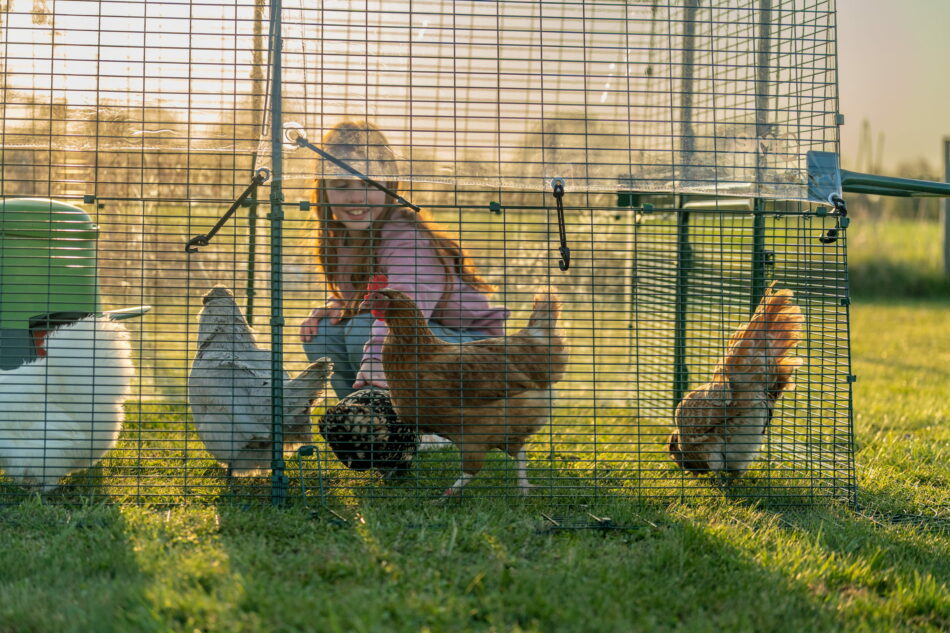
Diatomaceous Earth
Diatomaceous earth is a naturally occurring sedimentary rock that’s non-toxic and highly absorbent. It’s a favorite among chicken keepers for its effectiveness as a natural insecticide, especially in preventing red mite and other parasites in chicken coops. The fine powder works by dehydrating pests, making it a safe and chemical-free solution for your flock.
- How to Use:
- Sprinkle diatomaceous earth in the corners and crevices of your coop, focusing on areas where mites might hide.
- Mix it into your chickens’ dust bath to help control external parasites.
- Some keepers add a small amount to chicken feed, but always ensure it’s food grade and not pool grade.
- Safety Tips:
- Always wear a mask when handling diatomaceous earth, as the fine dust can irritate your lungs.
- Keep it away from your chickens’ eyes and respiratory systems.
Chicken Coop Cleaner
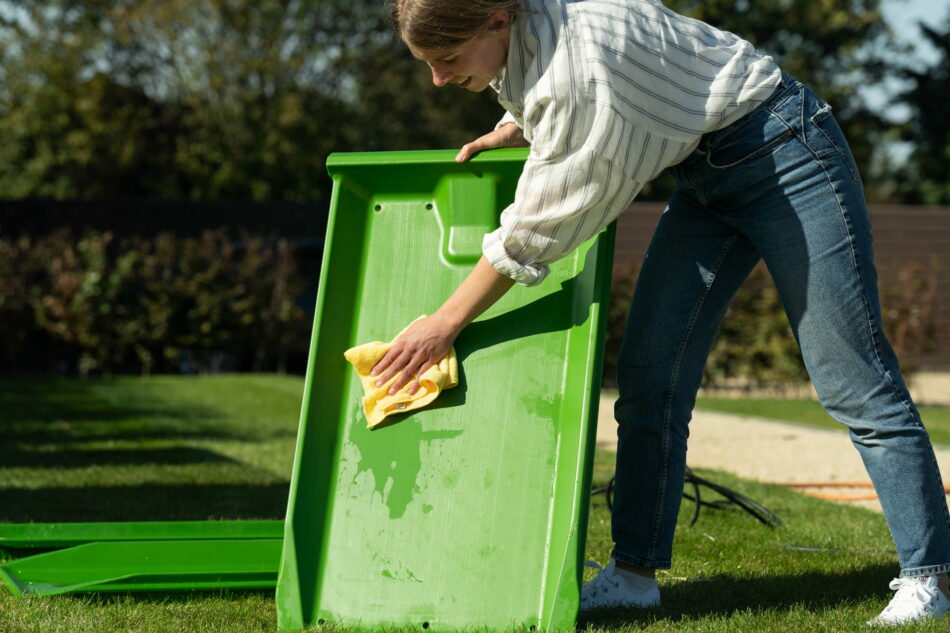
A clean coop and nestboxes are essential for healthy hens, as regular cleaning helps prevent the buildup of harmful bacteria and parasites. You’ll need a pet-safe disinfectant to use on your chickens’ housing to keep their environment safe.
- Plastic vs. Wooden Coops:
- Plastic coops, like Eglu coops, are easy to clean and come with removable droppings trays.
- Wooden coops absorb ammonia from chicken urine and are more difficult to clean, which can cause health problems for hens. With wooden coops, you may need to clean more regularly and vigorously to maintain a healthy environment.
- Cleaning Routine:
- Wipe surfaces down weekly with a pet-safe disinfectant.
- Deep clean the coop and nest boxes at least once a month.
- Don’t forget to wipe down accessories, including chicken feeders and chicken drinkers.
Apple Cider Vinegar for Chickens
Apple cider vinegar (ACV) is a popular supplement among chicken keepers. It’s known for its ability to boost the immune system, improve digestion, and support overall health.
- Benefits:
- Enhances gut health and helps prevent digestive issues.
- Can be used to clean waterers, removing limescale and keeping water fresh.
- How to Use:
- Add a small amount (about 1 tablespoon per gallon) to your chickens’ water a few times a week.
- Use ACV to clean accessories, ensuring they’re free from buildup.
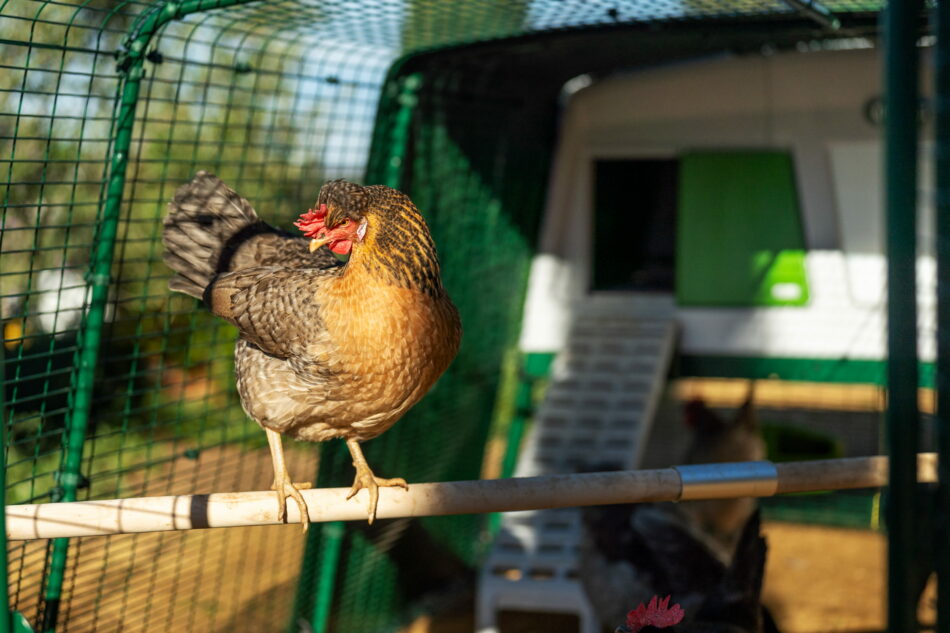
Chicken Grit
Chickens don’t have teeth, so they rely on grit, a mix of small stones and calcium sources like crushed oyster shells, to help them digest food.
- Why Grit Matters:
- Grit stays in the gizzard, grinding down food so chickens can absorb nutrients.
- Without grit, chickens can’t process larger food items, which can lead to blockages.
- Grit also provides essential minerals for strong bones and eggshells.
- How to Provide:
- Offer grit in a separate container so chickens can take what they need.
- Grit should be available at all times.
Chicken Supplements
Supplements can play a key role in maintaining your chickens’ health, especially if you want to support egg production and immunity.
- Essential Nutrients:
- Calcium and phosphorus are crucial for high-quality eggs.
- Garlic powder is recognized for its immune-boosting and deworming properties, and it can help eliminate red mite.
- Herbal Additions:
- Fresh or dried herbs like oregano, thyme, and mint can be added to feed or scattered in the coop to protect against infections and parasites.
- Use a Caddi Treat Holder to keep the floor of your run clean.
Chicken Mites Treatment
Mites are a common issue in chicken keeping, but with the right approach, you can keep your flock comfortable and healthy.
- Treatment Options:
- Use scaly leg spray or red mite powder, focusing on cracks in the coop, perches, and under the wings.
- Eglu chicken coops, with their smooth surfaces, help prevent mite infestations.
- Application Tips:
- Apply treatments at night when chickens are roosting to minimize stress.
Read our blog post for more tips on how to prevent and treat red mite.
Antiseptic Spray for Chickens
Minor injuries and feather pecking are common in backyard flocks. Having a veterinary-approved antiseptic spray on hand is essential.
- What to Look For:
- Non-toxic, non-sting formulas that disguise blood to prevent further pecking.
- Sprays are often blue or purple to hide redness and promote healing.
- Usage:
- Used to clean wounds, stop feather pecking, and disinfect minor cuts.
Cardboard Egg Cartons
Once your hens start laying, you’ll need a safe place to store their eggs. Cardboard egg cartons are practical and eco-friendly.
- Benefits:
- Protect eggs from damage.
- Make it easy to share eggs with family and friends.
- Reusable and recyclable.
Chicken Dust Bath Ingredients
Dust baths are a natural way for chickens to keep clean and control parasites.
- Ingredients for a Great Dust Bath:
- Dry topsoil or sand—something loose and easy for chickens to move around in.
- Add diatomaceous earth to help prevent mites and lice.
- A little wood ash can be beneficial.
- Dried herbs like lavender repel pests and keep the bath smelling fresh.
For a more detailed guide on how to make a chicken dust bath, check out this blog post.
Electrolytes for Chickens
Electrolytes are vital for hydration and recovery, especially during periods of stress or extreme heat.
- What They Do:
- Contain sodium, potassium, and calcium to help regulate body temperature and support recovery.
- Useful after predator attacks or environmental changes.
- How to Use:
- Offer electrolytes in water for a few hours at a time to prevent overconsumption.
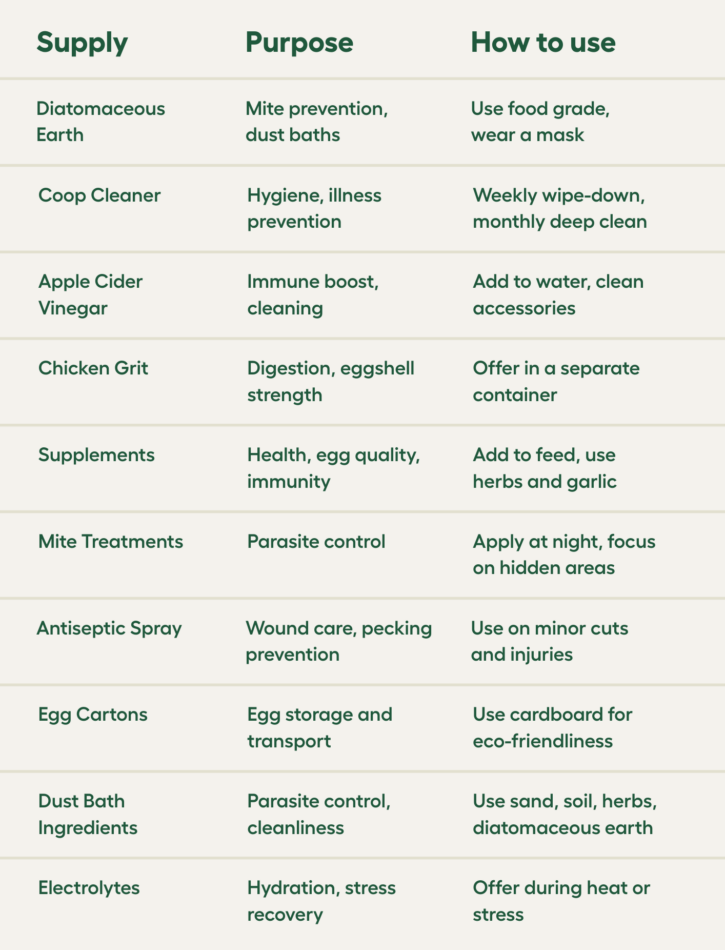
Essential Chicken Supplies Table
Key Takeaways
- Diatomaceous earth is useful for multiple things, including dust baths and mite prevention in the coop itself.
- Chicken-safe cleaners help keep the coop clean and support flock health.
- Apple cider vinegar, electrolytes, and supplements are important to support your chickens’ overall health.
- Grit is essential so your flock can properly digest their food.
- Chicken mite treatments and antiseptic spray help prevent and treat mites.
- Sand or dry topsoil is ideal for dust baths, allowing your chickens to stay clean while having fun.
- Egg cartons are perfect for storing the delicious eggs your chickens reward you with.
Omlet and Your Flock
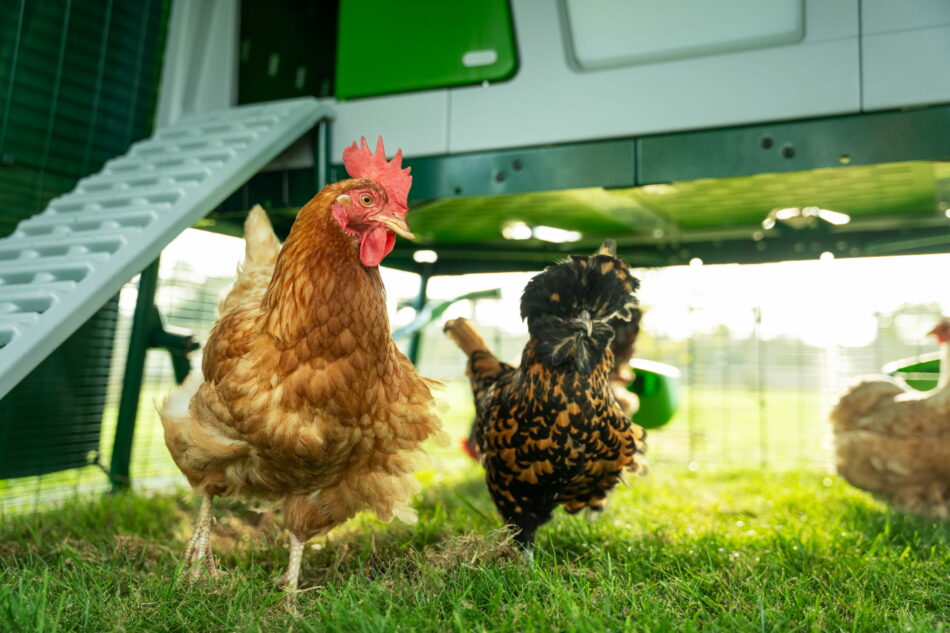
At Omlet, we’re dedicated to helping you keep your flock happy and healthy. Our Eglu Coops are designed for easy cleaning and effective mite prevention, making chicken keeping simpler and more enjoyable. With the right supplies and a little care, you’ll be rewarded with a thriving flock and plenty of delicious eggs.

This entry was posted in Chickens
One reply on “What Supplies do you need for Chickens?”
When the perch arrived I was worried it may be complex to set up, but it actually only took a matter of minutes. It is also so secure we have a strong weld-mesh run for fox protection attached to the run and the chickens were up and using it within minutes. The perch has a special connector which you can see in the left of the photo which clamps around any chicken wire or chicken mesh leaving a secure and very neat looking finish.