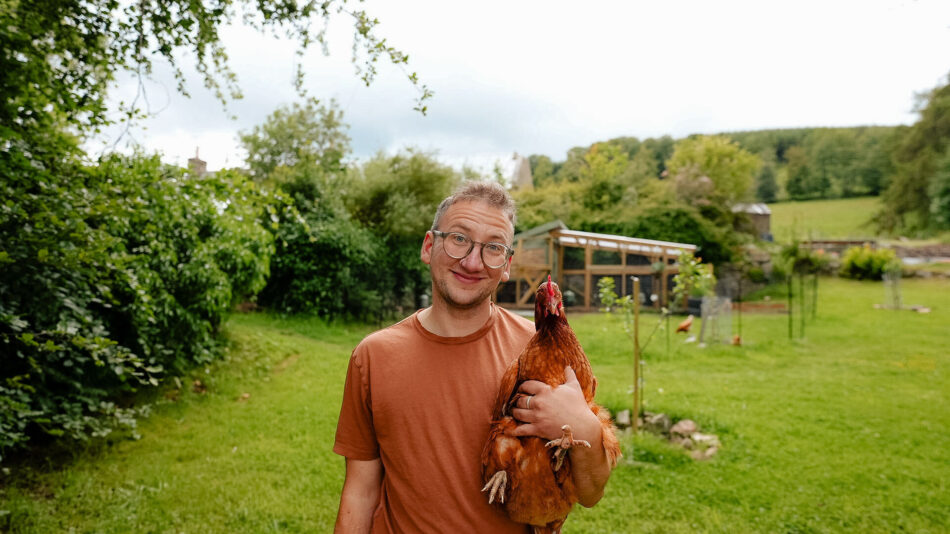
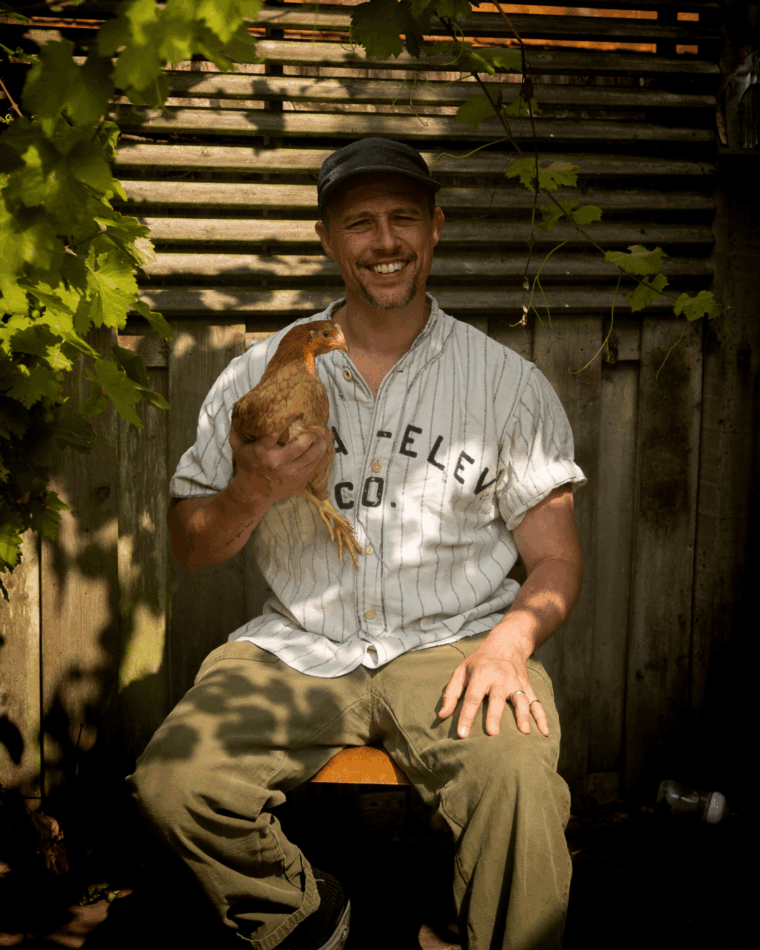
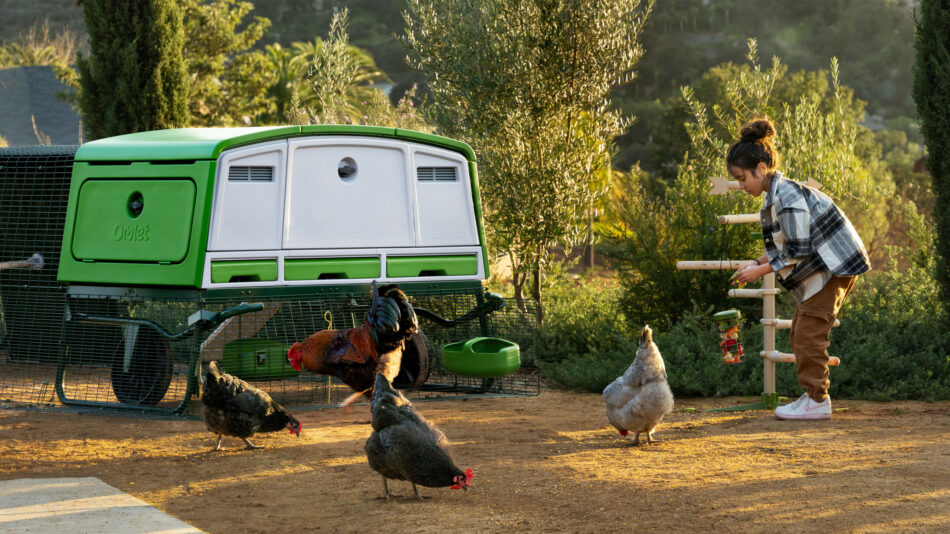
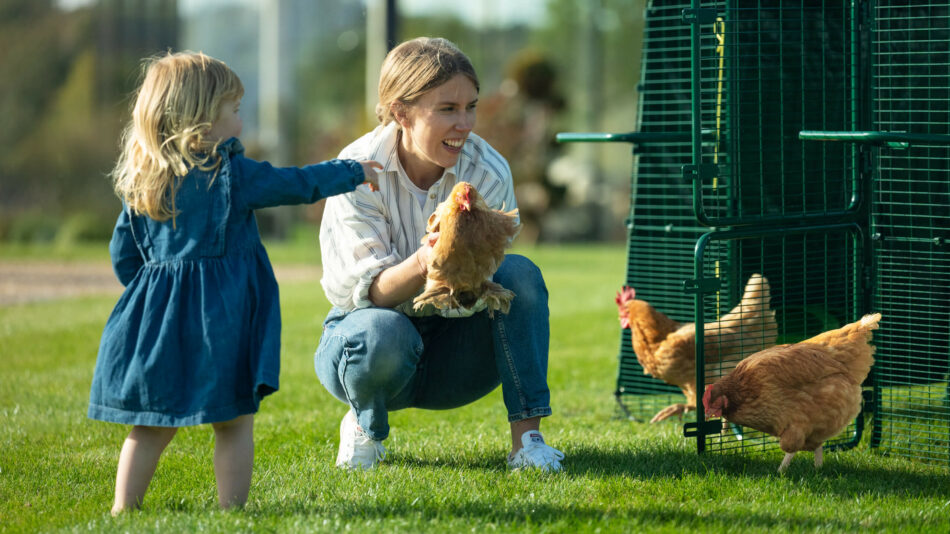
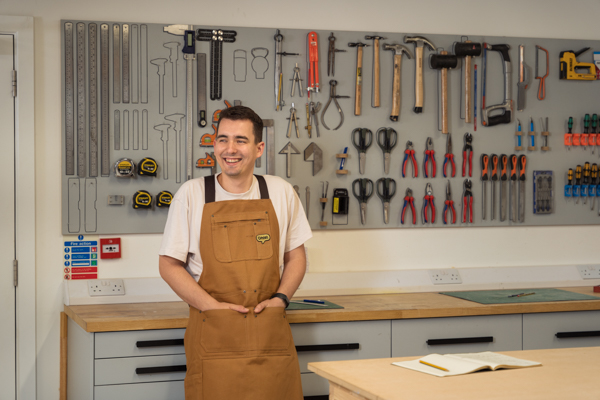
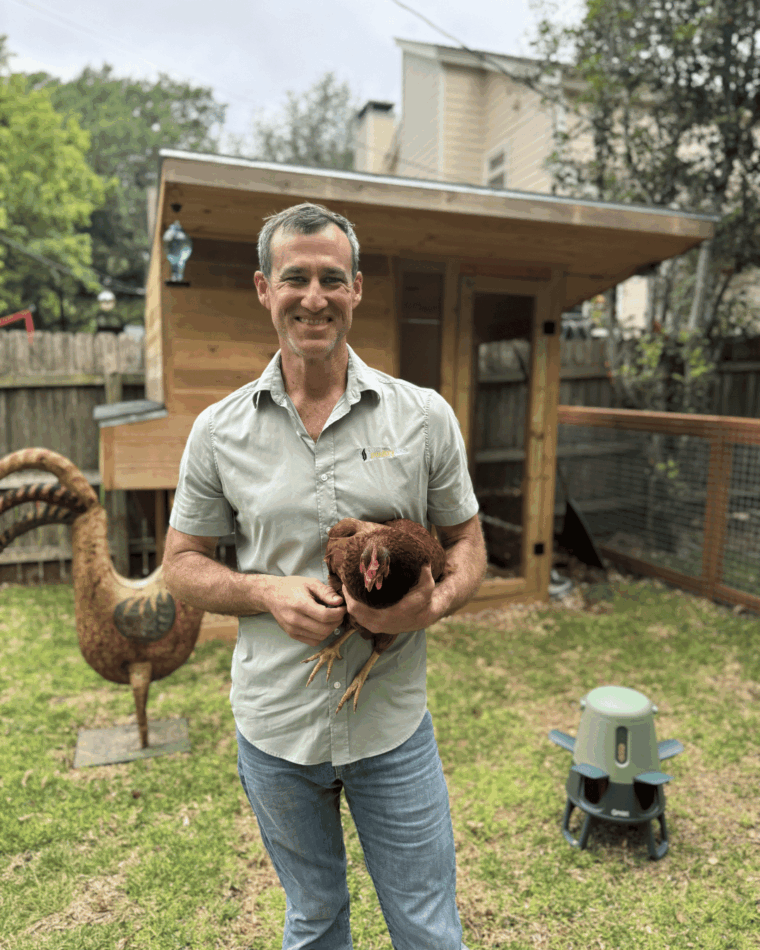
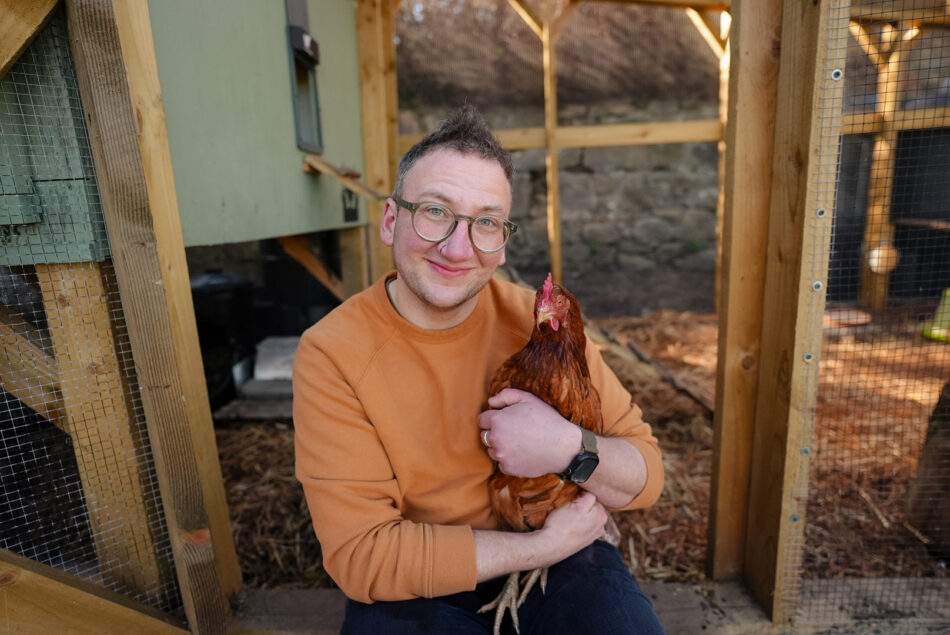
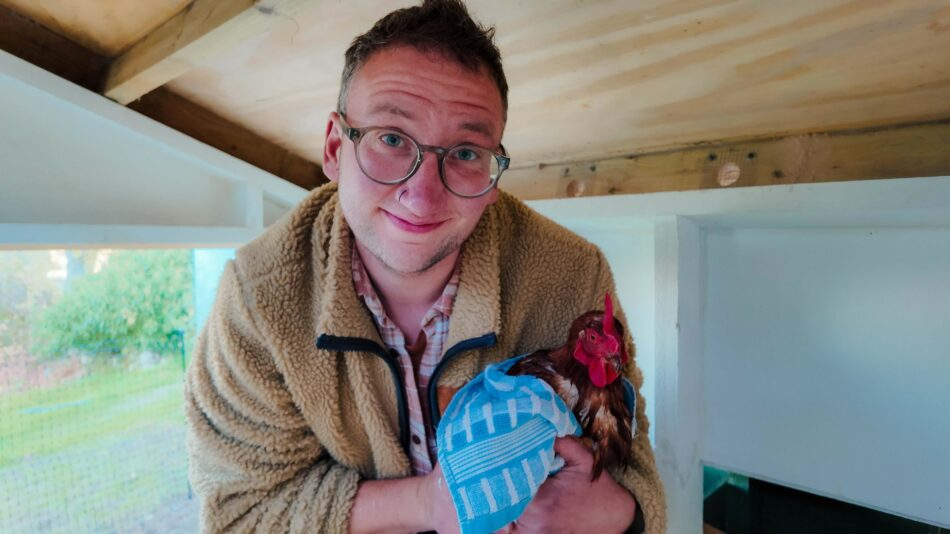
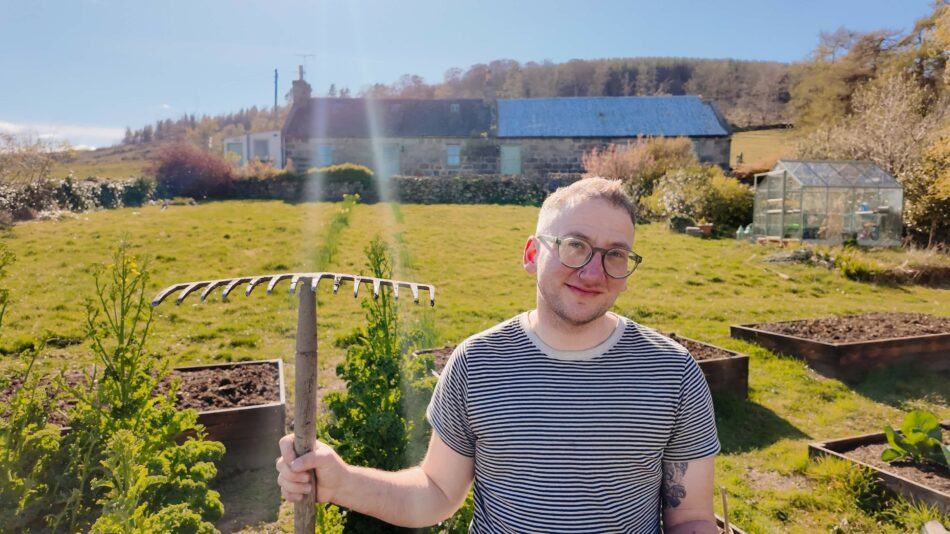
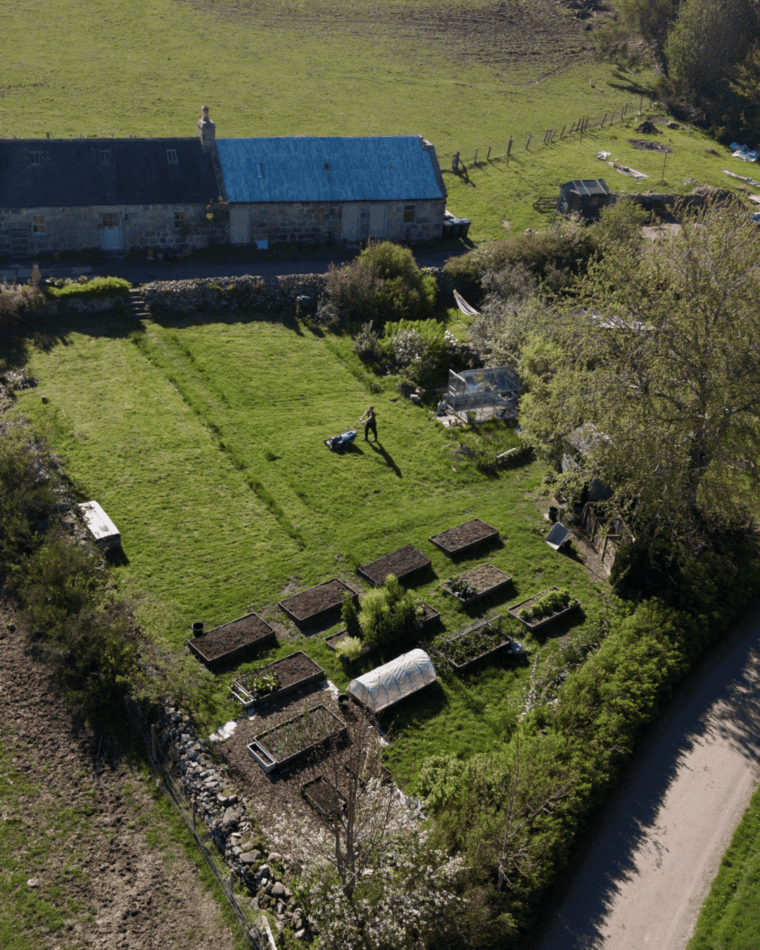
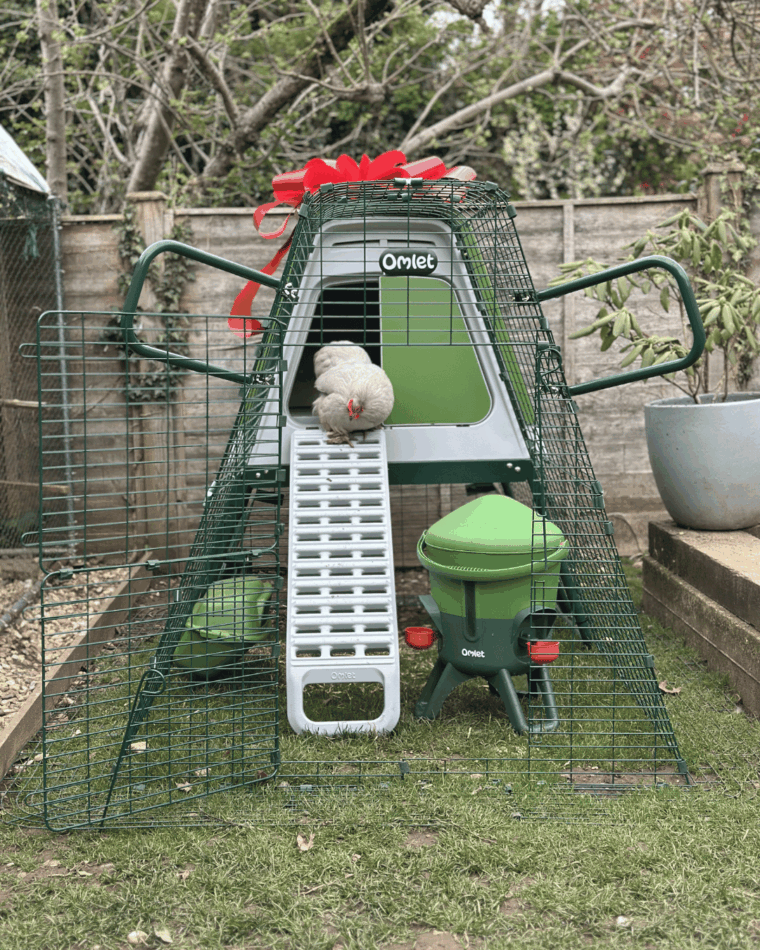
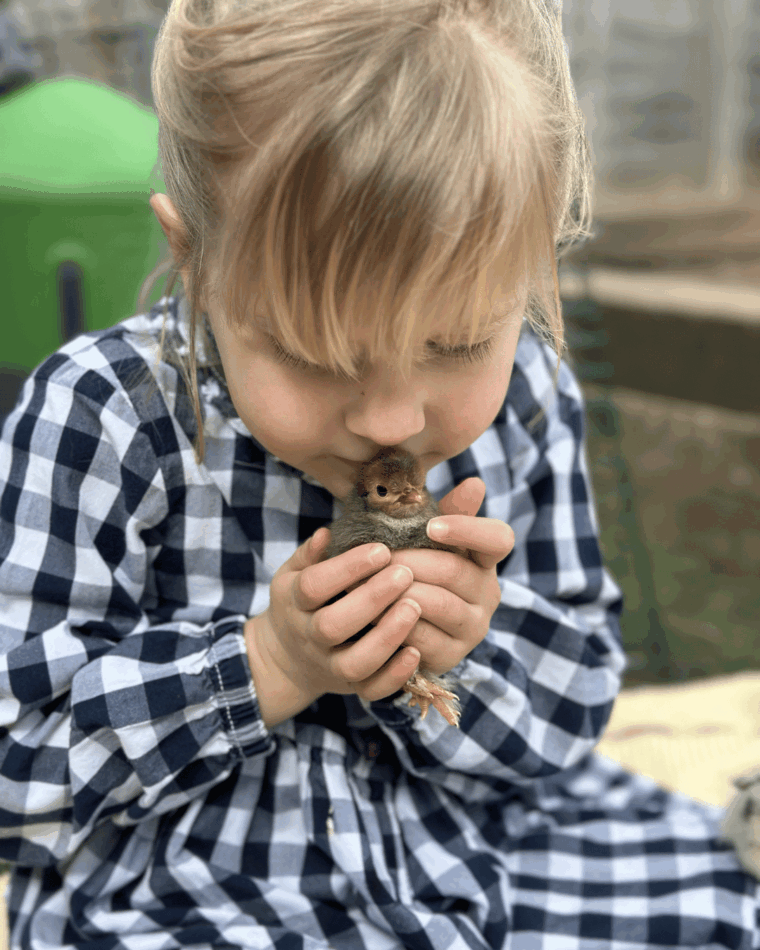
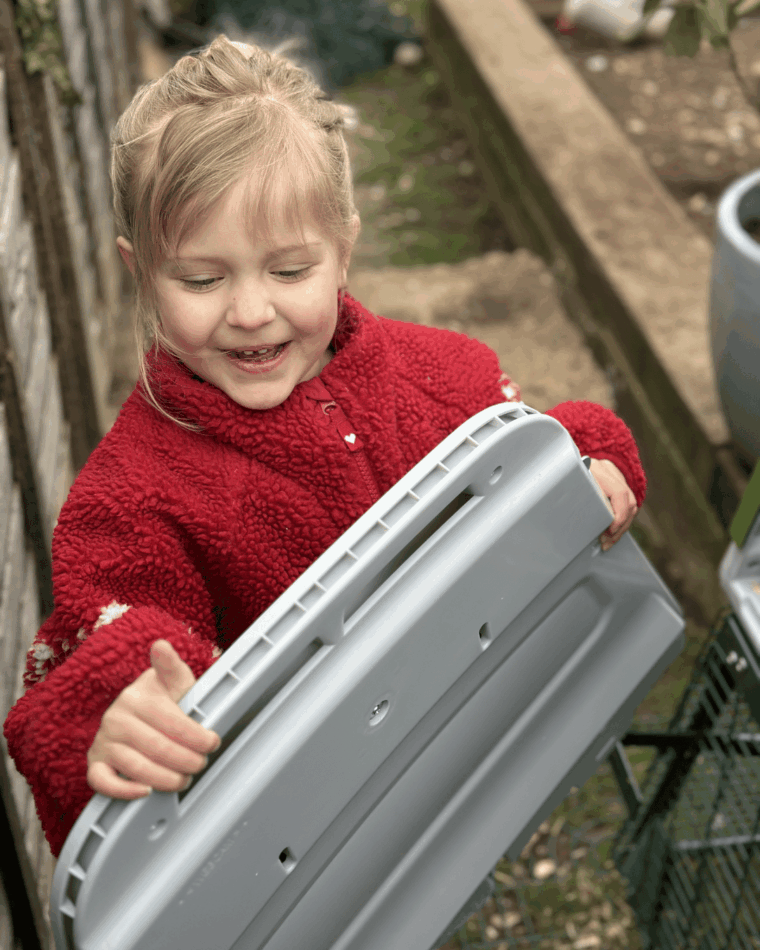
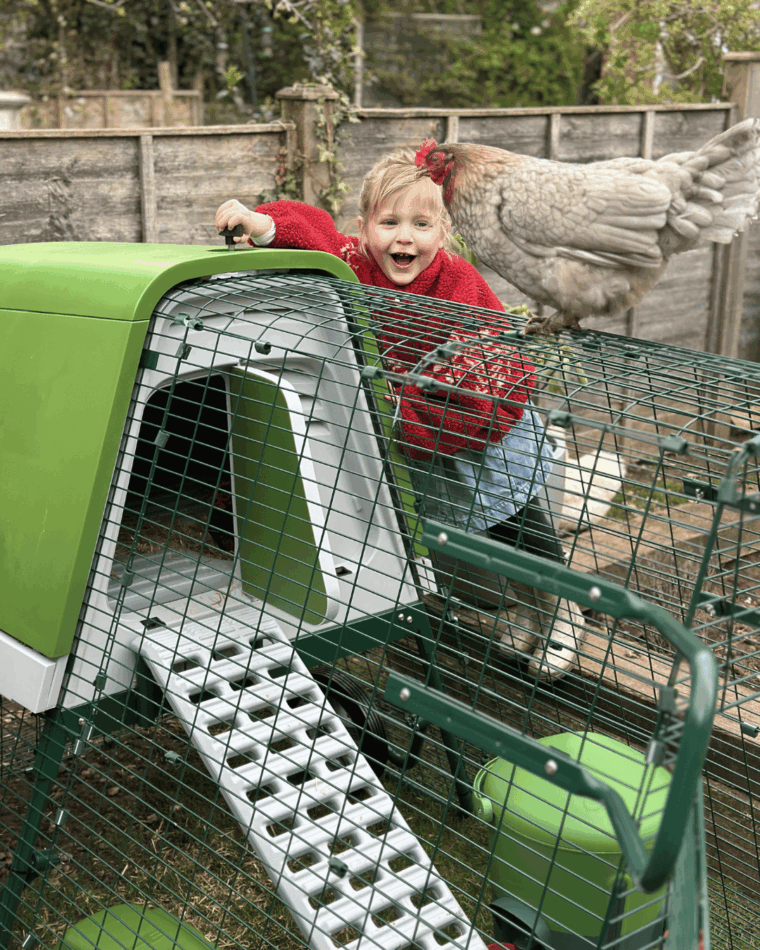
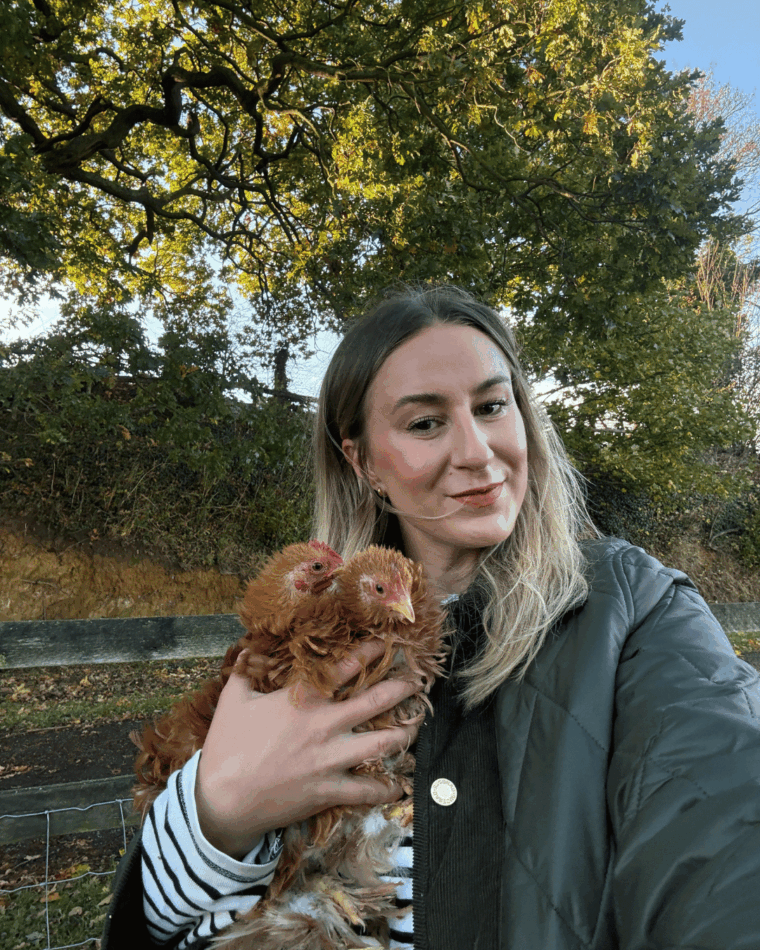
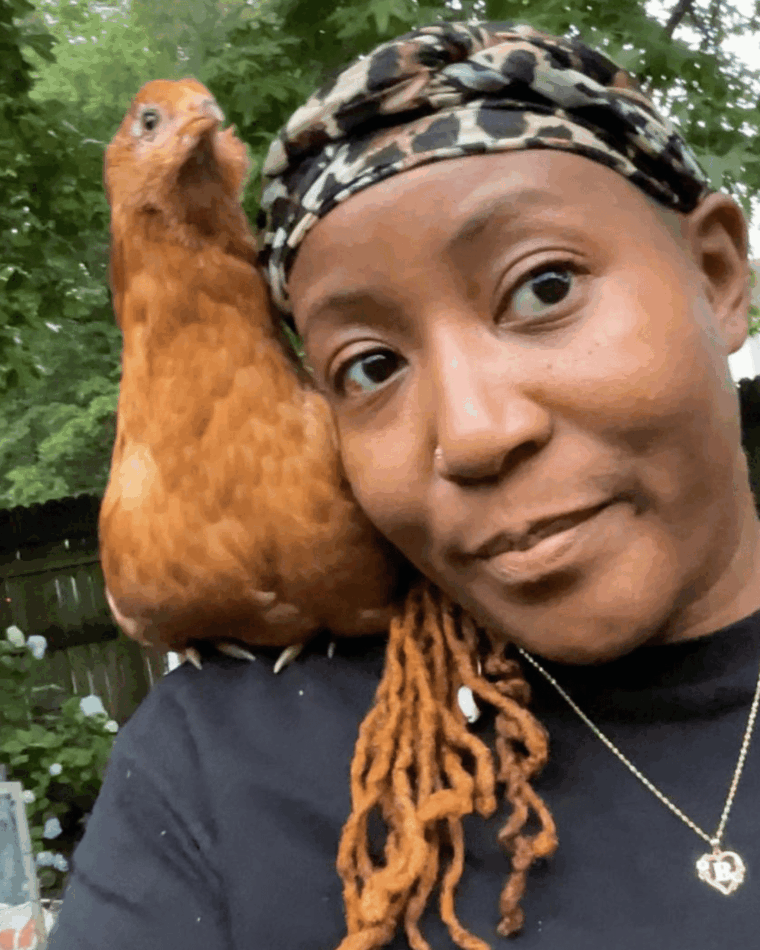
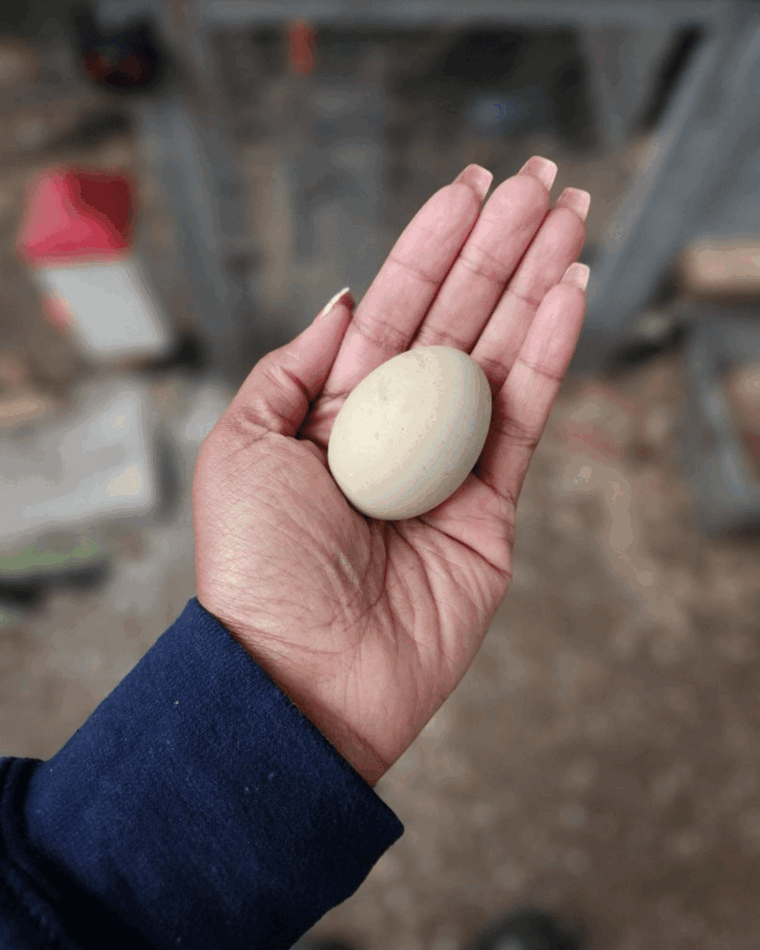
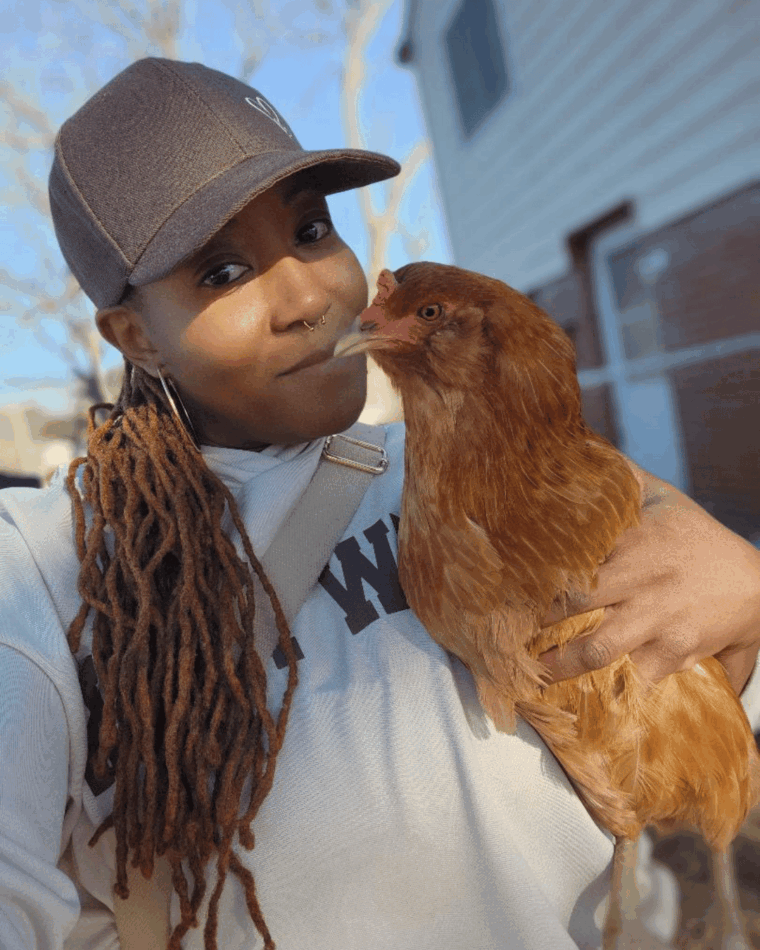
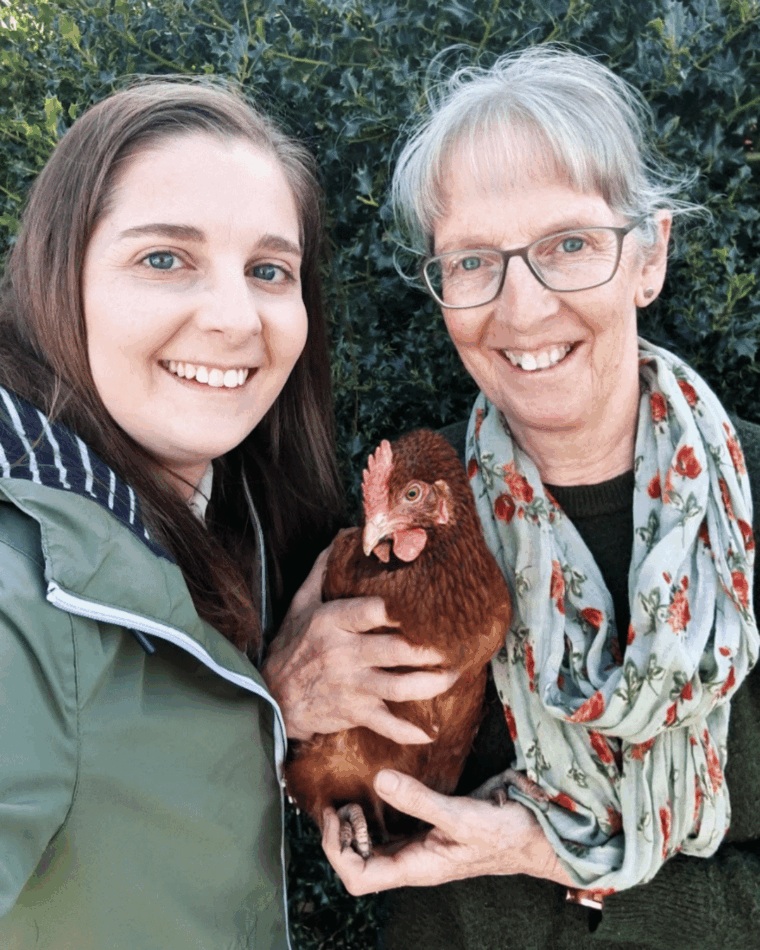
When we last spoke to Jude Harper, he was building a slower and more grounded kind of life – one wonky project at a time. It clearly struck a chord. People loved his honesty, his humour and his refusal to pretend he had everything figured out.
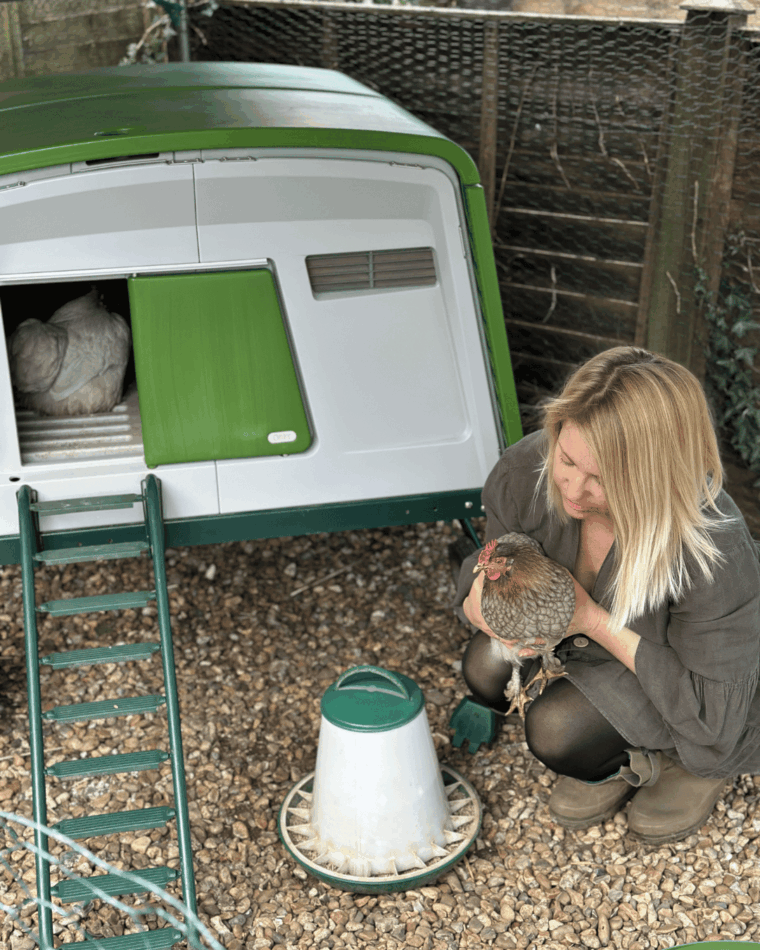
This time, the conversation moved naturally on to what comes next. Because once the chicken coop is built and the hens are happily settled in, you start to notice the systems around them. The everyday details, the little things that make chicken keeping feel easier, cleaner and smarter.
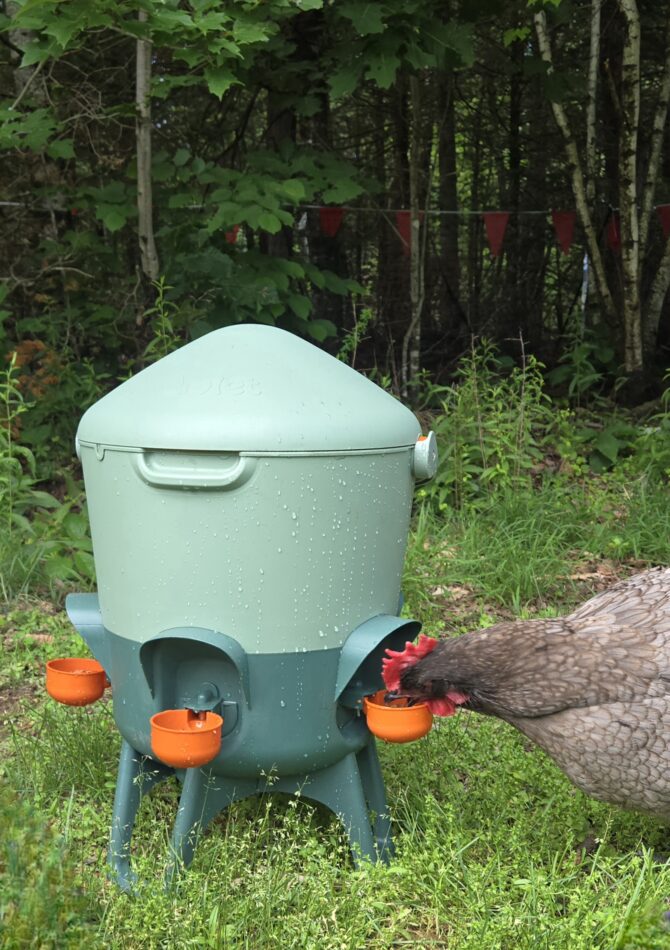
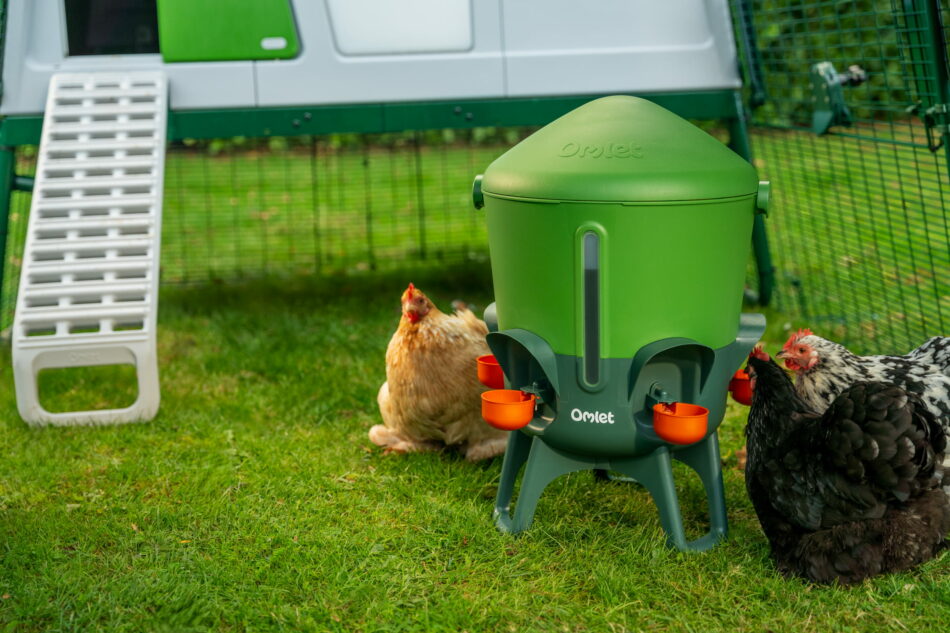
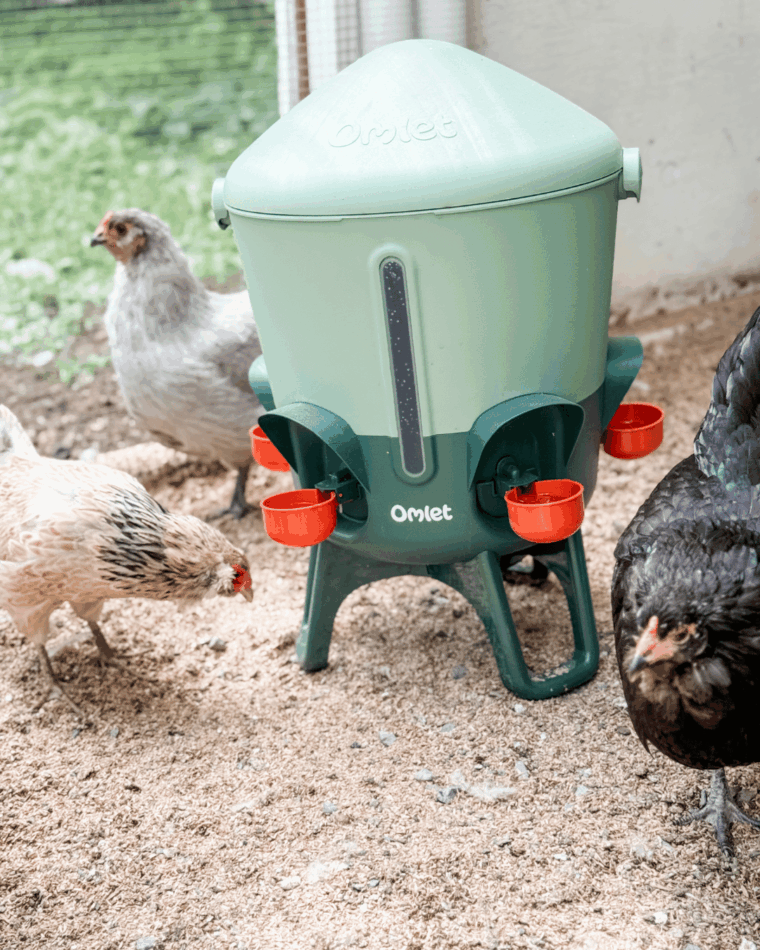
For Jude, that means thinking a lot about waste. What gets used properly, what goes back into the garden, and what definitely shouldn’t be ending up on the floor of the chicken run. That’s exactly why the Smart No Waste Feeder has become such a useful part of his setup.
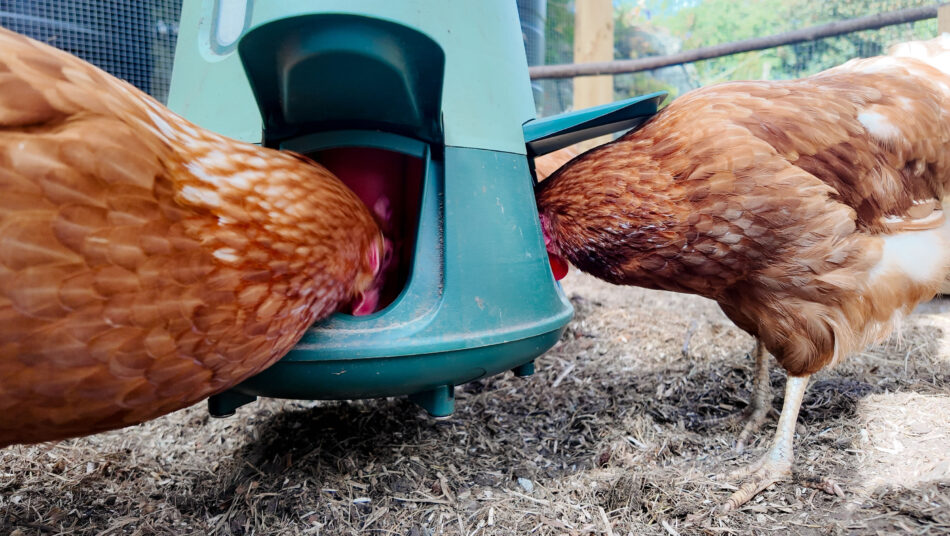
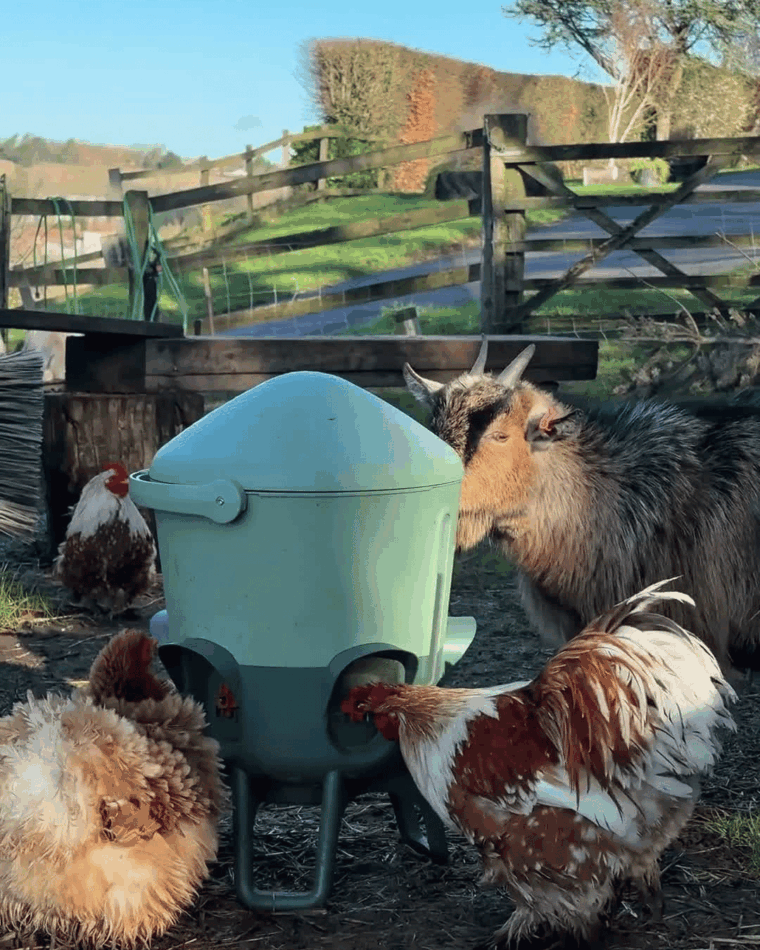
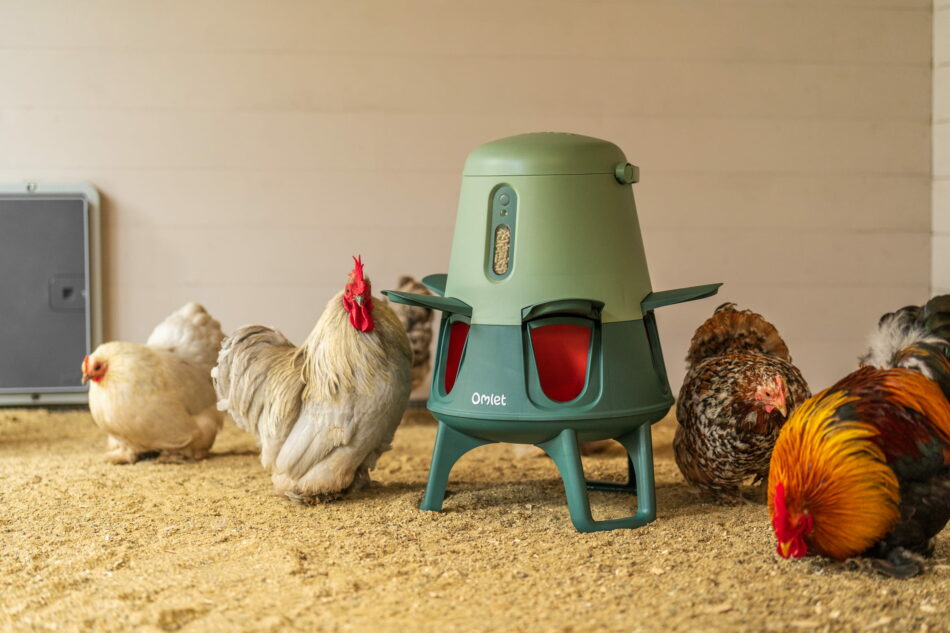
Anyone who keeps chickens will know they are not known for their table manners. Feed has a habit of travelling: scratched out, pecked around, flicked onto the ground and trampled into the ground. And once that happens, it’s no longer doing the job you bought it for. That’s what Jude appreciates about the Smart No Waste Feeder.
“There’s definitely never anything on the ground underneath,” he says, “which is great, because if you’re buying chicken feed, chickens might as well eat it.” It’s a simple point, but an important one. No waste feeding isn’t just about things looking neat. It means feed stays clean, dry and available to your hens, rather than disappearing into the floor of the run or getting spoiled by the weather.
That practical side matters even more when you think about pests. Feed on the ground doesn’t just create a mess, it can act like a dinner invitation for rats, mice and wild birds. And in the countryside, those opportunists are never far away.
“There are rats in the area because, I mean, it’s the countryside,” Jude says. “My neighbours will say sometimes, ‘Ooh, the rats are back!’”But Jude is quick to point out that the problem hasn’t come anywhere near his chickens: “I haven’t seen any rodents around the chicken coop or feeder… It’s nice to not have temptation lying around.” That really gets to the heart of it. The point is not to pretend wildlife doesn’t exist, it’s to avoid creating the kind of setup that makes your run inviting in the first place.
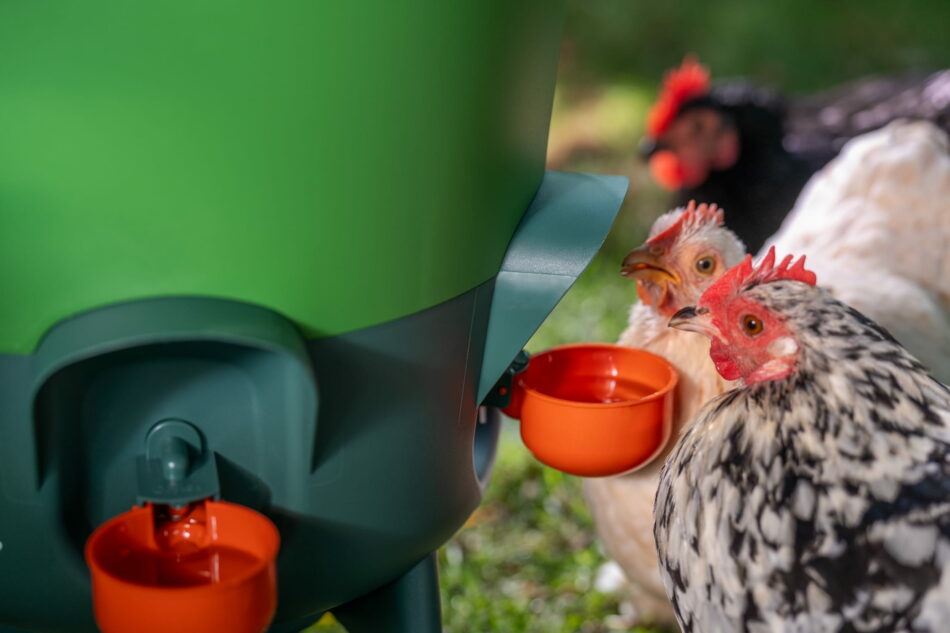
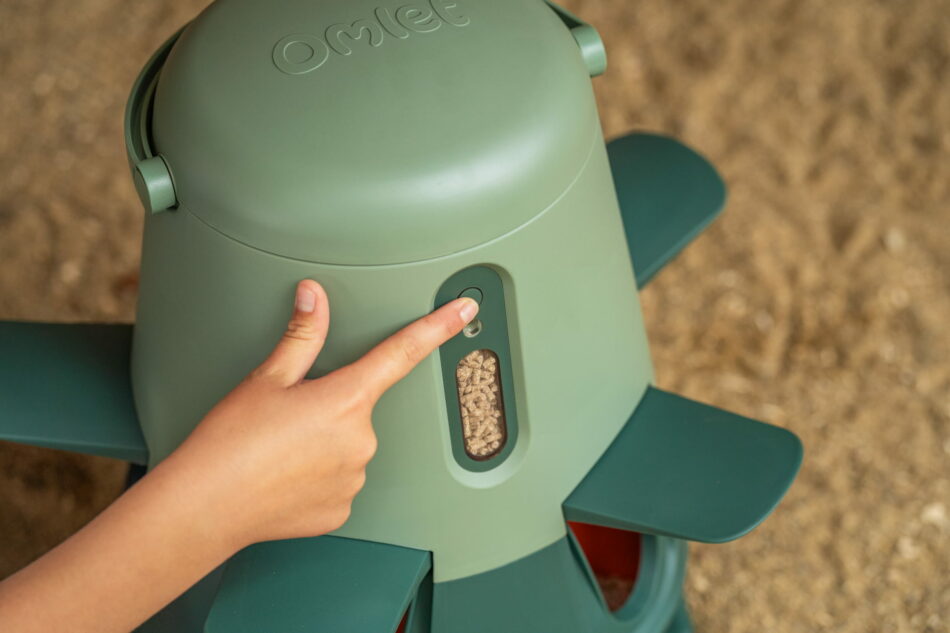
The design of the Smart No Waste Feeder plays a big part in that. Jude says his hens took to it straight away: “They worked it out really quickly and had no issues whatsoever.” That’s exactly how the best chicken-keeping products should feel – easy for chickens, easy for people, and quietly effective in the background.
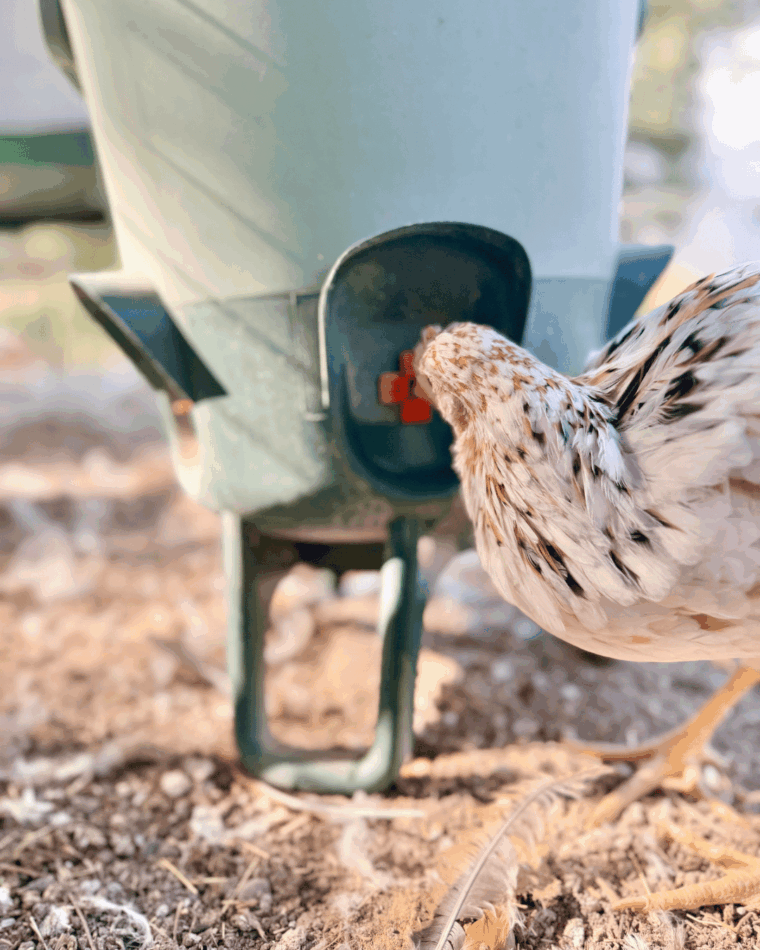
He also noticed how the Feeder’s shape helps keep food protected. “Chickens have to kind of get their head in a bit more to get the feed, which is fine if you’re a chicken, but harder, I think, if you’re a rodent or another kind of animal.” It’s one of those clever design details that does a lot without shouting about it. Jude keeps his feeder hanging in the run, which suits his setup and helps keep everything raised off the ground, dry and clean. He also likes knowing it’s one less thing to worry about in the evening: “That’s a job you don’t have to worry about… it’s not tempting anything in the night.”
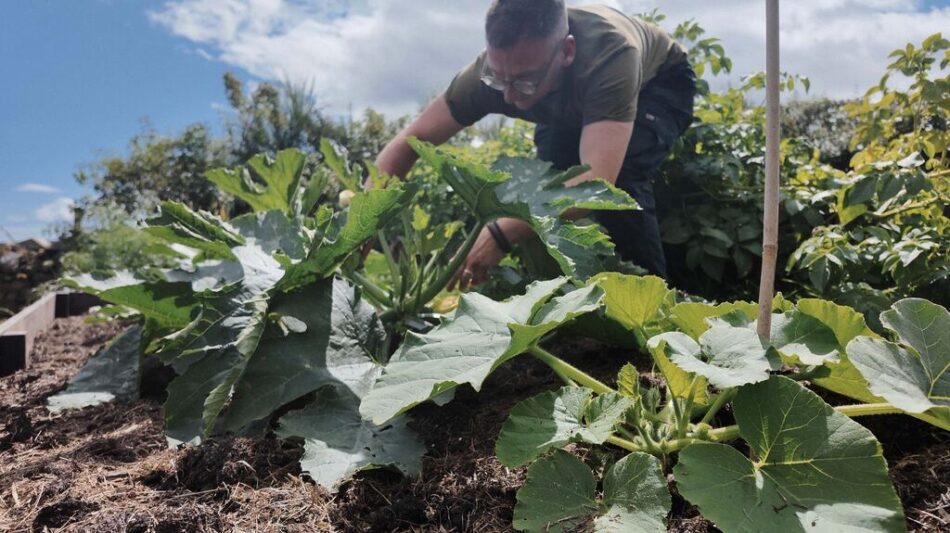
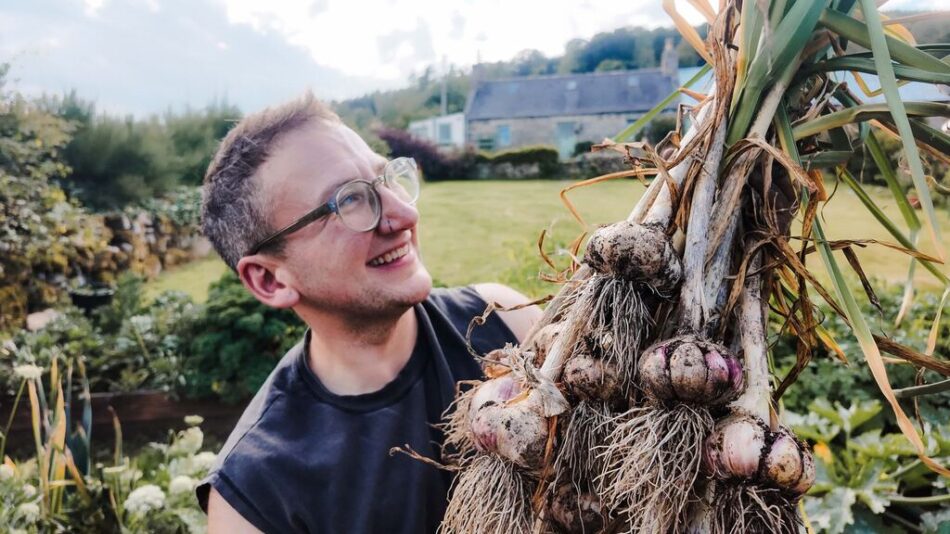
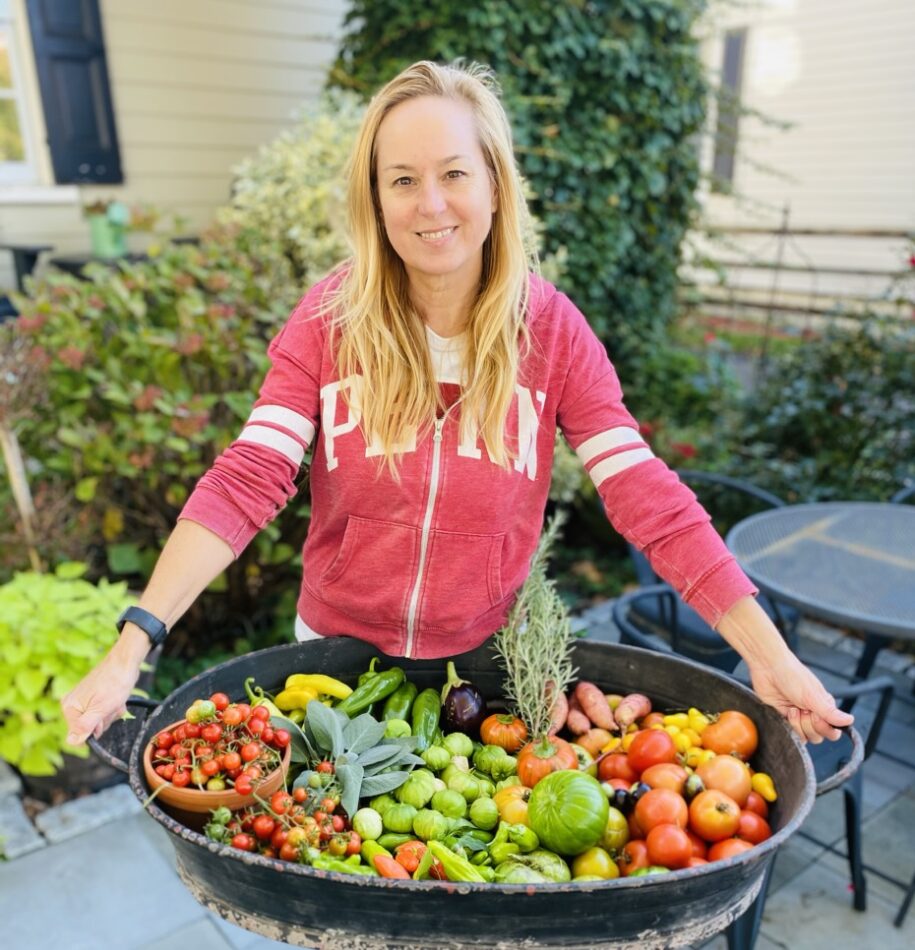
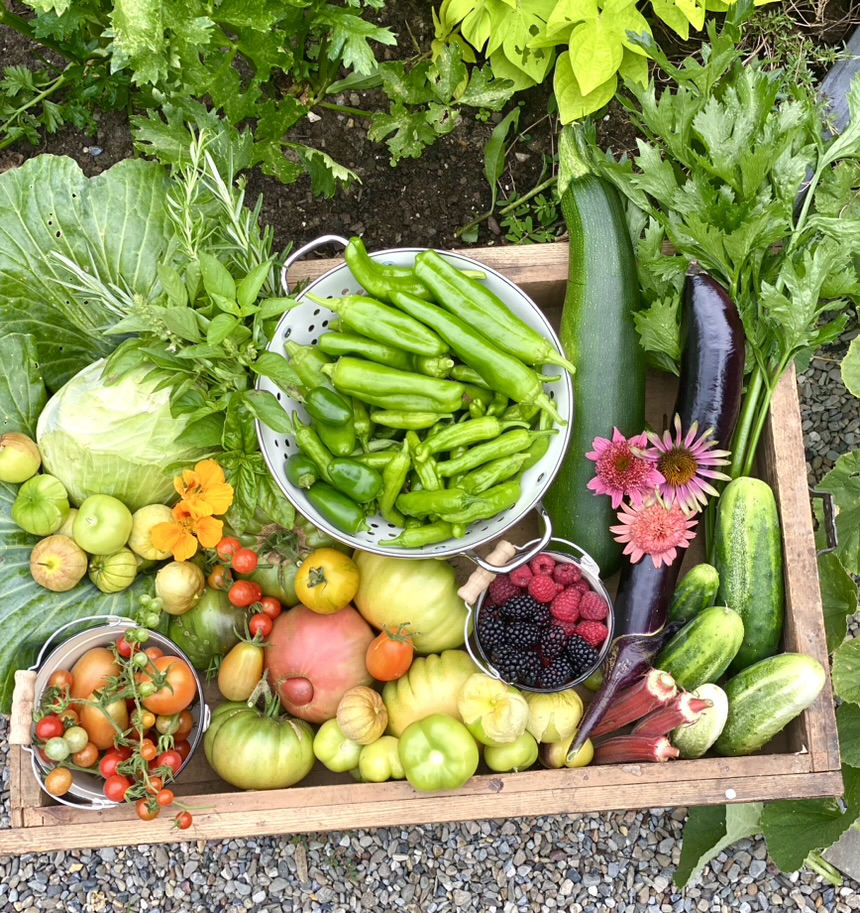
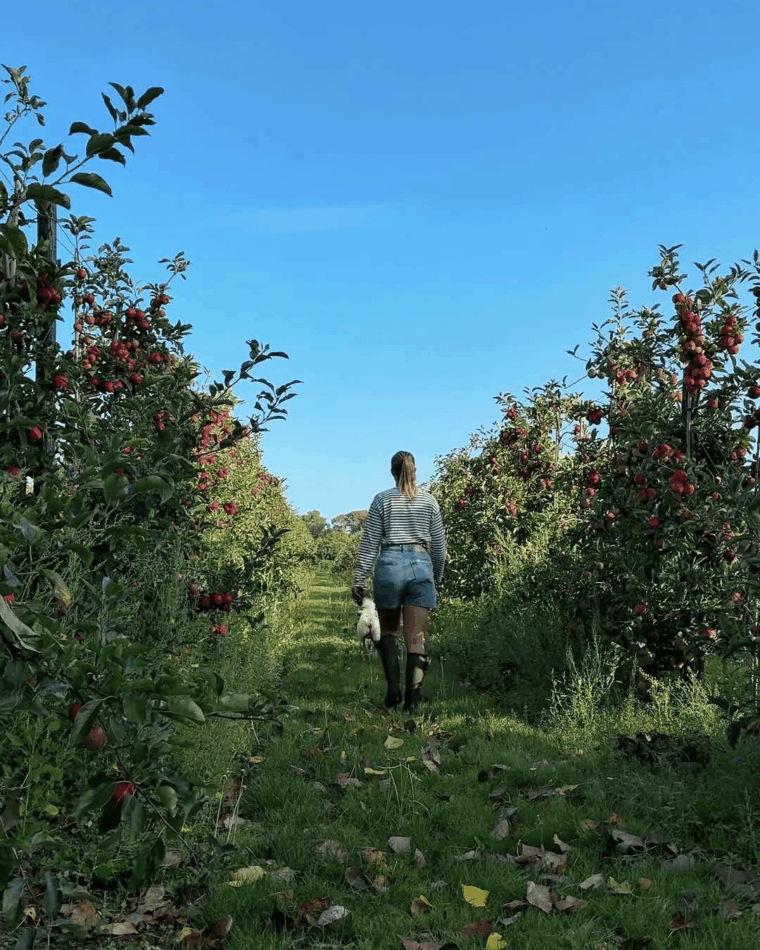
What makes Jude such a natural person to talk to about avoiding waste is that the idea runs through so much of his life already. Long before the chickens arrived, he was composting and growing his own food. What started with pots and a tiny garden has gradually become something much bigger: berries, carrots, onions, garlic, salad leaves, courgettes and whatever else the season allows.
But, as ever, he’s refreshingly realistic about it. “I am not fully self-sufficient,” he says. “I think being completely self-sufficient is incredibly hard to achieve for one household, let alone one person, but I do what I can!” That honesty is part of why his way of doing things feels so approachable. This is not about doing everything perfectly, it’s about making thoughtful choices, building habits slowly and noticing where waste happens.
That thinking extends to the chickens too. Some of what Jude grows can go straight from the garden to the run – berries are a particular favourite.
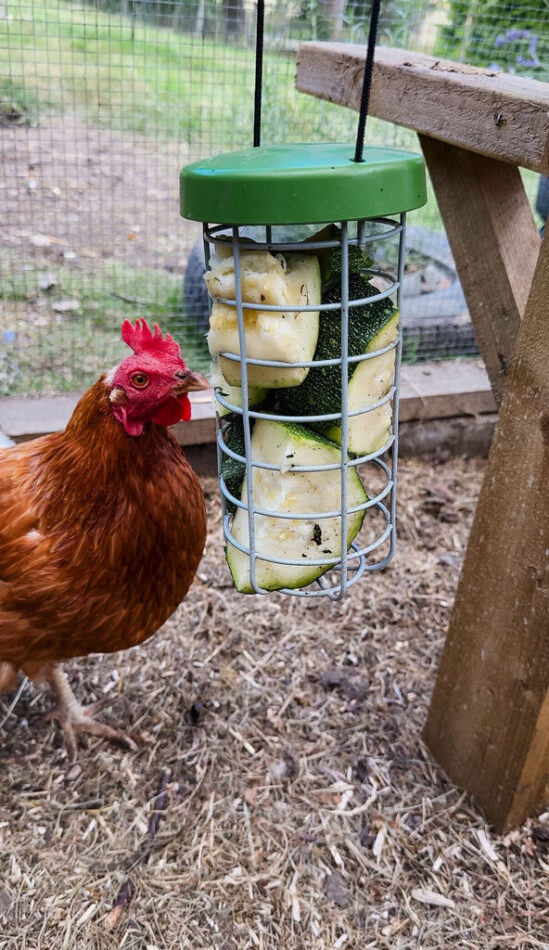
He says his hens love strawberries, redcurrants and blackberries, and homegrown courgettes can go down equally well when they get a bit overenthusiastic in the garden. It all fits into the same wider loop: compost feeding the soil, soil feeding the garden, the garden feeding the household and the hens, and the hens giving something back in return. It’s not polished or performative. It’s just a good, sensible system that makes use of what’s already there.
And that’s really why the Smart No Waste Feeder makes so much sense in Jude’s world. When you’ve put time into growing food, making compost, reusing what you can and learning how to live a little more seasonally, wasted feed starts to feel particularly unnecessary. It becomes part of a bigger picture: using things properly, protecting what you’ve paid for, and not accidentally feeding every passing pest at the same time.
Like the rest of Jude’s story, none of this is about getting it perfect first time. It’s about making one good change, then another, and letting those changes build into something that works. Sometimes that means learning how to grow raspberries or carrots, and sometimes it means choosing a feeder that quietly solves several problems at once. The beauty of the Smart No Waste Feeder is that it does exactly that – it keeps feed where it belongs, helps keep pests away, and makes the whole setup feel more under control.
For farmer, author, and regenerative agriculture pioneer Joel Salatin, chickens can do far more than lay eggs. Given fresh ground to explore, they can help transform a garden or stretch of land, one patch of grass at a time. At Polyface Farm in Virginia, USA Joel has spent decades moving animals across pasture in a rhythm that benefits both flock and land. Chickens get fresh grass, insects, and new things to peck at, while their manure returns nutrients to the soil before the ground is left to rest and regrow.
It’s a big idea with a surprisingly backyard-friendly application. Even on a smaller scale, regularly moving a chicken coop can turn a well-worn lawn into a more interesting, productive space for chickens and a healthier garden over time.
Why keep chickens moving?
For Joel, it comes down to hygiene. “Animals aren’t potty trained,” he says.“They tend to develop a toilet and they tend to walk through their toilet.” Leave chickens on the same patch for too long and manure builds up, which is less hygienic for the flock, and too much nitrogen in one place can overwhelm the grass beneath them.
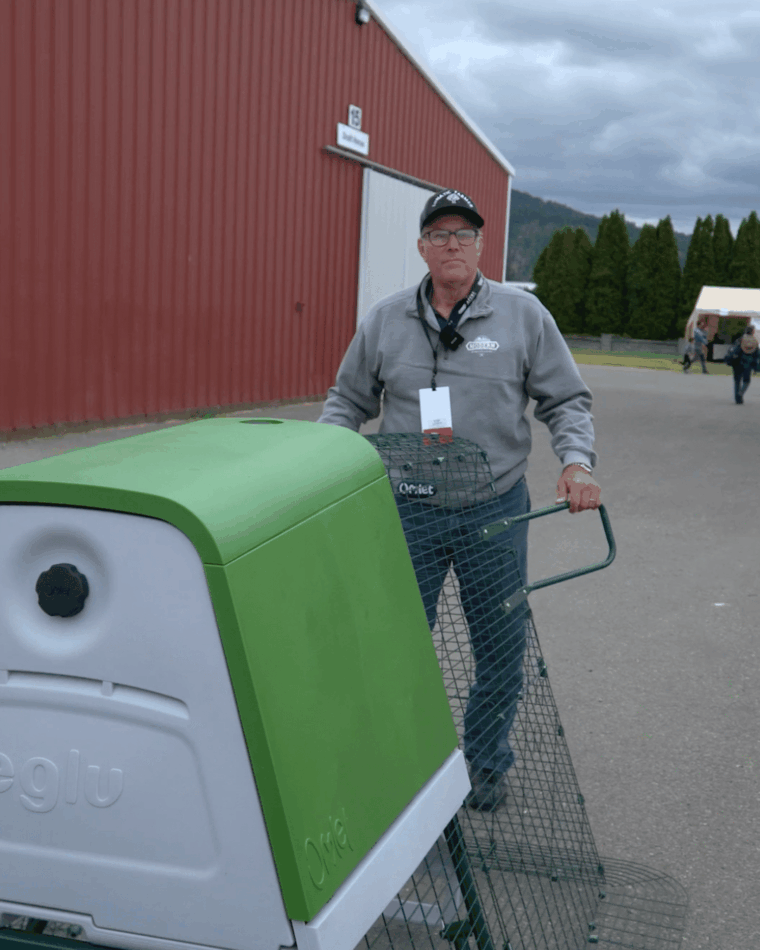
Moving chickens onto fresh ground breaks the cycle. “The more often you move them, the better, to move them away from yesterday’s manure,” says Joel. “I’m a big believer in daily moves. I just think there’s nothing like it, and it’s the best way ensure hygiene, sanitation and wellness.” A movable coop makes that much easier. All of Omlet’s Eglu chicken coops can be fitted with wheels and handles, so you can reposition the coop and run around the garden without taking the entire setup apart. For the chickens, it is a fresh patch to explore. For the lawn, it is a chance to catch its breath.
A new adventure, a new salad
Fresh pasture isn’t just about what chickens leave behind, it’s also about what they find when they arrive. “Animals will always eat dessert first,” says Joel. Give chickens a new patch of grass and they will head straight for the good stuff: tasty plants, bugs, seeds, and whatever else catches their eye. Leave them there too long and, as Joel puts it, “they’re then into garbanzo beans, liver and onions.” Moving the flock resets the menu. “Moving them every day provides a new adventure, a new place, a new salad, and away from yesterday’s excrement.“
It is enrichment without needing to overthink it. New ground gives chickens fresh places to scratch, peck, forage, and investigate, which is exactly what chickens like doing best. Joel also points to one change many keepers notice when their hens regularly forage on fresh ground. “The beauty of the pastured egg is the carotenes, the phytochemicals in the grass,” he says. “One thing you’ll notice is the yolks will get darker.” Grass is not a complete replacement for chicken feed, of course. Think of it as the salad bar alongside a balanced main meal.
How often should you move a chicken coop?
There is no one-size-fits-all answer. A small run with several chickens will need moving more often than a larger area with only two or three birds. Joel favours daily moves where practical, but the best guide is the ground itself. If the grass is looking worn, trampled, or heavily manured, it’s time to move before it turns into a bare patch.
It’s just as important to leave each patch to recover for long enough. “You need to rest the land at least 21 days, preferably 30, in order to actually get enough rest,” Joel explains. That gives grass a chance to regrow before the chickens return. It also helps prevent the same ground from becoming a permanent chicken bathroom, which nobody wants.
If you don’t have room to give each patch a proper break, Joel doesn’t recommend endlessly shuffling chickens between the same few tired spots. Instead, he suggests changing the system. “If the space is that tiny, I would go stationary and deep bedding.” A stationary setup needs a genuinely deep layer of bedding, with enough material for microbes to establish and decomposition to take place. Joel suggests more than six inches. The point isn’t that one system is better than the other. It’s about choosing one that works for the space you actually have.
Chickens can work wonders for your lawn
Done well, the relationship goes both ways. The chickens get fresh ground to explore. The ground gets chickens. As your flock moves around the garden, their manure is spread more evenly instead of building up in one spot. “You’ll have the prettiest lawn in the country because you’re painting it with nitrogen,” Joel laughs. “There’s nothing that grows lush grass like a chicken.”
That’s the big idea behind Joel’s approach. Don’t treat the chickens, coop, and garden as separate things to manage. Let them work together. The chickens forage, the ground gets fertilised, the grass recovers, and then the flock comes back to a fresh new patch.
Don’t forget the feed
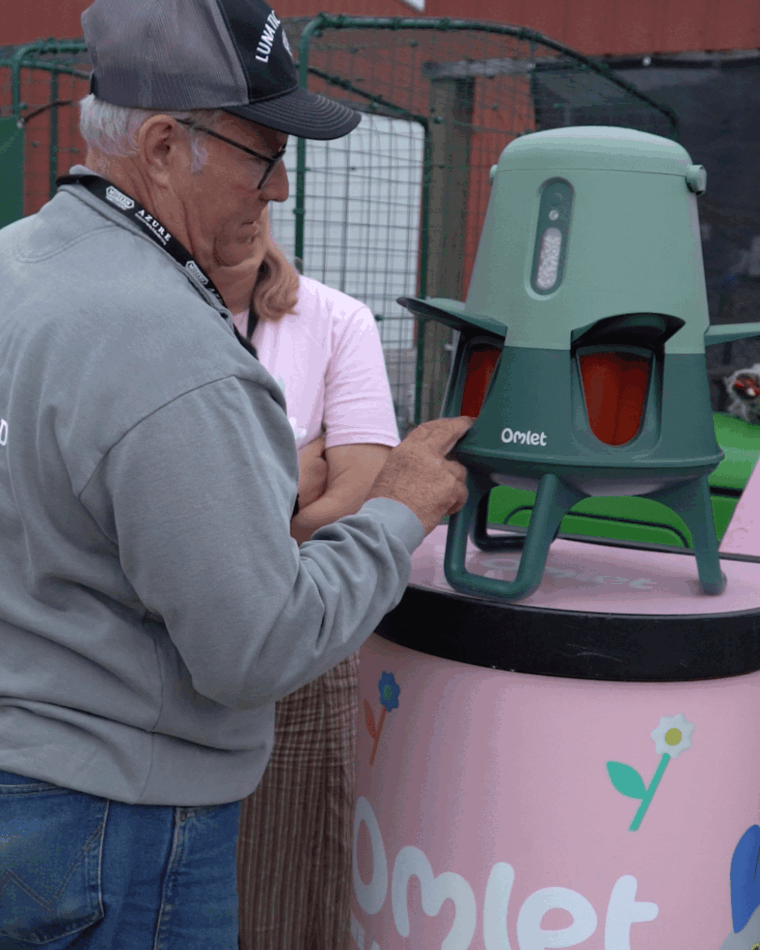
Fresh pasture is only part of the picture. Chickens still need a nutritionally balanced main diet, and wasted feed can add up quickly. When we showed Joel Omlet’s Smart No Waste Chicken Feeder, his reaction was immediate. “Wow, now this I like! This is very good.” For Joel, it solves a real problem. “Wasted feed is a huge problem, and it adds up, this is really solving that waste problem.” The Smart No Waste Feeder helps keep food contained rather than scattered across the run, which means no mess, no waste, and no rodents.
Fresh ground, happier chickens
Joel’s advice comes back to a simple idea: chickens thrive when their world changes with them. Moving a coop gives your flock fresh grass to scratch through, new things to peck at, and a cleaner patch to call home. It also gives your lawn time to recover, spreads nutrients more evenly, and turns everyday chicken keeping into something that benefits the whole garden.
Not every garden has the space for daily rotation, but for chicken keepers who do, a movable setup makes the difference between a coop that stays put and one that works with the natural rhythms of the flock. With wheels and handles available on all Omlet Eglu chicken coops, it’s easy to move your chickens onto a fresh patch of grass, then let the ground behind them rest, regrow, and get ready for their next visit.
Best known for his soulful voice and chart-topping songs including September Song, JP Cooper spends much of his life creating music. But at home, life looks a little different. Between homeschooling, raising three children and looking after a growing flock of chickens, the singer-songwriter has discovered that some of life’s biggest moments of inspiration come from slowing down. What started as a project for his children has become something much bigger.
JP’s journey into chicken keeping began thanks to his sister, a teacher who runs hatching projects in schools. After seeing how naturally his son Leo connected with the newly hatched chicks, JP and his wife decided to bring the experience home. “They seemed to instantly really calm him down,” JP says. “We thought, let’s do it ourselves.” Initially, it was all about giving their children responsibility, routine and another way to learn while homeschooling. “I thought, you know, this is something for the kids,” he laughs. “But I actually think I’m enjoying the chickens more than anybody.”
That unexpected twist has become one of the biggest surprises of keeping chickens. Like many first-time owners, JP expected them to be hard work. “Every time we get pets I’m always kind of like, ‘Why the hell have we done this?’” he jokes. “But this has really surprised me.” Instead of becoming another task on the to-do list, the flock has become a daily opportunity to slow down. “There’s something about just watching them do their thing that sort of slows me down,” he says. “I’m searching for the things that help my brain be present.” For someone balancing family life with a busy creative career, that pause has become invaluable. “If you’re not allowing yourself time to switch off all the noise in your head, there’s no room for new ideas and new inspiration.”
The chickens have also become an unexpected anchor for family life. Every morning, Leo pulls on his Crocs and heads straight outside to let them out. “The first thing he does nearly every single morning is go out the back door and let the chickens out,” says JP. “It’s become part of our morning and we absolutely love it.” For Leo, who is autistic, it’s a routine he chooses himself. Rather than being told to go outside, the chickens naturally spark his curiosity. “He’ll follow them around, then he’ll spot a bug on a rock and become interested in that. They’re just a great entryway to the garden.” It’s a simple ritual, but one that encourages time outdoors, child-led learning and moments of calm for the whole family.
JP admits he had all the same worries many prospective chicken keepers have. He thought they would smell, be messy and create extra work. Instead, he says, “It’s just so, so, so easy.” Cleaning takes minutes, the Eglu Pro Chicken Coop stays remarkably fresh, and the overall Omlet setup has made everyday jobs even simpler. “The Smart Feeder closing at night… it’s just a game changer,” he says. “It couldn’t be easier. I think that’s the biggest surprise I’ve had.”
Although the family’s hens haven’t started laying yet, JP already feels they’ve given them something far more valuable than fresh eggs. They’ve encouraged the whole family to spend more time outdoors, inspired dreams of growing their own food and reminded him to appreciate life’s quieter moments. “My dream has always been to disappear one day and live simply with my family, have some animals and grow our own vegetables,” he says. “The world feeds us this idea that you need this and you need that to be happy. But actually, when you boil it down to our basic needs, we’re not that complicated.”
For now, that simpler life starts with a coffee in hand, opening the coop door and watching the chickens wander into a new day. “I got them thinking they were for the kids,” JP says. “But they’ve given so much back to me.” JP has even started taking his guitar into the coop for some music time with his flock. Check it out.
When the weather heats up, most chicken keepers instinctively think about shade, frozen treats and keeping water cool. Come winter, the focus shifts to insulation and keeping the cold at bay.
But according to Lyndsey Gaskins, founder of The Chicken School, one thing deserves your attention no matter the season: ventilation. “Interestingly, ventilation is one of the biggest priorities in both seasons,” says Lyndsey. “Just for different reasons.”
It’s a simple point, but one that’s often overlooked. Many new chicken keepers think ventilation is only important in summer, or worry that letting air into the coop during winter will make their flock cold. In reality, good airflow plays a vital role in keeping chickens healthy all year long.
Summer: Keeping cool when temperatures soar
Living in Utah, Lyndsey regularly experiences summer temperatures climbing over 38°C. While the dry climate helps a little, she says heat is still one of the biggest challenges chicken keepers face.
“Healthy chickens handle cold remarkably well when they’re dry and protected from wind,” she explains. “Heat is much harder because chickens don’t sweat. They rely on panting and releasing heat through their combs and wattles to cool themselves down.”
Without adequate airflow, heat quickly builds inside a coop, making it much harder for chickens to regulate their body temperature. That’s why Lyndsey says ventilation works hand in hand with shade and fresh, cool water during the hottest months. “I’d much rather prepare for a heatwave than react to one.” She also encourages owners to watch their flock closely, rather than relying solely on the weather forecast.
“Panting is usually the first thing I notice. I’ll also watch for wings held away from their bodies, reduced activity, hanging out in the shade all day or less interest in eating.One thing I’ve learned is that chickens are pretty good at telling you when they’re uncomfortable – you just have to know what you’re looking for.”
The Omlet Insulated Chicken Drinker has also become part of Lyndsey’s year-round routine. “Keeping water cooler for longer has been one of the biggest benefits,” she says. “On really hot days, chickens drink a surprising amount, so having clean, fresh water available all day is essential.” She also appreciates that it helps keep water cleaner for longer, meaning less time worrying about debris or algae building up in the heat.
Winter: Fresh air still matters
As temperatures begin to fall, it’s tempting to close everything up to keep the coop warm. But Lyndsey says that’s one of the biggest misconceptions she sees. In winter, ventilation serves a different purpose. In winter, ventilation isn’t about cooling chickens down. It’s about removing moisture. As chickens breathe overnight, they release warm, damp air into the coop. Without fresh airflow, that moisture builds up, creating damp conditions that can lead to discomfort and health issues.
Instead of sealing the coop completely, Lyndsey recommends focusing on blocking harsh winds while still allowing fresh air to circulate above the birds. “Winter is all about keeping them dry and providing good ventilation while blocking harsh winds.”
A setup that works, whatever the weather
Having used the Omlet Eglu Pro chicken coop through both Utah’s hot summers and freezing winters, Lyndsey has been impressed by how it helps her flock stay comfortable year-round. “One thing I’ve appreciated is how well the Eglu coop promotes airflow while still giving the flock a secure place to rest.”
She has also noticed changes in how her chickens use the coop throughout the day. “They seem more comfortable throughout the day and don’t crowd together looking for cooler spots nearly as much. They still spend plenty of time outside scratching around, but they always have a comfortable place to retreat to when they need it.”
For Lyndsey, it’s that year-round consistency that gives her peace of mind. “As someone who worries about my chickens probably more than I should, it’s reassuring knowing they have that extra layer of protection from both heat and cold.”
Think ahead, not behind
One of the biggest lessons Lyndsey teaches through The Chicken School is to prepare before the seasons change, not after.
As summer draws to a close, she recommends giving your coop a thorough check, making sure ventilation is working properly, inspecting drinkers and feeders, and testing any automatic equipment while the weather is still mild. It’s also the perfect time to think ahead to winter. While the Omlet Insulated Chicken Drinkerhas helped keep water cooler during Utah’s hot summers, its insulated design also helps slow water from freezing as temperatures begin to drop, making it a useful addition whatever the season.
“My biggest advice is simple: don’t wait for the weather to change before you prepare. A little planning makes seasonal transitions much easier on both you and your chickens.”
Whether you’re heading into a late-summer heatwave or preparing for the cooler months ahead, one thing remains the same. Good ventilation isn’t just a seasonal feature – it’s one of the foundations of a healthy, happy flock all year round.
Seventeen years ago, Lisa Steele started a blog because she was answering the same chicken-keeping questions on Facebook again and again. At the time, backyard chickens were becoming increasingly popular in the US, and people wanted to know how to get started. Her solution was simple: write her advice down once and send people a link. “I thought, ’10 or 20 articles and I’ll be good’, I had no idea how much it would grow.” she laughs.
Those blog posts eventually became Fresh Eggs Daily. More than 700 blog posts, multiple books and countless hens later, Lisa has become one of the most recognisable voices in backyard chicken keeping. We spoke to the fifth-generation chicken keeper about what she’s learned along the way – and why, despite all those years of experience, the best chicken-keeping advice is often the simplest.
Chicken keeping doesn’t have to be complicated
Lisa didn’t set out to become a chicken expert. Growing up in Massachusetts, she lived across the road from her grandparents’ chicken farm and spent her childhood around animals. But it wasn’t until later in life, after moving around with her husband’s Navy career, that she started keeping chickens herself.
As more people began raising backyard flocks, Lisa noticed a common theme: many new keepers were overthinking it.“I think people are surprised at how easy it really is,” she says. “Once people get them and work out the routine and find out how everything works, they stick with it.”
Many of the questions she was answering in 2009 are still the questions she hears today. Do hens need a rooster to lay eggs? Why won’t my hen leave the nesting box? What happens when it gets cold in winter? For Lisa, the answer is usually the same: learn the basics, observe your flock and don’t be afraid to adapt as you go.
Prevention beats panic
One of the reasons Fresh Eggs Daily struck a chord with chicken keepers was Lisa’s focus on prevention rather than reacting to problems once they’d already appeared.
“A lot of the information I was reading back then was basically, get your chicks, feed them, give them water and if they die, get another one,” she says. “And I was like, wait, there has to be a more proactive way to do this.” That led her down a rabbit hole of research into natural animal care, herbs and nutrition. She became interested in the idea of supporting chickens before they became sick rather than waiting until there was a problem to solve.
It’s a philosophy she still follows today. “I kind of treat my chickens the same way I treat myself,” she explains. “You take and eat certain things to stay healthy, not just when you’re unwell.“
That mindset eventually inspired her own range of Fresh Eggs Daily poultry products, including an electrolyte powder. “I was making it myself at home with sugar, salt and baking soda and just keeping it in a container, and then thought, I could sell this!” she says. “It’s important to keep on hand. Not just in summer, but if you have chicks that have been shipped, if a chicken has been injured, or really any stressful situation.”
Chickens are tougher than most people think
Despite the number of winter-related questions she receives, Lisa believes people often underestimate how resilient chickens really are. When she moved from Virginia to Maine over a decade ago, plenty of people questioned whether her flock would cope with the freezing winters.
“When we moved to Maine, people said, ‘Are you still going to raise chickens because it’s really cold there?’ But the chickens are so much happier here,” she says. “They handle the cold so much better than the heat.”
One winter morning, temperatures dropped to -27°C. “I was worried they might not have made it through the night! But they all came right out, ate their breakfast, had something to drink and carried on. They went back inside afterwards, but they were far less bothered by the cold than I was.” The experience reinforced something she now tells new keepers regularly: chickens are often much hardier than we give them credit for.
Cool Summer
That’s not to say chickens don’t need a helping hand from time to time. In fact, one of the biggest lessons Lisa has learned is that summer can be more challenging than winter. “People tend not to worry so much about the heat,” she says.” And that’s really when it is more dangerous for the chickens.”
Keeping water cool for her flock is one of Lisa’s priorities during hot weather. Alongside regular water changes, she’s been using Omlet’s Insulated Chicken Drinker.
“I love the Omlet Drinker,” she says. “The design is really nice and sturdy. It’s easy to fill, and I’m excited because I can add my electrolytes right into it.” Lisa also likes that the insulated design helps keep water cooler for longer and suggests adding ice or frozen water bottles during particularly hot weather.
For Lisa, summer flock care is also about paying attention to your flock’s behaviour. “If you see them standing with their mouths open, holding their wings out from their body, sitting down a lot or standing with their eyes closed, those are signs that they need a little extra help,” she explains. Alongside cool water, good ventilation, shade and hydrating treats can all help chickens stay comfortable when temperatures rise.
Lisa’s advice remains refreshingly straightforward: start with good information, focus on prevention and don’t overcomplicate things. Whether you’re bringing home your first hens or caring for a long-established flock, the basics still matter most.
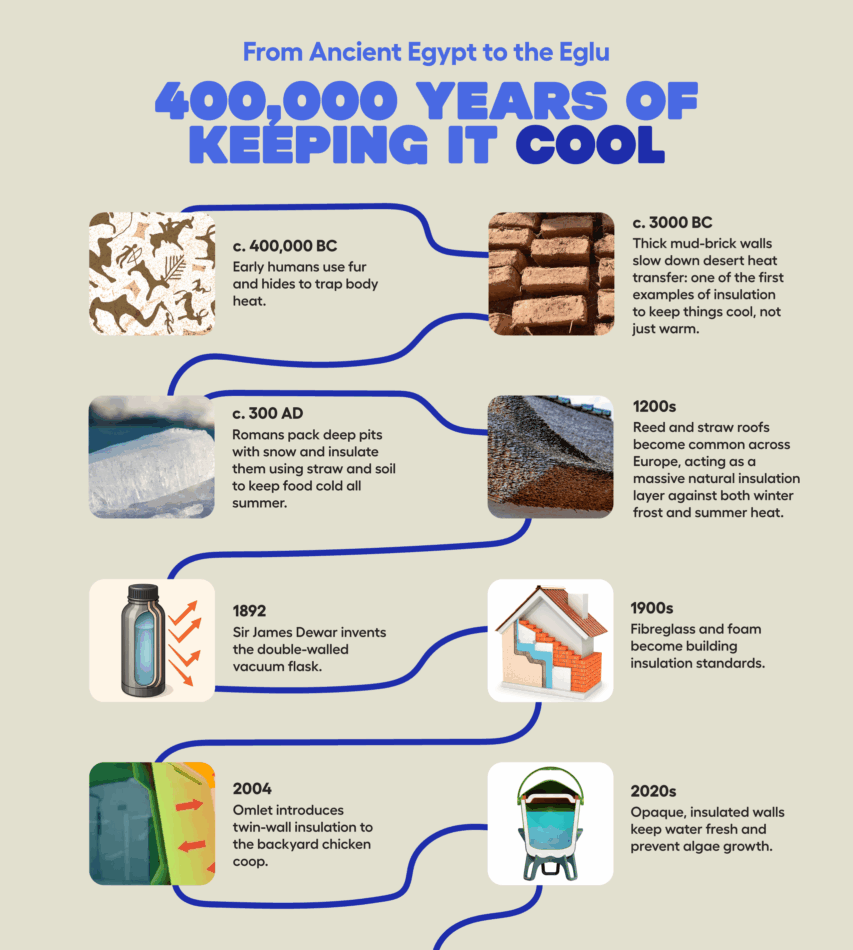
For as long as humans have built shelters, we’ve been trying to outsmart the weather.
From mammoth hides stretched over Ice Age frames to sheep wool stuffed into medieval walls, the quest for keeping things warm, or cool, has driven thousands of years of ingenuity. By the start of the 21st century, we’d become pretty good at insulation. We’d wrapped it around our homes, stitched it into our clothing and built it into products we use every day.
Chicken coops, however, seemed to have missed the memo. When Omlet co-founder James first started keeping chickens, he did what most first-time chicken keepers did: he built a traditional wooden coop. Like most people, he quickly discovered its flaws. It got damp, it was awkward to clean and red mites seemed to view it as a luxury apartment.
There had to be a better way
At the time, James was studying Industrial Design Engineering – a discipline that combines engineering with product design. “Good design is all about choosing the appropriate material.” he says. That simple idea would eventually become the foundation of the Eglu.
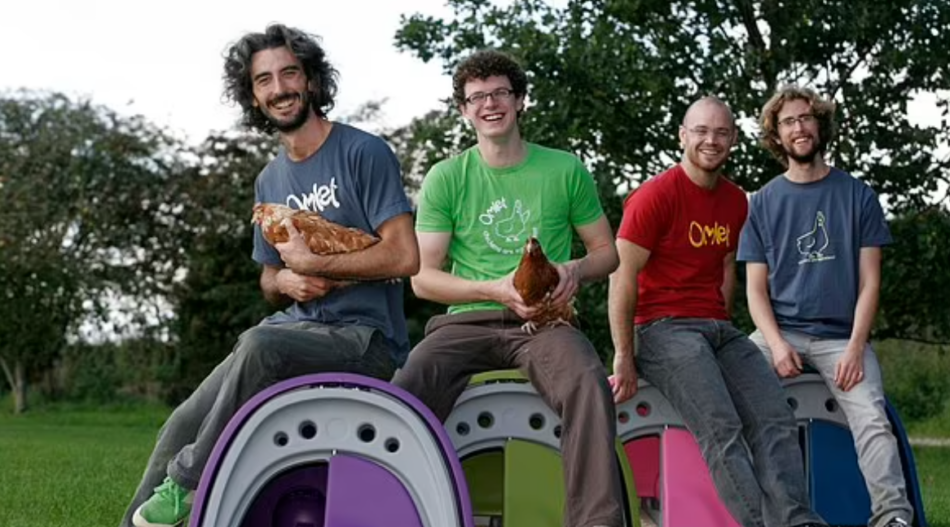
(L-R) Hanns, James, Simon and Will in the early days of Omlet.
The road trip
After university, James teamed up with fellow design graduates Simon, Hanns and Will. Together, they set out to rethink chicken keeping from the ground up. Their first step? A road trip around plastic moulding factories.
Not quite as glamorous as inventing the next smartphone, but for Omlet it turned out to be a pivotal moment. The team visited manufacturers producing everything from industrial components to marine equipment, looking for ideas that could solve the problems they’d experienced with traditional coops. By the end of the trip, they’d found one. As James recalls, “By the time we came back, we were like, ‘Oh my God. Hollow plastic mouldings are totally amazing.”
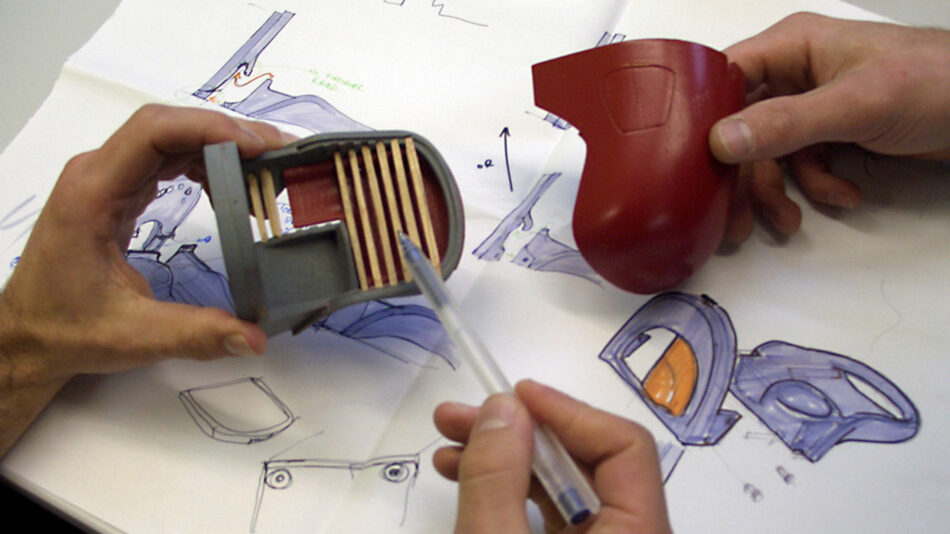
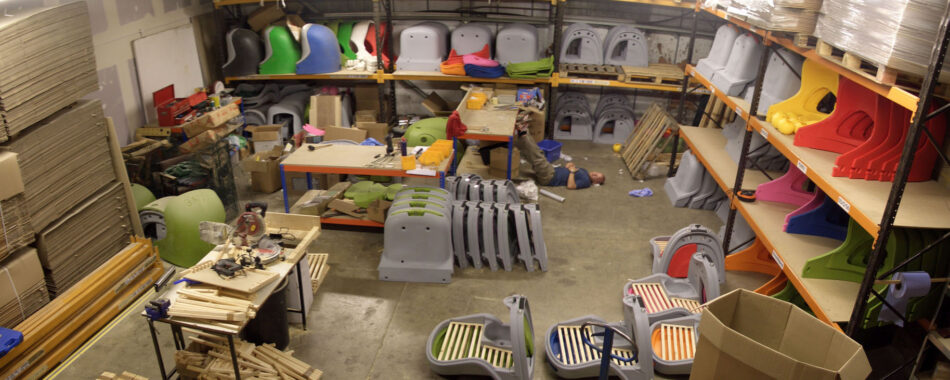
Early sketches and mini models of the first Eglu coopThe first warehouse
The breakthrough wasn’t simply that plastic was different from wood, it was that twin-wall construction solved multiple problems at once. The hollow walls trapped a layer of air, creating an insulating barrier, while the material itself was strong, easy to clean, resistant to moisture and could be moulded into smooth surfaces without the cracks and crevices that red mite love. One design decision solved a surprisingly long list of problems.
More than just warmth
When people hear the word insulation, they tend to think about winter. In reality, it works both ways, helping keep heat out in summer and warmth in during winter. But the trick wasn’t turning the Eglu into a giant thermos flask. Chickens need fresh air just as much as they need protection from the elements, which is why ventilation was designed into the Eglu from the very beginning.
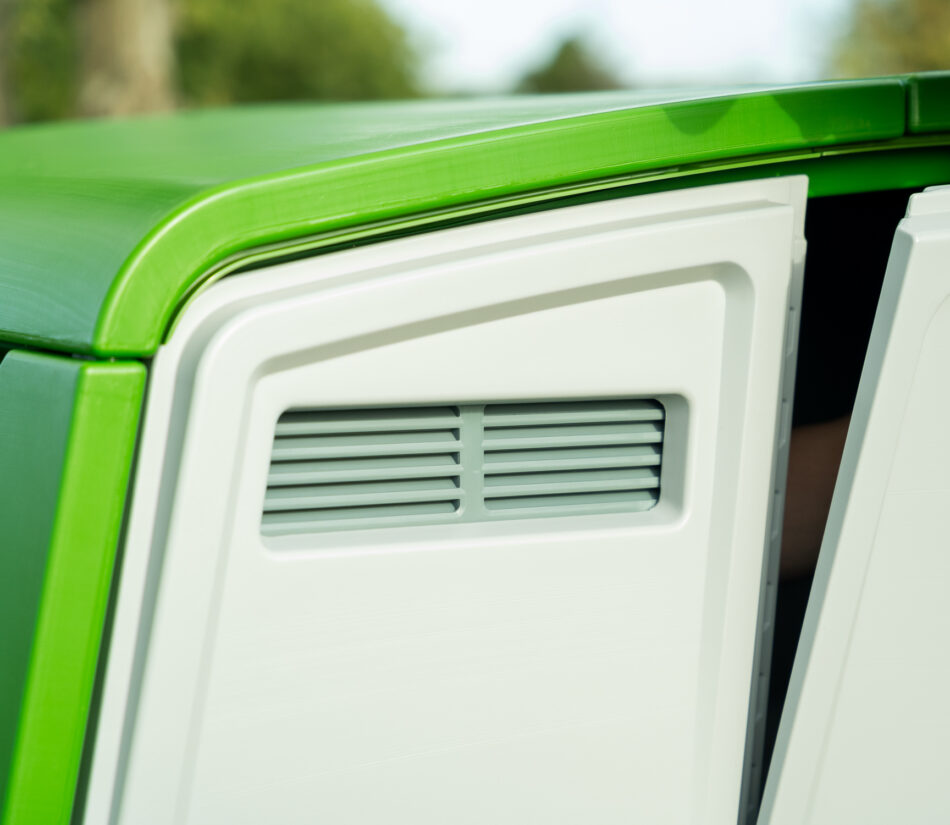
As Omlet Design Manager Josh explains, “Think about walking into a garden shed on a hot day. It’s stuffy, hot and the air feels stagnant.” Traditional coops can suffer from exactly the same problem. The Eglu’s twin-wall construction slows the transfer of heat, while carefully positioned vents keep fresh air moving through the coop. Together, they help regulate temperature, manage moisture and maintain airflow all at once.
The clever bits you never notice
Most Eglu owners probably don’t realise there are more than 15 patented design features hidden inside their coop. Tiny details help direct rainwater away from the coop. Structural features add strength without adding unnecessary weight. Ventilation systems quietly do their job in the background. There are even specially designed channels that stop water creeping into places it shouldn’t. That’s often the hallmark of great design: when something works so well, you stop thinking about it.
Designed for Britain. Loved everywhere.
The Eglu was originally designed for British weather – cold, damp and often unpredictable. What surprised the team was how well the same design worked elsewhere.
As Omlet expanded around the world, customers began reporting benefits the designers hadn’t specifically planned for. In places like Florida, owners praised the coop’s resistance to humidity, moisture and pests. Others found its robust construction stood up impressively well to extreme weather such as storms.
It turns out that if you design something to survive temperamental British winter, it’ll cope with quite a lot. The Eglu’s impact was even recognised beyond the world of chicken keeping, earning its place in the V&A’s Best of British Design exhibition alongside some of the country’s most iconic innovations. Not bad for a chicken coop.
From coop to cup
Over the years, one challenge kept cropping up in conversations with chicken keepers around the world: water. In winter, drinkers froze. In summer, they heated up quickly in the sun. Some keepers in hotter climates were even adding ice to their chickens’ water every day and it was still going warm. So, we invented the Insulated Chicken Waterer. Want to know the full story? Read it now.
The Eglu’s place in the history of insulation isn’t about inventing a new material or discovering a new scientific principle. It’s about asking a simple question: why are we still doing it this way? More than 20 years after James, Simon, Hanns and Will first set out to rethink the chicken coop, that question still drives Omlet’s design team today.
Most chicken keepers know the routine – breaking ice on winter mornings, adding ice cubes on hot summer afternoons. Scrubbing away algae. Refilling water that somehow seems dirty again five minutes later.
When Omlet started speaking to chicken keepers around the world, these frustrations came up again and again. What began as a conversation about frozen water quickly revealed a bigger challenge: keeping water clean, accessible and appealing to chickens all year round.
Over the next two years, that challenge would lead to customer visits across the UK and the US, hundreds of product testers, countless prototypes and some surprisingly extreme temperature tests. Here’s the story of how Product Research Manager, Rebecca and Design Manager, Josh transformed hundreds of conversations with chicken keepers into the Omlet Insulated Drinker.
The why
With Rebecca, Product Research Manager
Every Omlet product starts in the same place: with a question. Not “What should we make next?” But “What are chicken keepers struggling with?”
For the Insulated Drinker, that process began in 2023. Rebecca and the research team visited chicken keepers across the UK and the US, spoke to customers online, gathered feedback through surveys and worked closely with Omlet’s product testing communities.
“We begin by listening carefully to people who know their flocks best. Sometimes a single comment, routine, frustration or little hack can unlock a much bigger insight.” The team visited around 20–30 chicken keepers in person and continued gathering feedback from hundreds more through Omlet’s Curious Collective, surveys and product testing groups.
One topic kept coming up: water.
Not just keeping it available, but keeping it clean, fresh and at the right temperature. At first, the focus was winter. Chicken keepers told the team they worried about water freezing, particularly when they were away from home or relying on someone else to care for their flock. Many didn’t have access to electricity near their coop or run, making heated drinkers impractical. But as the research continued, a second challenge emerged…
“In summer, many chicken keepers struggle to keep water cool, fresh and clean. Some add ice, while others battle algae when drinkers sit in direct sunlight.” What started as a winter problem quickly became a year-round challenge.
What were chicken keepers looking for?
As Rebecca’s team dug deeper, a clear picture began to emerge. Chicken keepers weren’t just looking for a water container. They wanted a solution that would:
Keep water cleaner for longer
Help reduce algae growth
Stay stable on uneven ground
Be easy to clean and refill
Support temperature regulation in both summer and winter.
“What became clear was that there wasn’t really a solution that combined cleaner water for longer with support for temperature regulation.“
Expect. Seek. Discover.
At Omlet, every product brief is built around three principles:
Expect – Do the basics brilliantly.
Seek – Understand the problems flock keepers actively want help solving.
Discover – Deliver something people may not even realise they need until they’ve experienced it.
Only once those needs were clearly understood was the challenge handed over to the design team.
The how
With Josh, Design Manager
Once the team understood the problem, it was over to Omlet’s designers to find a solution.
The biggest challenge? Creating a drinker that could help keep water cooler in summer and slower to freeze in winter – without relying on electricity.
“The water will always be trying to get to whatever the outside temperature is. The insulation creates a barrier and slows that transfer down.”
The first idea didn’t work
Like many products, the Insulated Drinker didn’t arrive at its final design straight away. Early concepts explored twin-wall designs that relied on trapped air for insulation. “We tried using air and a twin-wall design on its own, but it wasn’t good enough.” While the design performed slightly better than a standard drinker, the results weren’t strong enough to meet the team’s goals.
After exploring different options, they settled on a foam-insulated twin-wall construction, with around 2.5cm of insulation helping to slow heat transfer between the water and the outside environment.
Putting It To The Test
Designing a product is one thing. Making sure it works in the real world is another. Some of the earliest versions of the Insulated Drinker were 3D printed at Omlet HQ and sent out to small groups of testers for feedback. “This is the stage where we tend to make the most changes. Sometimes one specific use case can change the direction of a project.”
As the design evolved, testing expanded across multiple countries, climates and flock setups. Before launch, more than 300 chicken keepers tested the drinker in the UK, Germany, France, Australia and the United States. The team gathered feedback on everything from assembly and cleaning to stability, usability and how chickens interacted with the design.
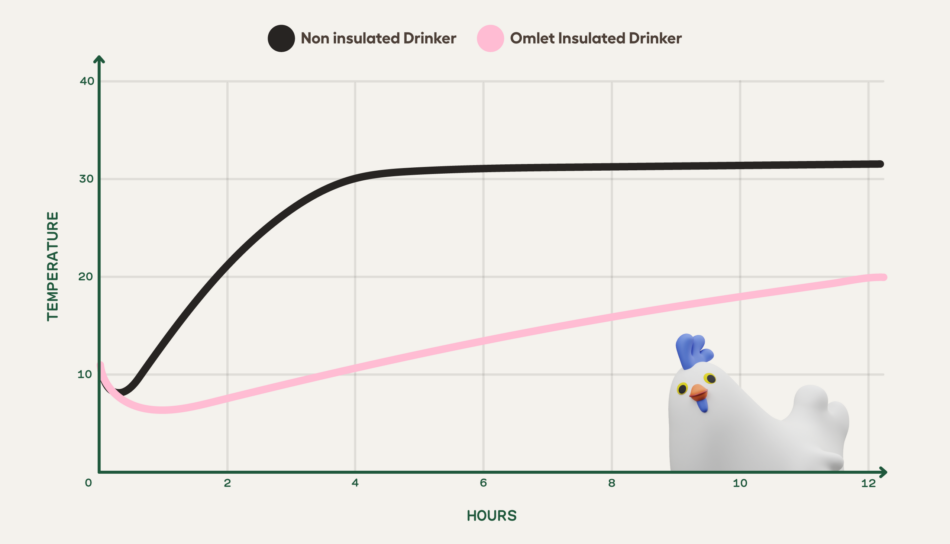
Alongside real-world testing, the drinkers were also subjected to rigorous laboratory testing. Using temperature-controlled chambers, drinkers were exposed to conditions ranging from -4°F to 100°F and compared against equivalent non-insulated drinkers. Each test was repeated multiple times to ensure the results reflected real-world conditions. The outcome was clear.
“The Insulated Drinker consistently performed four to five times better than comparable non-insulated drinkers.” Josh says seeing the results was one of the most rewarding parts of the project. “It was really interesting to see how much effect the insulation had on the water temperature.”
Why does water temperature matter?
Keeping water at a comfortable temperature isn’t just about convenience. It’s about encouraging chickens to drink. “Chickens are a bit fussy. As water moves outside their preferred temperature range, the amount they drink reduces.” On hot days especially, helping water stay cooler for longer can support better hydration and encourage chickens to keep drinking throughout the day.
Every feature has a purpose
Many of the final design features can be traced directly back to the challenges Rebecca’s team uncovered during research.
To help reduce algae growth – the reservoir limits light exposure.
To help keep water cleaner for longer – stored water is separated from the drinking area.
To improve stability – the drinker features a tripod-style stand.
And for greater flexibility – it can also be hung.
Every detail exists for a reason.
The listening never stops
Although the Insulated Drinker is now in chicken runs around the world, the process behind it is still ongoing. Customer feedback, reviews and real-world experiences continue to shape future improvements and innovations.
“We don’t just speak to people once at the beginning and then disappear into product development. We revisit them throughout the journey to test our thinking, uncover new insights and make sure the product is genuinely matching their needs.”
Because the best products aren’t designed for chicken keepers. They’re designed with them.
When temperatures rise, water becomes a vital part of chicken care. In hot weather, how that water is presented – temperature, cleanliness, accessibility – can make a real difference to how much your flock actually drinks. We spoke to Blayne Mozisek (A.K.A The Poultry Doc) to get a deeper understanding of how important water is for your flock’s health, especially in the hotter months.
“Water is the most important nutrient for chickens,” says Blayne.“Clean, fresh water is paramount to anything else.”
1. Spot the signs of dehydration
One of the earliest warning signs of dehydration is much more visible in chicks.
“The skin will be drawn up around their shanks,” Blayne explains.“That vein starts to stand out.” In older birds, the signs are more subtle – skin that doesn’t bounce back quickly, reduced activity, or simply a drop in normal behaviour. In more serious cases, birds may stop drinking altogether, which is often a sign that something deeper is going on. “In critical situations when birds go off water, there’s typically a larger issue at play.”
2. A sudden stop in laying is often linked to water intake
Egg production is far more fragile than many keepers realise – and heavily dependent on hydration. “An egg is mainly water,” says Blayne “If you impact the supply of water, hens can stop laying almost immediately.” In fact, vets sometimes use controlled water restriction in very specific medical situations to temporarily halt laying while a bird recovers. For backyard keepers, though, the takeaway is simple: if eggs suddenly stop during hot weather, water quality, temperature and easy access should be the first things you check.
3. Clean water matters more than anything else
Water quality plays a bigger role in flock health than most people realise. If their water isn’t clean, it can lead to algae, which can lead to biofilm – and that stuff is full of harmful bacteria.That slippery green build-up in waterers isn’t just unpleasant – it can affect both hen health and overall hygiene in the coop.
“There are tons of studies that show biofilm can contain some really nasty bugs,” Blayne explains, including bacteria like listeria.
Blayne’s advice is simple: “Keeping the water clean, preventing algae, keeping the biofilm out… can all have long-term impacts on overall health.”
4. Temperature matters – but extremes are what to avoid
One of the most common questions in summer is whether chickens should have ice-cold water. The answer is more nuanced than a simple yes or no. Blayne explains that chickens don’t necessarily benefit from water that is ice cold, and in some cases it can reduce how willing they are to drink. “A lot of people relate water to how we as humans want water when we’re hot,” he says. “But that’s not always the case.”
Extremely cold water can be off-putting, particularly for younger birds, while very warm water in hot weather can also reduce intake. The sweet spot is consistently fresh, cool water that stays stable throughout the day – shaded, protected and refreshed regularly. In prolonged heat, adding small amounts of ice to the Omlet Insulated Waterer can help moderate temperature, but the goal isn’t to make the water freezing cold – it’s to prevent it from becoming uncomfortably warm. This is where consistency matters more than anything else: stable access to drinkable water throughout the day, rather than large temperature swings.
5. Electrolytes aren’t essential – but have a place
Walk into any farm store in summer and you’ll find shelves of electrolyte powders and vitamin mixes promising to “boost” hydration. But the Poultry Doc is clear that these aren’t always necessary. “The idea that you need to have vitamins and electrolytes in your water all the time is not true.”
That said, there are specific situations – such as heat stress – where they can support recovery. “When birds pant, they blow off CO2,” he explains, which can affect internal balance and even egg quality in some cases. Used occasionally and appropriately, electrolytes can play a positive role, but Blayne doesn’t believe they should replace the foundation of flock health.
The takeaway
Summer chicken care doesn’t need to be complicated. It comes back to the basics: clean water, stable conditions and keeping your flock drinking consistently through the day. “Good, clean and adequate supply of fresh water is critical,” says Blayne. And in hot weather, how that water stays cool, clean, and accessible can make all the difference.
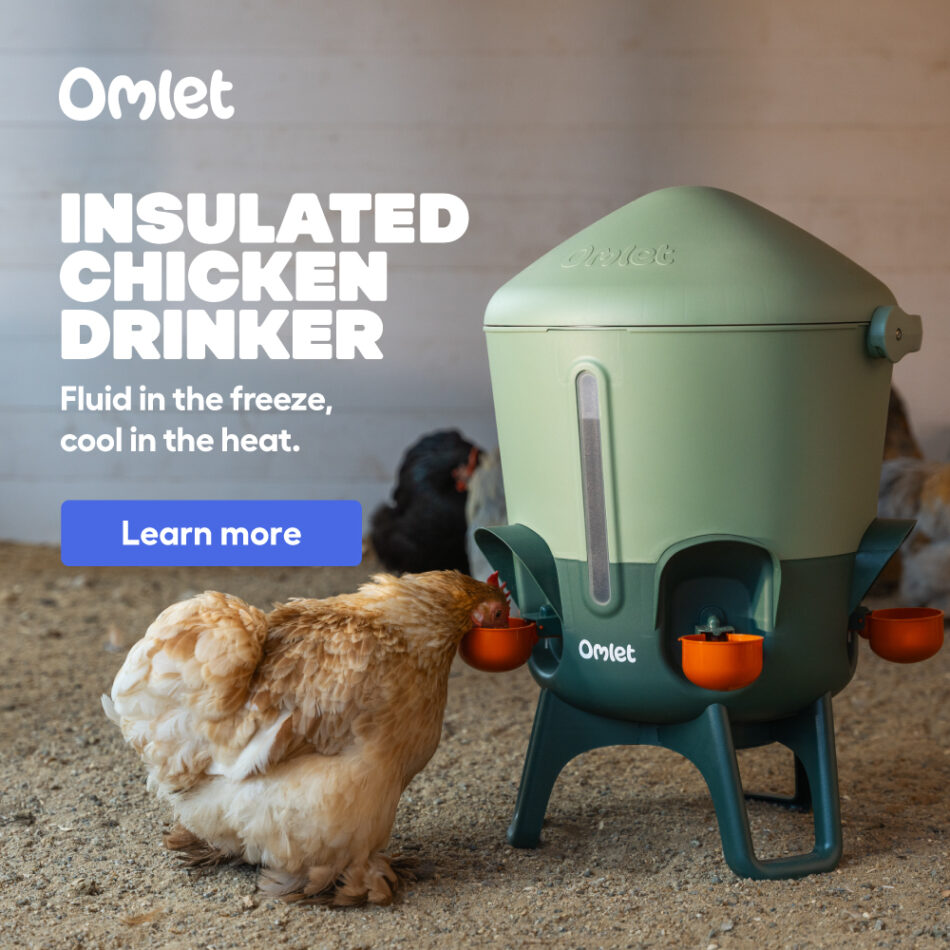
Adding an Omlet Insulated Chicken Waterer to your setup is a great way to ensure you’re aligning with The Poultry Doc’s advice. Its opaque design blocks 99% of light, resulting in no algae or bacteria build up, the insulation keeps water cool and fresh, and it has a water level window so you can easily see when it needs filling.
For many chicken keepers, summer means longer days, more time outdoors and baskets full of fresh eggs. But for hens, rising temperatures can quickly become uncomfortable – and in extreme heat, even dangerous.
According to long-time chicken keeper, breeder and author Brandelyn Tafoya, helping chickens cope with hot weather comes down to three essentials…
1. Keep Fresh Water Available at All Times
“Access to fresh water at all times is super important,” says Brandelyn. During hot weather, chickens can quickly become dehydrated, especially if their water warms up in the sun.
Top tips:
Consider adding electrolytes during periods of extreme heat.
Brandelyn also recommends offering frozen treats to encourage hydration and provide enrichment.
Why not try:
Ice cubes with treats frozen inside
Frozen fruit pieces
Chilled veggies your flock already enjoys
2. Prioritise Coop Ventilation
“Airflow is also super important in the coop to keep them cool,” Brandelyn explains.
A poorly ventilated coop can quickly become hot and humid during summer, especially overnight. Good airflow helps remove warm air and allows fresh air to circulate around your flock.
Why ventilation matters:
Reduces heat build-up inside the coop
Helps prevent hot, humid conditions
Keeps hens more comfortable overnight
Encourages better air quality year-round
Omlet’s Eglu Chicken Coops are designed with twin-wall insulation and strategically placed ventilation points to help regulate temperatures and maintain airflow throughout the year.
3. Monitor Your Chickens’ Behaviour
One of the easiest ways to tell if chickens are struggling with the heat is to simply watch them. Signs your chickens may be too hot:
Panting
Holding their wings away from their body
Lethargy
Drooping posture
Reduced activity
Unusually quiet behaviour
If you notice these signs, provide extra shade, fresh cool water and electrolytes where needed.
What not to do
Unlike dogs, chickens don’t benefit from being sprayed with a hose or being submerged in water. Brandelyn says this can often cause unnecessary stress and do more harm than good. Instead, focus on the basics: cool water, airflow, shade and hydration support.
Bonus Tip: Choose Heat-Hardy Breeds
If you live in an area with consistently hot summers, breed selection can make a difference. “There are breeds that do handle the heat better than others,” Brandelyn says. Research breeds that are known for coping well in warmer climates before starting or expanding your flock.
Helping chickens stay comfortable in summer doesn’t have to be complicated. Fresh water, good ventilation and keeping an eye on your flock’s behaviur can go a long way towards preventing heat stress.
As Brandelyn puts it, preparation is key. By getting ahead of rising temperatures, you’ll help your hens stay healthy, comfortable and productive all summer long.
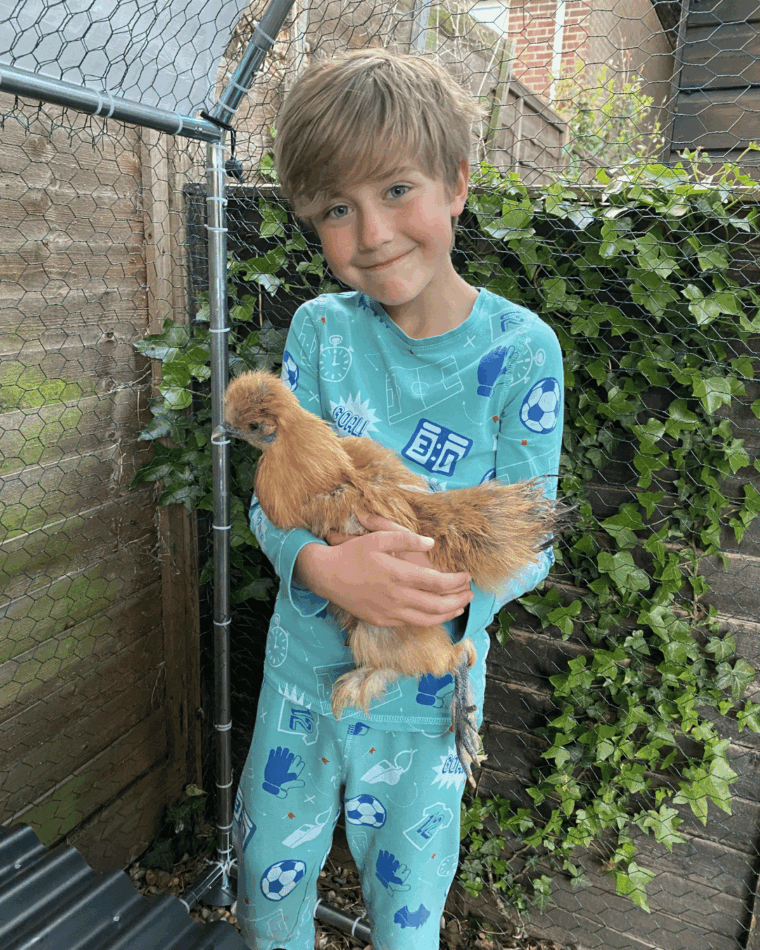
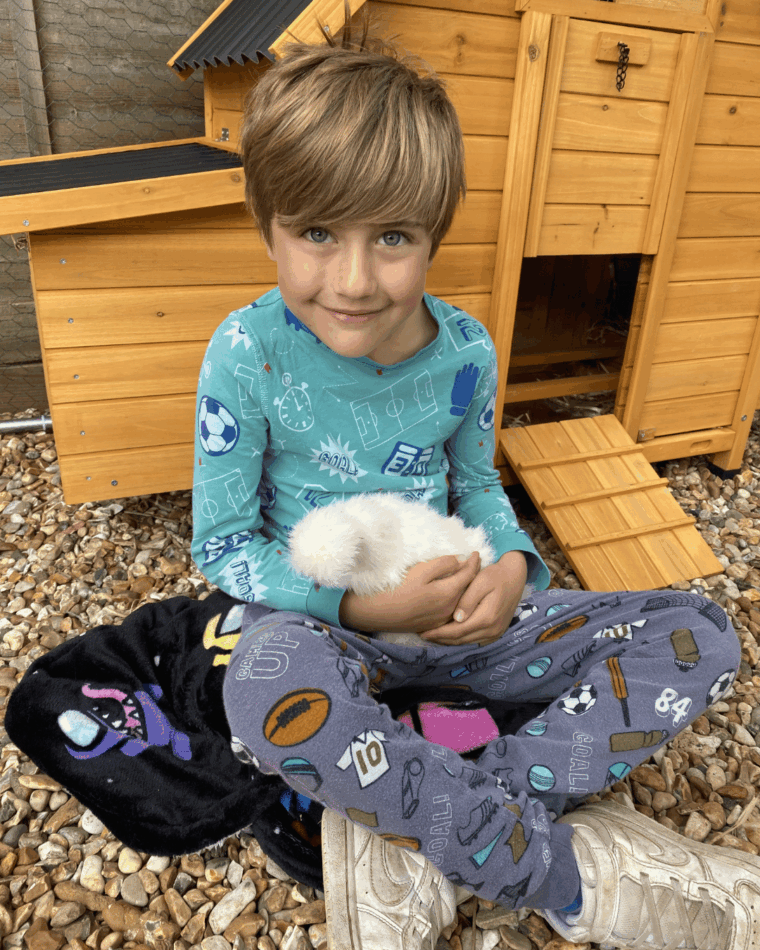
It started, as so many family stories do, with a child who simply wouldn’t let it go. Caspian had decided he wanted chickens. Not as a passing phase or a fleeting birthday idea, but with a quiet, unwavering determination that slowly reshaped the household.
“He just kept coming back to it,” his mum Emily says. “I did secretly think he might change his mind and ask for a bike instead. But he never wavered.” So he got to work. Pocket money was saved, birthday presents were redirected and small jobs around the house suddenly had a new purpose. “He asked for money instead of presents so he could put it towards a coop and chickens,” Emily says. “He didn’t quite get to the chickens themselves at that point, but he saved enough for a coop and run. It showed us how serious he was.” The family went to a local poultry farm “just to look”… and came home with four chickens.
“We went for two Silkies,” Emily laughs. “Then they mentioned they had a couple of Warrens already laying, and it suddenly felt like we might as well.” From there, things escalated quickly. At a local agricultural show, Caspian spotted a Polish bantam and spent his pocket money on the spot. “Other children had sweets and toys,” Emily says. “He came out with a chicken.” That bird became Henny Penny – and the flock officially became a family fixture.
The love for chickens didn’t stop with Caspian. His sister Romy was just 13 months old when the first hens arrived, and Emily says she was drawn to them immediately. “Since having the chickens, it’s naturally become part of Romy’s daily routine,” she explains. “She just goes out to them.”
Over time, those small visits turned into habits – feeding, checking and learning how to care for them gently. “It’s never felt forced,” Emily says. “She’s just picked it up naturally and enjoys being involved.”
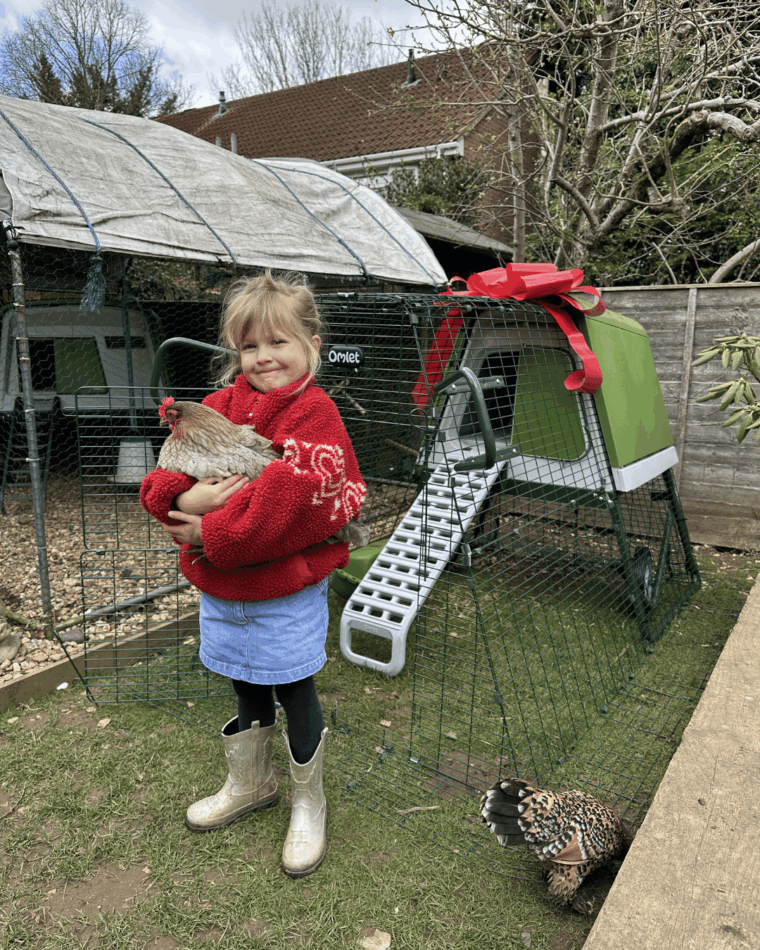
For her fourth birthday, Romy got her own flock and her own Eglu Go Up. “It felt like the natural next step,” Emily says. “She already spent so much time with them.” Now the garden holds two overlapping worlds – Caspian’s original flock and Romy’s growing group, all part of the same daily rhythm.
Caspian still leads much of it, often getting to the coop before anyone else. “I’d go down to let them out and he’d already be there,” Emily says. “Just sitting with them.” And while the flock has grown, Emily insists it’s all been surprisingly simple. “Much easier than rabbits or guinea pigs,” she says. “Once you have a routine, it just becomes part of life.”
What started with one determined child has become something much bigger – a family rhythm shaped by early mornings, muddy footprints and a flock of chickens that quietly took over the garden.
If you’ve spent any time on YouTube or Instagram recently, chances are you’ve stumbled across Jude Harper – better known online as Rewilding Jude – building raised beds in the rain, repurposing old junk into something useful, or chatting to his chickens while standing ankle-deep in compost.
What started as a personal project after a huge life change has quietly grown into an online community of people craving slower living, muddy boots, fresh air and a reminder that life doesn’t have to move at full speed all the time.
After losing both his parents in 2022, Jude left behind a life that no longer felt right, packed up his things and moved to a fixer-upper in rural Scotland. No countryside experience or grand masterplan, just a gut feeling that something needed to change. Somewhere between building a wonky chicken coop, growing vegetables in reused containers and rescuing ex-commercial hens, things slowly started to click into place. “I sort of felt like I didn’t have a purpose anymore. And this has really helped with that.”
Jude didn’t exactly set out to become a chicken person.
In fact, he originally built his enormous DIY coop as a way to learn basic construction skills. “I thought, ‘It’s probably better to start with a chicken coop than a wall in the house,’ because if it’s wonky, it doesn’t really matter,” he laughs. Three months later – after battling Scottish weather, uneven ground and a steep learning curve – the coop was finally finished. “So I thought… I should probably put some chickens in it now.”
Enter Bossy, Scraggy, Prison Chicken and Hennifer Saunders – four rescued hens from the British Hen Welfare Trust who quickly became the stars of both Jude’s garden and his social media channels.
“I had no idea what good pets chickens are,” he says. “They’re such little characters, and are way more useful than my cat. The cat just brings me rodents.”
Chicken therapy is real
For Jude, chicken keeping became something much bigger than fresh eggs. Like many people taking on a renovation project, he found himself overwhelmed by stress,but the chickens changed something. “If everything’s getting a bit too much, I’ll just go and give the chickens treats and watch them jump around. They don’t really have much to worry about, and it puts things into perspective.”
There’s something about chickens that forces you to slow down. Watching them scratch through leaves, follow you around the garden or inspect absolutely everything you’re doing has a grounding effect that’s difficult to explain until you’ve experienced it yourself.
“They’re so interested in everything,” Jude says. “If I’m outside doing something, they want to be involved.”
And while the internet often romanticises “escaping to the countryside”, Jude is refreshingly honest about the reality of it all. It isn’t perfect or polished – sometimes your well runs dry, sometimes your coop goes mouldy and sometimes your chickens escape into the neighbour’s garden.
Healing through growing
Long before the chickens arrived, gardening was already helping Jude process grief. He started small – growing vegetables in containers on a tiny patio after his parents passed away.“It sounds cliché, but getting your hands in the soil really does make you feel better.” Watching things grow became a quiet form of therapy, it was a reason to get outside and a reminder that things change slowly.
“The joy I’d get from waking up and seeing what had changed overnight in the garden… it really helped.”
That connection to nature eventually snowballed into composting, growing food, building things by hand and documenting the entire process online. In many ways, it became a way for Jude to stay connected to his parents too. “I think I’ve absorbed all of their hobbies,” he says. “If my mum could see how much I’ve turned into my dad, she’d probably be rolling her eyes.”
“If you’re not making mistakes, then you’re not making anything.”
One of the most refreshing things about Jude’s outlook is that he doesn’t pretend to have everything figured out and that’s exactly why his content resonates.
“There’s this idea online that if you can’t do sustainability perfectly, there’s no point trying at all,” he says. “But small things really do add up.”
For Jude, that might mean composting food scraps, reusing old materials, growing some vegetables, or simply making fewer supermarket trips. It’s not about doing everything. It’s about doing something.
“I think the skill I do have is not being afraid to be bad at something.” It’s a sentence that perfectly sums up both his online success and the reason so many people connect with his videos. Watching someone honestly muddle through, make mistakes and keep going anyway feels reassuring in a world obsessed with perfection.
Start small, start messy
So what advice would Jude give someone dreaming of a slower life, chickens, vegetable patches or simply feeling more connected to the world around them?
“Don’t try and do everything all at once.”
Jude had already been living in Scotland for over a year when he got chickens. Before that came composting, gardening and learning basic skills one step at a time. And crucially – accepting that you’ll probably be a bit rubbish at first.
“No one’s perfect the first time around. You just have to get past being bad at it.”
Jude’s advice is refreshingly simple:
Start small
Grow one thing
Build one thing
Try one thing.
Because somewhere between the compost piles, the wonky DIY projects and four rescued hens, Jude built himself a whole new life – one that’s inspired thousands of people to slow down, get outside and realise you don’t need to have everything figured out to start.
You can follow Jude’s renovation and gardening journey on both his Youtube and Instagram channels.
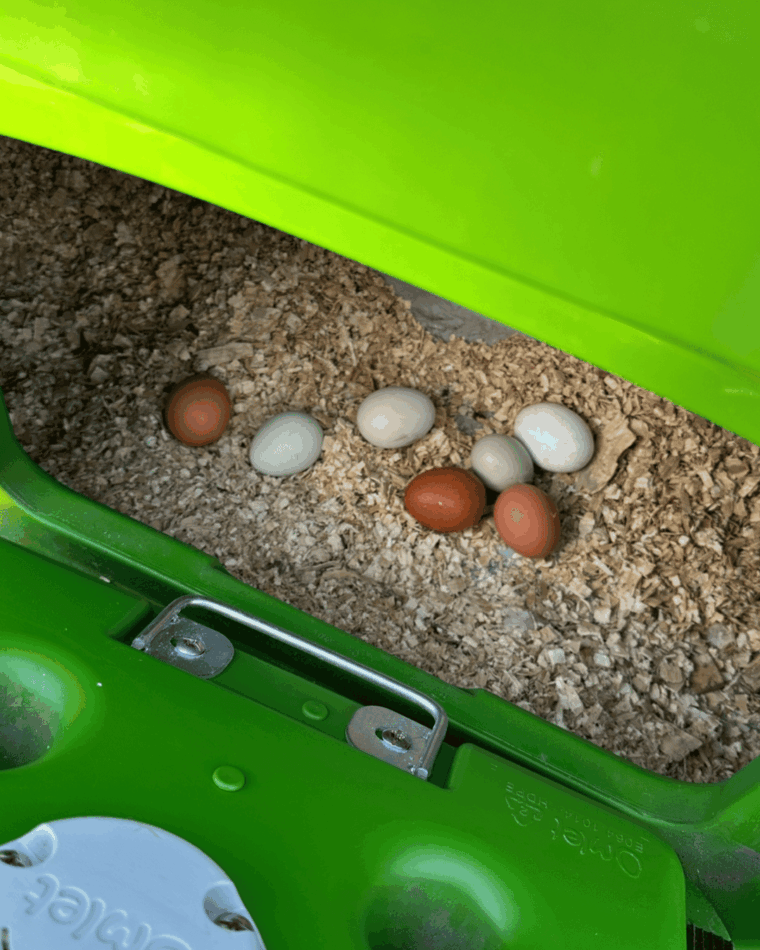
There’s something deeply satisfying about collecting a warm egg from the nesting box, stepping into your garden and building a meal from ingredients you grew yourself.
For Toni Farmer – sustainable agriculture professor, science-led gardening educator, and long-time chicken keeper – this isn’t a trend. It’s a return of how we used to do things.
“We need to stop thinking of chickens as the cheapest way to get eggs,” she says.“You’re not saving money. You’re investing in food security.”
Toni has a name for the way she lives: the backyard supermarket. It’s exactly what it sounds like. Out of spinach? Pick it. Need herbs? Snip them. Breakfast? The eggs are already there.
“Yesterday, I wanted spinach for dinner. We were out in the fridge, but I had it growing in the garden,” she explains. “I didn’t have to drive to the supermarket, waste petrol, or buy more than I needed.” Instead, she stepped outside, picked exactly what she needed and got on with her day. “It makes you wonder why we ever moved away from this.”
For Toni, this isn’t about perfection or self-sufficiency extremes. It’s about something simpler: eating well, wasting less and reconnecting with where food actually comes from.
It often starts with chickens
For many people, including Toni, chickens are the gateway. After reading about the horrors of the commercial egg industry, she made a snap decision. “I went to my husband and said, ‘We’re building a coop this weekend.” And that’s exactly what they did. Seventeen years later, she’s still keeping chickens – and still finds joy in the smallest moments. “There is nothing like walking into your garden and picking up warm eggs. It feels like a magic trick.” Her current flock? Named after queens from Game of Thrones.
What makes Toni’s setup so powerful isn’t just the eggs or the veggies – it’s how everything connects. Chicken bedding doesn’t go to waste – it becomes compost. That compost feeds the garden, and the garden feeds the household. “It’s a really good three step cycle,” she says. The result is less food waste, healthier soil and a system that largely sustains itself.
If the idea of growing your own food feels overwhelming, Toni’s advice is simple: “Just start.” Not with a full garden overhaul, not with perfection, but with one small bed. “Make it about 32 square feet. Grow what you usually buy – tomatoes, cucumbers, lettuce.” And accept that things will go wrong. “If your plants die or bugs eat everything, you have not failed. You’re just at the beginning of your learning curve.”
If you’re not sure where to begin, Toni recommends starting with:
Peas – fast-growing, low maintenance and beginner friendly
Raspberries – expensive to buy, surprisingly easy to grow and come back every year
“Within two years, you’ll have so many raspberries you can’t believe you ever paid for them.”
One of Toni’s most refreshing ideas is the community flock.
One of the biggest barriers to keeping chickens is people thinking they won’t suit their lifestyle. Holidays. Busy schedules. Costs. Her solution? Share the load. “One household keeps the coop. Others contribute to food or costs. Everyone shares the eggs.“If I told my neighbours I was going on holiday tomorrow, I’d get 20 offers to help,” she says. “Mostly because they want the eggs.”
For Toni, this shift back to growing your own isn’t nostalgic – it’s necessary.“Climate change is coming for our food,” she says. “It’s probably time we learned these skills.”
But beyond resilience, there’s something else. Joy. The joy of stepping outside instead of driving to the store. The joy of cooking with ingredients you grew yourself. The joy of knowing exactly where your food came from. And of course, the joy of a warm egg in your hand and spending quality time with your flock.
If there’s one message Toni wants people to take away, it’s this:
“Don’t give up after your first failures, give it time and within a few years, you’ll know so much you can start teaching other people.”
Erica grew up on a farm in Colombia, where caring for animals was part of daily life from a very young age. One chicken in particular ended up shaping the course of her life – a meat bird she named Chiquita. Originally bought at a local market with the intention of being raised for food, she quickly became a companion for Erica. After persistent pleading, her father agreed to spare her life. Erica reflects that this experience changed her entire perspective on animals: “Chiquita ultimately taught me the important lesson that ‘livestock’ holds far more value than simply being meant for a plate.”
That bond stayed with her long after childhood. She explains that being exposed so young to the idea of chickens as “nothing more than a food source” is exactly what later made her question it. “I knew for a very long time that I wanted chickens on my own terms – as pets – once I was old enough.” She adds, “Chiquita helped shape my mindset as a child, and that deep empathy followed me into adulthood.”
After high school, Erica joined the U.S. Army. Military life meant constant relocation and living on base, which made it impossible to keep animals. Still, she says the idea of chickens never left her and remained something she carried with her quietly through those years.
It wasn’t until Erica left the military and settled in St. Louis with her husband that things finally shifted. With stability and space, she was able to turn a long held dream into reality: a home where she could keep chickens.“The dream of having chickens on my terms was finally going to become reality,” she says. That moment became the beginning of what would grow into Second-Hen’d, a non-profit dedicated to rescuing and rehoming ex-commercial egg laying hens.
As she learned more about so-called “spent” hens (hens are often disposed of after 1-2 years when they no longer produce eggs, despite being able to live up to 10 years if properly cared for) her purpose deepened further. Since founding the organisation in 2016, she describes the biggest change in her life as internal: “Waking up every single day with a feeling of purpose.” She is also open about her past struggles: “The ‘before’ was incredibly difficult. There were days I simply couldn’t get out of bed or function at all no matter what.” What changed, she says, is responsibility and connection: “Knowing these sweet souls need me to continue saving them and educating others while telling their stories is what keeps me going.”
For Erica, the most powerful part of rescue work is watching transformation unfold. “There are so many rewarding aspects of saving and re-homing ‘spent’ hens (especially the glow ups!),” she says, but what stands out most is when the personalities emerge for the first time. She describes the hens that arrive as “scared and confused empty shells” who have never experienced open space, sunlight, or freedom. What follows is a gradual unfolding of behaviour and identity: “their first scuffles as they work out the new concept of a pecking order, their first nest building, their first attempts at ‘flying,’ their first explorations – and just ‘learning how to chicken!”.
To date, Second Hen’d has saved 1065 hens. To find out more about Erica’s work, head over to the Second Hen’d website.
When asked to complete the sentence “My life is better #BecauseOfTheChicken because…”, Erica simply says:“They are why I found renewed meaning in existence.”
Four-year-old Romy doesn’t just have chickens – she’s the ultimate mini chicken boss. She manages them, feeds them, cleans up after them and is very firm on the fact that they “poo a lot.”
For her fourth birthday, Romy received her very own Omlet Eglu Go Up chicken coop and five chicks, which she immediately accepted as her official workload. We were so excited to find out how the flock have been doing so far – and she had plenty to say!
What did you get for your 4th birthday?
“I got a coop. I’m lucky! I got the coop! And 5 chicks! It’s green and white and has a green cover to protect the chickens from the rain & a door I can open & shut so they can go in the yard!”
What did you name your chickens? What are they like?
“My new chickens are called Hetty, Plant, Sandy, Pingu and Ginger. Some are frizzles because they have sticky-out feathers. Pingu has browny-black feathers & Sandy is yellow. Their mommies are Karen & Blossom, white Polish bantams in our yard. The chicks make noise if I leave them. I think we have two roosters because they are jumpy.”
What are your daily chores to help look after the chickens?
“I feed them, fill their water and feed them happiness. I help mommy poo pick the big coop, I help clean out the brooder coop. I have a little spoon to poo pick the chick coop. They poo a lot. I have to pick out their poo so they don’t eat it.”
What do you love most about the chickens?
“Hmm… because they’re funny. I love playing around in the garden with them. They follow me because they think I’m going to dig the worms. I love my new chicks too. They are so fluffy. They will be big chickens soon I can’t wait!”
Where do the chickens live?
“The chicks live in the brooder coop to keep them warm, but they will live in my new Omlet chicken coop soon. The big chickens live in mummy’s coop, but they are Caspian’s chickens really! I just have Gloria & Pickle. They all snuggle up together.”
What do you think of their new Omlet coop?
“Good! I love it so, so, so much! It’s so cosy and it has a door you can open and shut, and a nest so they can lay eggs. My coop makes me happy because it’s like my mummy’s but a bit smaller so I can clean it myself.”
Do you have a favourite chicken and why?
“Wolfie! Wolfie is my favourite. She is a Copper Maran. I love her because she’s so naughty. She makes me so happy and she makes me laugh. She jumps on me if I sit down. I hatched her from an egg.”
Do you collect the eggs? What do you do with them?
“Yes, I do. If I have a broody hen, I have to try and get the eggs if they let me. They don’t peck me though. I sometimes give them to my teachers and my grandma and grandpa. I like scrambled eggs and bacon and eggs and egg bites. Mommy makes cakes sometimes.”
We’re looking forward to catching up with Romy again soon – we’ll be sure to share the updates.
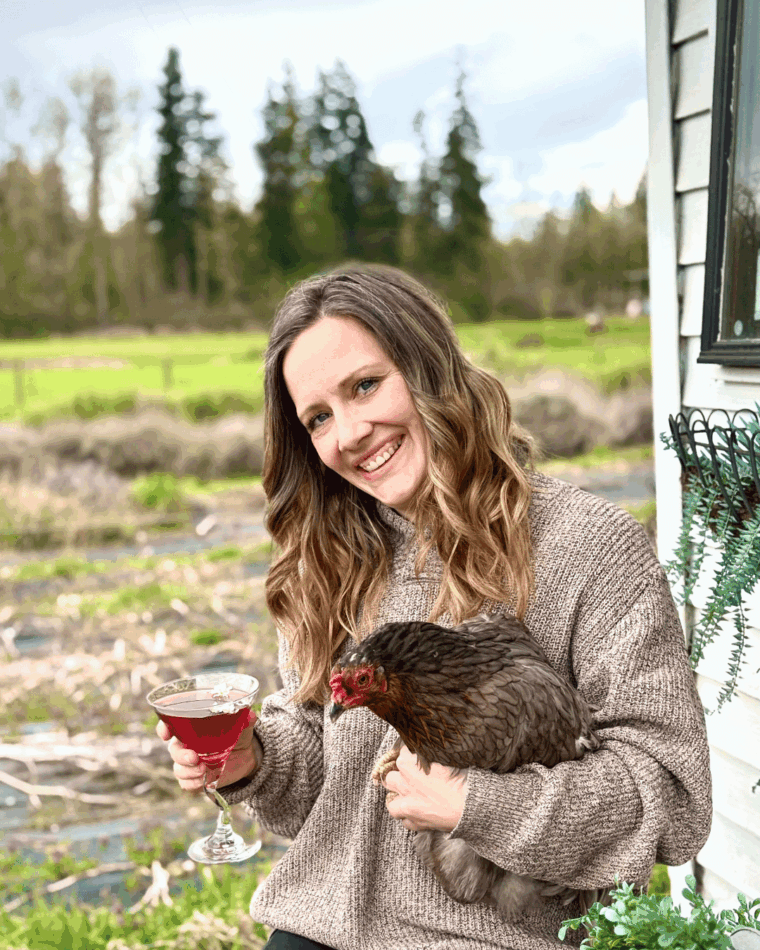
Over in Washington State, USA, Venise Cunningham’s chickens aren’t just part of the farm – they’re part of the bar.
It began with “a teeny, tiny chicken coop” and five Rhode Island Reds at Venise’s first house by the river, and her family’s first time trying out chickens. Twelve years on, the flock has evolved. Most recently, her seven year old son decided he wanted to hatch eggs so they borrowed an incubator, sourced fertile eggs from local farmers and tried their luck. “Humidity and temperature is kind of hard here,” she says. “But we got seven to hatch!”
Today, the chickens roam, scratch, fertilise – and the hens lay eggs that find their way into the cocktail shaker of Simple Goodness Sisters drinks business.
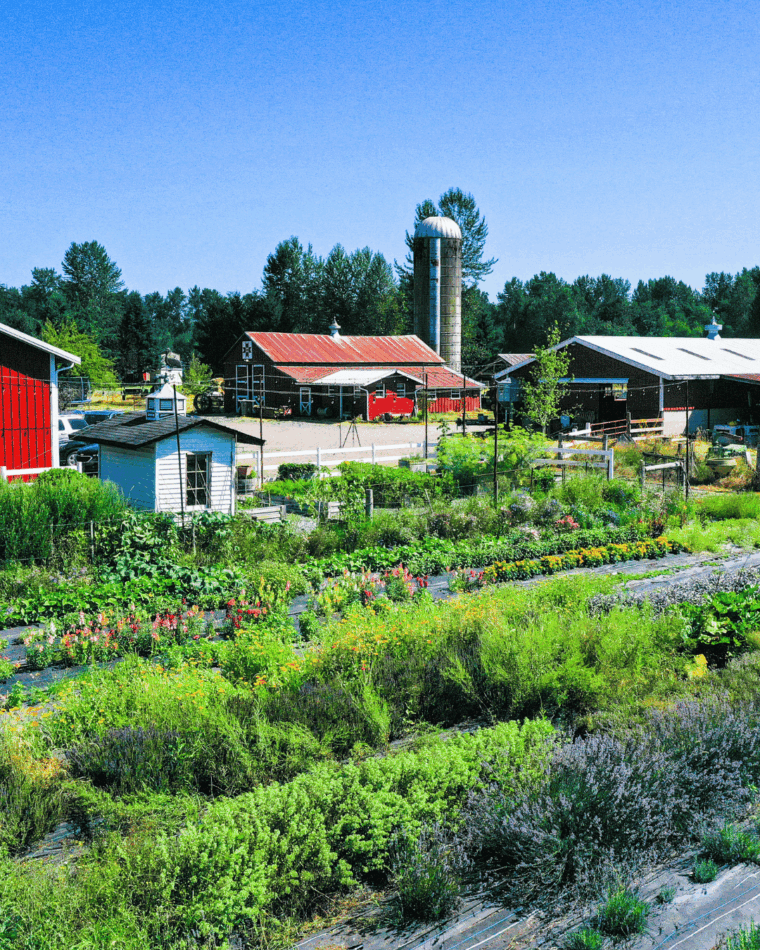
Venise is the grower. She cultivates the herbs, edible flowers and fruit that shape the flavours of Simple Goodness Sisters, the business she runs with her sister Belinda. Belinda is the cocktail maker. Before setting up their cocktail syrup business, the sisters worked in downtown Seattle and Bellevue for tech companies, planning large scale events. It was there they spotted the gap.
“There’s a lot of attention on farm to table,” Venise says, “but not a lot of attention goes to the glass.” So they built what she calls “a whole cocktail farm.”
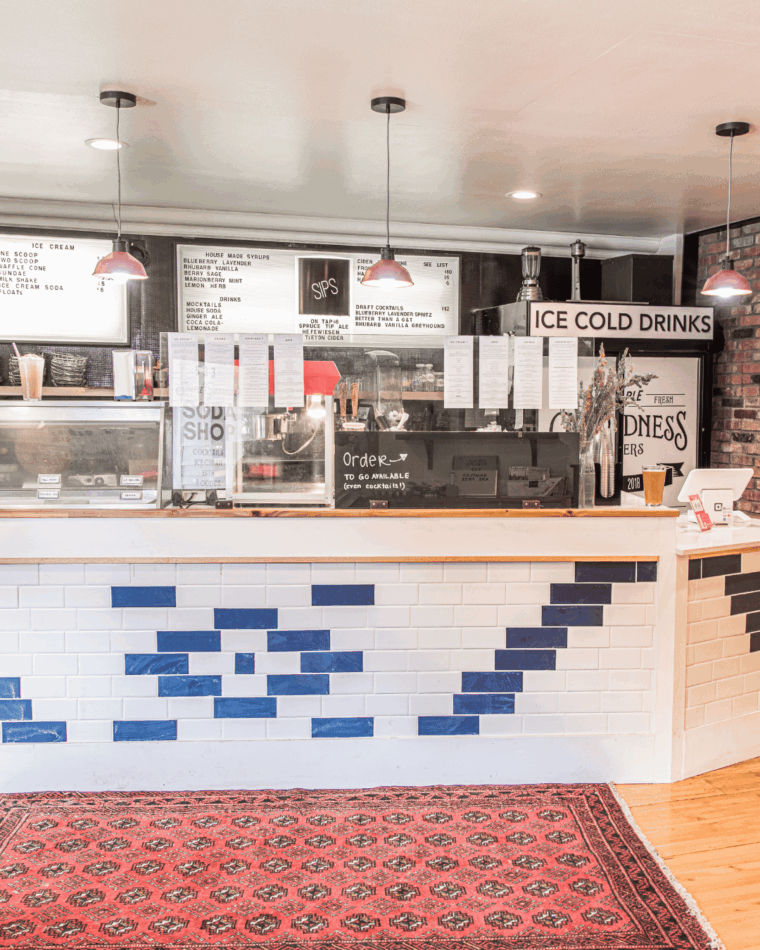
The syrups anchored drinks at their restaurant and at events across the region – including the Northwest Flower & Garden Festival in Seattle (where we met the sisters who also had a booth there) where they were mixing the introductory cocktails for the afternoon speakers.
When Venise is making a blueberry lavender syrup, she’ll use 100 pounds of blueberries bought directly from a neighbouring farm. The juice is pressed and bottled. And this is where the chickens come into play. The hens aren’t a novelty – they’re integrated. Because once 100 pounds of blueberries have given up their juice, Venise is left with skins and flesh still full of value.
“All of the juice comes out of the blueberries, but you still have all the skin and the flesh,” she says. “I’m still pulling a lot of really good ingredients out of the syrup kettle.”
In their book, she and Belinda call the philosophy “whole animal bartending” – the cocktail equivalent of nose-to-tail cooking. Use everything. Waste nothing. Some fruit leftovers become shrubs. Some are dehydrated and ground into sugar rimmers. And when they’ve taken it as far as they can, the rest heads back outside.
“It goes to the farm, and it becomes chicken food… then it goes into my compost, and then it turns into compost, and then I put it in my garden bed – it never goes into the trash.”
That circular thinking extends beyond the bar. Watching how thoroughly the chickens scratch through pasture sparked another idea: “Can they weed for me?” Venise built a temporary structure over her raised beds so the flock could claw through weeds before planting season. “In a couple of weeks, all of my beds are weeded,” she says.
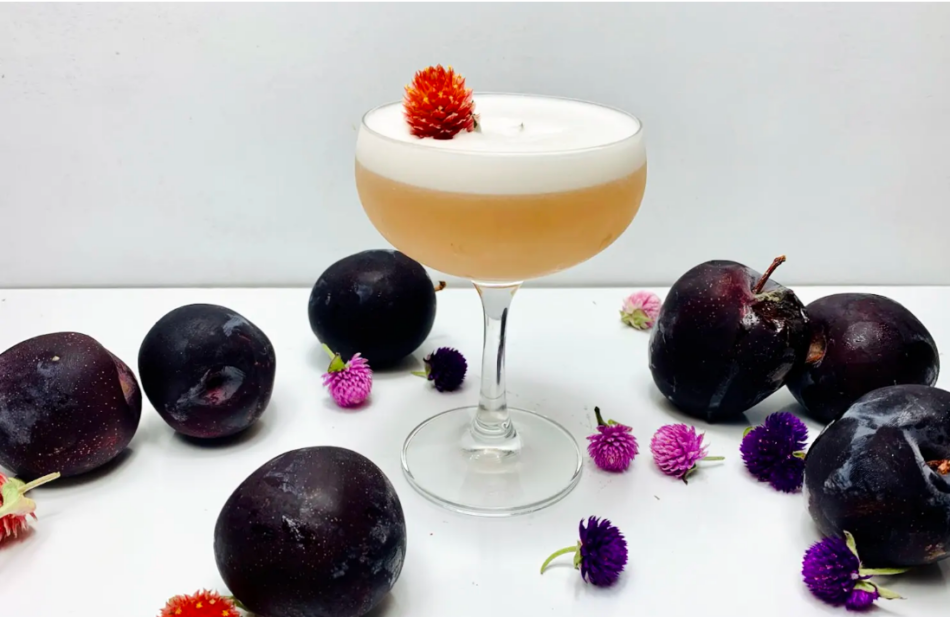
And it’s not just weeding – “they’re adding the fertiliser… it’s all really great for the soil.” For Venise, this is the heart of farming. “That’s the part of farming that I love the most – getting really creative.” The Herb Garden Sour cocktail also involves the flock – it uses the egg whites from the flock’s eggs for its foamy and bubbly texture.
Why not give The Simple Goodness Fizz cocktail a go?
20ml lemon juice, or a mix of lemon and lime juice, fresh squeezed
20ml Simple Syrup
15ml (or about 1 large) egg white or aquafaba (chickpea water) as a vegan/allergen substitute
1 scoop of 3 large cubes ice
Garnish of choice
Directions: In a cocktail shaker, add all ingredients but no ice. Firmly cap the shaker and do a dry shake of all ingredients for 1 minute (it’s a workout!). Gently, so as not to kill the foam, add a big scoop of ice to the shaker and then shake vigorously for another 30 seconds. Strain the drink into a coupe or stemmed wine glass. Some foam will come through and settle to the top. Capture the extra foam that has clung to the sides of the shaker by “rinsing” the shaker with just 25ml of club soda, swirling it to catch the foam and then straining it onto the top of the drink. If done correctly, there will be a solid line of silky foam ½ inch thick at the top of the glass, and a bright, transparent liquid layer of cocktail below. Find the full recipe and more over on the Simple Goodness Sisters website.
From coop to cocktail foam, from spent berries to chicken feed to compost to soil, the system runs in a tight circle.
The farm grows the flavours. The bar shakes the drinks. The chickens keep it moving. And as Venise puts it, nothing “ever goes into the dumpster.”You can find out more about the farm, the cocktails, and the book the sisters have written ‘Drink Your Garden’ on the Simple Goodness Sisters website.
Connie didn’t just get chickens, she discovered a whole new way of life.
What started as a practical decision (fresh eggs, better compost, a more productive garden) quickly became something far more immersive. These days, her Melbourne backyard isn’t just a garden – it’s a place of routine, entertainment, community and occasionally, a carefully timed feather trim.
“I love hearing them in the background,” she says. “It makes me feel like I’m living on a farm, even though I’m in Melbourne.”
One of Connie’s favourite memories is looking after Luna, her Araucana, who needed regular trims to keep the feathers out of her eyes.“I’d wrap her in my arms and use pet grooming scissors to give her a little haircut,” she says. What started as a simple task became a quiet ritual – a moment of trust and care between keeper and chicken.
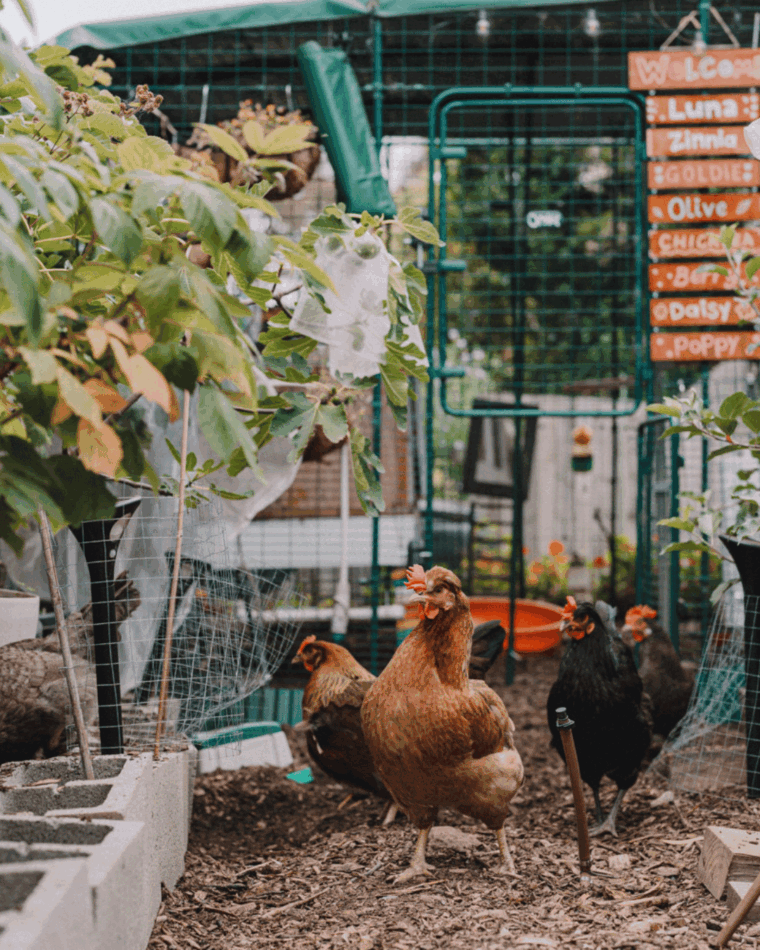
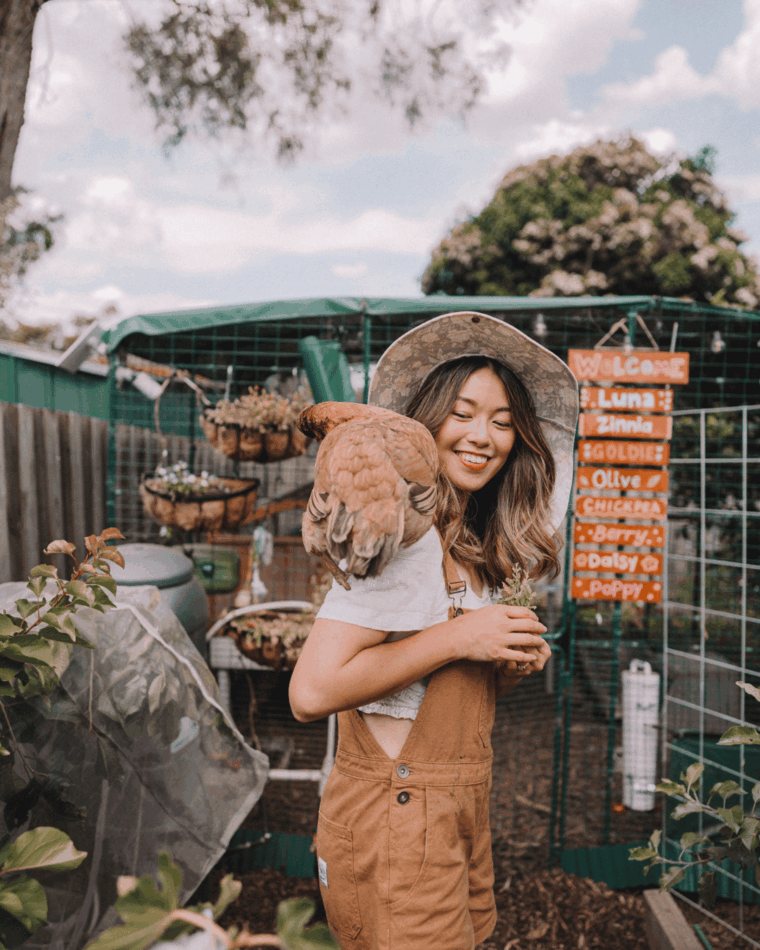
Connie’s current flock – Berry, Chickpea, Daisy, Olive, Goldie and Poppy – bring plenty of personality (and a bit of chaos) to the garden.
One of the biggest surprises for Connie? How much she loves observing the flock. “I could watch them for ages,” Connie says. “They’re like TV.” What started as a quick daily check has turned into a full blown habit – rain or shine. Whether it’s dramatic pecking order politics, post egg victory songs, or general garden chaos, there’s always something going on. “I go out there every day now,” she says. “Even when I wouldn’t normally.”
Keeping chickens hasn’t just changed Connie’s routine – it’s changed how she sees the world around her.
“Looking after chickens has taught me so much about birds in general,” she explains. “I notice wild birds more now, and I care about them more too.” It’s also shaped how she lives day to day. Weeds are fed back to the flock, eggshells are crushed for calcium and chicken waste becomes compost for the garden. What started as a hobby has become a more circular way of living.
The chickens have also brought the local community closer together. Connie started a group chat with other chicken keepers nearby to share advice, swap tips and help each other out. “People are always surprised by the different egg colours,” she says. “I love talking about breeds with them.”
It hasn’t all been easy. Connie has lost two hens this year, Luna and Zinnia, and the experience has been difficult. But it’s also deepened her understanding of what it means to care for animals. “While it has been terribly sad, it’s only because of all the joy and love I experienced raising them,” she reflects.
Thinking of getting chickens?
Connie’s advice is simple: start by seeing it for yourself. Visit local chicken keepers, learn from their setups, and invest in tools that make life easier, like automatic feeders and waterers. Always make sure your coop and run are secure. And one final tip?“Get a bigger coop than you think you need,” she says. “You’ll probably end up with more chickens than you planned – chicken maths is hard to resist.”
We asked Connie to finish the sentence… My life is better #BecauseOfTheChicken “…because of all the times they’ve made me chuckle with their funny antics.” (Photography credit: Connie Cao / @connieandluna)
It only took one message – and a very efficient brother-in-law.
Hannah is the next chicken keeper in our series “How Chickens Changed My Life.”
After spending time around her boyfriend’s parents’ chickens and visiting a café where hens wandered freely, Hannah floated the idea of getting some of her own in the family group chat. By the next day, five bantam chickens and a coop arrived on her doorstep, courtesy of her brother-in-law.
“I instantly fell in love with them.”
That moment marked the beginning of what has since become a full, thriving flock. Today, Hannah keeps eight chickens, including three chicks she hatched herself over the summer. Each has its own personality, but together they form a lively, ever-moving part of her daily routine.
Her hens – Nugget, Winnie, Eggatha and Henrietta – are, as Hannah describes them, “lovely happy girls.” Dave the rooster keeps a careful watch over the group while Nutty lives up to her name. “She literally runs around like a headless chicken.”
What started as a simple addition to the garden has quietly reshaped how Hannah spends her time.
With chickens to care for, the outdoors has become part of her everyday rhythm rather than something reserved for weekends or spare moments. “I have always been a lover of the countryside and the outdoors but now this gives me a reason to get outside, potter about and enjoy nature without feeling like I’m not doing anything productive.”
There’s a slower pace that comes with it – small, familiar tasks and daily routines that bring a sense of calm and continuity. “It has inspired me and brought me so much happiness, I didn’t realise what I was missing and now I’ve found something that brings me endless joy.”
Alongside that enjoyment has come a subtle shift in perspective. Caring for animals day to day naturally builds patience, consistency and an appreciation for things that develop over time. “The best things in life don’t happen instantly, and material things aren’t the key to happiness or a measure of success.”
As her time outdoors increased, so did her interests beyond the coop.
That time spent outdoors has had a ripple effect, gradually expanding from the coop into the wider garden and into new, hands-on ways of living.“It started with 5 chickens and as I was spending more time outside, I started pottering in the garden and fell in love with gardening, which then led me to want to start growing my own vegetables and now I even bake my own bread!”
Sharing her journey has also connected her with a wider community.
Through her online presence, Hannah has found herself part of a wider network of like-minded people, with opportunities to connect beyond her immediate surroundings. “It has opened opportunities for me, I was kindly invited to an Omlet event, and loved meeting lots of other like minded people who are also creators too!”
But among all the day-to-day moments, one stands out clearly. “My favourite chicken related memory has got to be the day my chicks hatched… It was so adorable.”
For anyone considering starting their own flock, Hannah’s advice is reassuringly simple. “You don’t need heaps of space, just a good coop and a couple of hens and you’re good to go! You can learn everything about chickens as you go.”
We asked Hannah to finish this sentence: “My life is better #BecauseOfTheChicken… “ It’s brought me a whole new meaning to life.”
Chickens are naturally curious foragers, and their diet plays a significant role in their health, happiness, and productivity. At the heart of a balanced chicken diet is a high-quality layer pellet, which provides a carefully formulated mix of grains, protein, and essential vitamins. Overindulging in treats can disrupt the nutritional balance they need. Additionally, chickens require grit in their diet to help them digest food properly, supporting their overall well-being.
One important rule to be aware of before getting started: Defra regulations make it illegal to feed chickens anything that has passed through your home, including kitchen scraps, household food waste, and even fruit and vegetable peelings. If it’s been in your house, it cannot go to your flock. This rule is in place to help prevent the spread of disease, so it’s best to stick to approved feed and treats.
What to feed chickens?
Feeding chickens starts with understanding their basic nutritional needs. The primary food for laying hens should be layer pellets, which are designed to meet the daily requirements for protein, vitamins, and minerals. These nutrients are crucial for maintaining energy, supporting immune function, and ensuring consistent egg production. If you’re interested in making your own chicken feed, we have some advice on our guide to help you with this.
Layer pellets and chicken feed
Layer pellets are the gold standard for laying hens. As a guideline, each chicken should receive about 120g of pellets per day. These pellets contain a balanced blend of grains, proteins, and essential nutrients, ensuring your flock gets everything they need for optimal health and egg laying. If you are interested in maximising your hens’ egg production, you may want to read our article on 8 ways to make your chickens lay more eggs.
Generic chicken feed, which often includes a variety of grains such as corn, wheat, and barley, can also be used. These feeds provide a good source of energy and can be alternated with layer pellets. However, always ensure that the feed you choose is appropriate for the age and purpose of your chickens, as chicks, growers, and layers have different nutritional needs.
The importance of grit
Chickens do not have teeth, so they rely on grit, small stones or insoluble particles, to help grind down food in their gizzard. Without grit, chickens may struggle to digest their food properly, which can lead to digestive issues and poor nutrient absorption. Grit should be made available at all times, especially if your chickens are not free-ranging on soil where they can naturally find it.
Feeding equipment
Investing in a reliable chicken feeder is an effective way to manage your flock’s diet. A well-designed feeder, such as the Omlet No Waste Feeders, helps you easily monitor feed levels, minimises waste, and keeps food clean and dry. Choosing the right feeder can make daily care simpler and more efficient for both you and your chickens.
How to serve treats safely
When offering treats to your chickens, preparation is key. Always chop treats into bite-sized pieces to prevent choking and make them easier to digest. Remove any parts that could be harmful, such as apple seeds or tomato stems. Wash all fruits and vegetables thoroughly to remove pesticides and dirt.
Treats should never make up more than ten percent of your chickens’ overall diet. The majority of their nutrition should come from a balanced layer feed, which is formulated to meet all their dietary needs.
Monitoring your chickens’ diet
Keeping an eye on what your chickens eat is essential for their health. Too many treats can lead to obesity, reduced egg production, and other health issues. Using a smart chicken feeder can help you track how much your flock is eating and ensure they always have access to fresh, clean food.
If you notice changes in your chickens’ behaviour, appetite, or egg production, review their diet and make adjustments as needed. Sometimes, a simple change in feeding routine or treat frequency can make a big difference.
Enrichment and feeding products
Providing enrichment is just as important as nutrition. Products like the Treat Caddi, Peck Toys, and Smart Feeder not only make feeding easier but also keep your chickens entertained and engaged, as well keeping the floor clean which in turn prevents pests. These tools help distribute treats evenly, reduce food waste, and encourage natural behaviours like pecking and foraging.
For example, the Treat Caddi can be filled with fruits or vegetables and hung in the run, encouraging chickens to peck and explore. Peck Toys dispense small amounts of food as chickens interact with them, providing both mental and physical stimulation. The Smart Feeder allows you to monitor feed levels and reduce spillage, ensuring your flock always has access to the nutrition they need.
Key takeaways
Chickens need a diet consisting mainly of layer feed to get essential vitamins and minerals
All treats should be served in moderation to maintain a balanced diet
Chop treats into bite-sized pieces to avoid choking and aid digestion
Grit is essential for proper digestion, especially if chickens are not free-ranging
Use feeding and enrichment products to make feeding easier and more enjoyable for your flock
Omlet and your flock
At Omlet, we understand that keeping chickens is about more than just providing food. It is about creating a happy, healthy environment where your flock can thrive. Our range of products, from smart feeders to enrichment toys, is designed to support you in caring for your chickens every step of the way.
We are passionate about sharing our knowledge and expertise, helping you make informed decisions about your flock’s diet and well-being. Whether you are a seasoned chicken keeper or just starting out, you can count on Omlet for advice, support, and innovative products that make chicken keeping a joy.
For more tips and information, explore our other articles and guides, and discover how Omlet can help you and your flock live your best lives together.
Meet Brittany, the latest chicken keeper featured in our series “How Chickens Changed My Life.” Brittany’s journey into chicken keeping began in 2020, during the early days of the pandemic. She had started a garden and, fueled by a lifelong love of animals, realised chickens were the perfect addition to her backyard homestead. Her hens – Ginny, Nora, Essie, and Millie – are named after her grandmothers, a tribute to family roots and the spirit of nurturing that runs in her family.
“Ginny and Essie are spirited, Nora is skittish, and Millie falls somewhere in between.”
Life with chickens quickly reshaped Brittany’s daily routine. Without an automatic coop door, she rises with the sun to let the flock out, a commitment that has brought unexpected rewards. “I HAVE to get up, and as a result, I’ve caught some beautiful sunrises because of them.”
One of the first milestones that truly captured Brittany’s heart was finding her very first egg. “Finding that first little sage green egg was unforgettable,” she says. The tiny egg was the culmination of patience, care and observation, and it remains one of her favourite memories from the past year.
The hens have also provided lessons in patience and mindfulness. Waiting for eggs, tending to their needs and observing their personalities has been a gentle reminder that good things take time – and that nature has its own schedule. “They’ve been a reminder that great things are worth waiting for and to just enjoy the process, no matter how it looks or how long it seems to take.”
Brittany has discovered that her chickens are more than pets, they’re a bridge to community. Sharing knowledge, stories and sometimes eggs with neighbours and friends has fostered new connections, both online and in her neighbourhood. “Being able to expose people to a world they otherwise may not have known about is one of the best parts.”
Her flock has also influenced her approach to gardening, cooking and sustainability. Between composting, growing her own food and considering the impact of her choices on the environment, Brittany has become more thoughtful and deliberate in her daily habits. “Both my chickens and my garden have made me more conscious about what I put on and into my body.”
Brittany’s advice to anyone considering their first flock is simple but profound: do your research, prioritise the health and safety of your chickens and embrace the learning process along the way.
Ultimately, Brittany sees her backyard flock as more than just a hobby – they are a source of joy, connection and self-discovery.
We asked Brittany to finish this sentence: “My life is better #BecauseOfTheChicken… “They’ve brought me closer to myself and my purpose in this world.”
Meet Rebecca, Omlet’s New Product Strategist, who proves that sometimes you don’t choose the chicken life – the chicken life chooses you. It all started fifteen years ago with a chance encounter under a bridge and a very surprised pair of labradors. From that first muddy rescue to now helping shape the future of chicken care at Omlet, see how one Rhode Island Red sparked Rebecca’s lifelong passion. The discovery took place on a country bridle path in the UK, a route Rebecca had walked hundreds of times before with her dogs. But one afternoon, leaning over the stream bridge revealed something unexpected. “Standing by the water was a bright red Rhode Island Red hen,” she remembers.“Not a duck. Not a heron. Definitely not a fish.”
Knowing the local foxes wouldn’t be far behind, a rescue mission was launched. Armed only with a pair of trusty wellingtons and childhood memories of chicken-sitting for neighbours, Rebecca scrambled down the bank. “With a chicken tucked under one arm, I climbed back up, wondering: how exactly do you transport a rescue hen?” The solution? A seating reshuffle in her small blue hatchback: dogs on the back seat, chicken in the boot and a very interesting car ride home.
That “accidental” hen was the start of a 15-year journey for Rebecca and her family. Today, the flock consists of four characterful birds: Trunchbull (named after the Matilda villain for her bossy attitude), Grayling and the Colombian Blacktail duo, Autumn and Copper.
The joy of the flock comes in small, daily wonders. “The colour of the eggs from the black chickens is green, which is quite unusual and always a delight to see,” Rebecca says. Beyond the breakfast table, the chickens have become genuine garden companions. They are famously comical, tilting their heads to “talk” and charging across the grass the moment they hear the food tin shake.
The chickens have even taken over some of the gardening chores. By digging through weedy soil, they turn it into fine, perfectly fertilised earth ready for reuse. “Nothing goes to waste,” Rebecca notes, as the hens also happily manage any leftover vegetables from their garden.
Her practical advice for newcomers? Focus on their natural behaviours. “Chickens love digging and need mental stimulation. If you don’t want them roaming your borders, a Walk In Run is essential with the addition of a Poletree to keep them entertained“. She also shares a pro-tip from her own experience: given the choice between wood chips and soil as the base of their run, her girls will pick the soil side every time.
Rebecca had no idea at the time that things would come full circle and she’d one day be working at Omlet, where chickens are at the heart of everything.
And when we asked Rebecca to finish this sentence, she said: “My life is better #BecauseOfTheChicken because… I’ve always got a fresh egg in the morning and someone to enjoy being in the garden with.”
By clicking "Accept All", you agree to the storing of cookies on your device to enhance site navigation, analyze site usage, and assist in our marketing efforts.
Privacy Preference Centre
When you visit any website, it may store or retrieve information on your browser, mostly in the form of cookies. This information might be about you, your preferences or your device and is mostly used to make the site work as you expect it to. The information does not usually directly identify you, but it can give you a more personalized web experience. Because we respect your right to privacy, you can choose not to allow some types of cookies. Click on the different category headings to find out more and change our default settings. However, blocking some types of cookies may impact your experience of the site and the services we are able to offer.
Manage Consent Preferences
Always Active
These cookies are necessary for the website to function and cannot be switched off in our systems. They are usually only set in response to actions made by you which amount to a request for services, such as setting your privacy preferences, logging in or filling in forms. You can set your browser to block or alert you about these cookies, but some parts of the site will not then work. These cookies do not store any personally identifiable information.
These cookies allow us to count visits and traffic sources so we can measure and improve the performance of our site. They help us to know which pages are the most and least popular and see how visitors move around the site. All information these cookies collect is aggregated and therefore anonymous. If you do not allow these cookies we will not know when you have visited our site, and will not be able to monitor its performance.
These cookies enable the website to provide enhanced functionality and personalisation. They may be set by us or by third party providers whose services we have added to our pages. If you do not allow these cookies then some or all of these services may not function properly.
These cookies may be set through our site by our advertising partners. They may be used by those companies to build a profile of your interests and show you relevant adverts on other sites. They do not store directly personal information, but are based on uniquely identifying your browser and internet device. If you do not allow these cookies, you will experience less targeted advertising.
 Free returns
  180-day guarantee
  10% off your first order