 Free returns
 180-day guarantee
 10% off your first order
Chicken Enrichment: How to Keep Your Flock Happy and Stimulated
Chickens are naturally curious, active animals with strong instincts to forage, perch, dust bathe, and socialise throughout the day. An interesting enclosure with variety makes it easy for keepers to meet all of those needs. Whether your flock free-ranges or lives in a run, intentional enrichment makes a real difference to their health, happiness, and behaviour.
The idea that run-kept chickens can’t be as content as free-ranging ones is a myth worth setting aside. With the right space, variety, and accessories, a well-enriched run produces a flock that’s calm, productive, and genuinely thriving. Enrichment isn’t a luxury for the most dedicated keepers. It’s a standard part of good chicken keeping, whatever your setup looks like.
What this article covers:
- How to read your flock’s behavior and recognize the signs of a happy, well-stimulated chicken
- When and why to introduce more enrichment
- Practical enrichment ideas for the run, from toys and perches to foraging and dust bathing
- Low-cost DIY options that work brilliantly
- Why your own presence is one of the most underrated enrichment tools of all
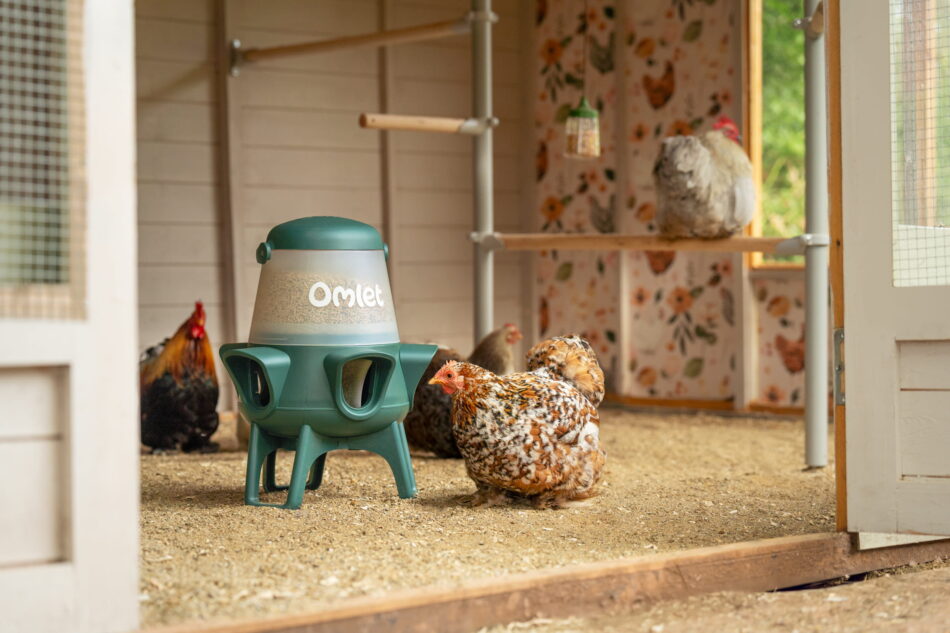
Understanding Chicken Behaviour
Chickens are intelligent, social animals with a natural drive to explore, peck, scratch, and interact with their environment from the moment they step outside in the morning. Left without outlets for these instincts, they don’t simply rest. They redirect that energy in ways that can create problems for the flock, including feather pecking, restlessness, and increased competition within the pecking order.
A flock with genuine outlets for its natural behaviours will be calmer, healthier, and more productive. The connection between enrichment and egg production is well established: stressed or under-stimulated hens lay less consistently. Enrichment isn’t about keeping your chickens entertained for your own enjoyment (though that’s a brilliant side effect). It’s about meeting the behavioural needs that chickens have carried with them for thousands of years.
It’s also worth being clear about what enrichment is and isn’t. It isn’t a remedy for a poor setup. A cramped run, inadequate shelter, or social imbalance within the flock won’t be fixed by hanging a toy. Enrichment works best as a standard part of good chicken keeping, layered on top of a solid foundation of space, safety, and nutrition.
One thing most keepers underestimate: their own presence. Chickens that associate their keeper with positive experiences, whether that’s treats, calm handling, or simply spending time nearby, show lower stress indicators and stronger flock cohesion. You’re part of the environment too.
Signs Your Chickens Are Happy and Thriving
A content, well-stimulated flock has a distinct look and feel to it. Once you know what to observe, it becomes second nature to recognise how your chickens are doing on any given day.
Signs of a happy, well-enriched flock:
- Active foraging and scratching behavior throughout the day, not just at feeding time
- Relaxed flock dynamics with minimal pecking order disputes
- Consistent egg production for the breed and season
- Willingness to roost at dusk without hesitation or competition
- Dust bathing, preening, and social interaction between flock members
- Curiosity toward new objects, treats, or keeper presence
If your flock ticks most of these boxes most of the time, you’re doing a great job. Chickens aren’t perfectly serene creatures, and a little jostling and squabbling is completely normal. What you’re looking for is a general baseline of activity, engagement, and calm.
When to Introduce More Enrichment
Certain behaviors are worth taking seriously as signals that your flock needs more variety or stimulation. The key is not to panic. These are common, manageable situations that any keeper can address with simple changes.
Reduced activity or increased time spent stationary is worth investigating first with a health check, since lethargy can sometimes indicate illness rather than boredom. If your chickens check out physically, the next step is looking at the environment.
Feather pecking directed at flock mates is one of the clearest signals that the environment needs more variety. Chickens that are redirecting their pecking instinct at each other are telling you they need more appropriate targets for that behavior.
Pacing along the run perimeter is easily resolved by introducing new stimuli or simply rearranging existing accessories. Novelty is a powerful motivator for chickens, and sometimes moving the same objects to different positions is enough to spark renewed interest.
Egg eating can often be addressed through foraging enrichment and nest box adjustments. Chickens that have enough to do throughout the day are less likely to turn their attention to the nest box out of curiosity or habit.
Chicken Enrichment Ideas for the Run
The run is where most of your flock’s waking hours are spent, which makes it the most important place to focus your enrichment efforts. The best setups appeal to the full range of natural chicken behaviors: foraging, perching, pecking, and socializing. You don’t need to do everything at once. Start with one or two additions and build from there.
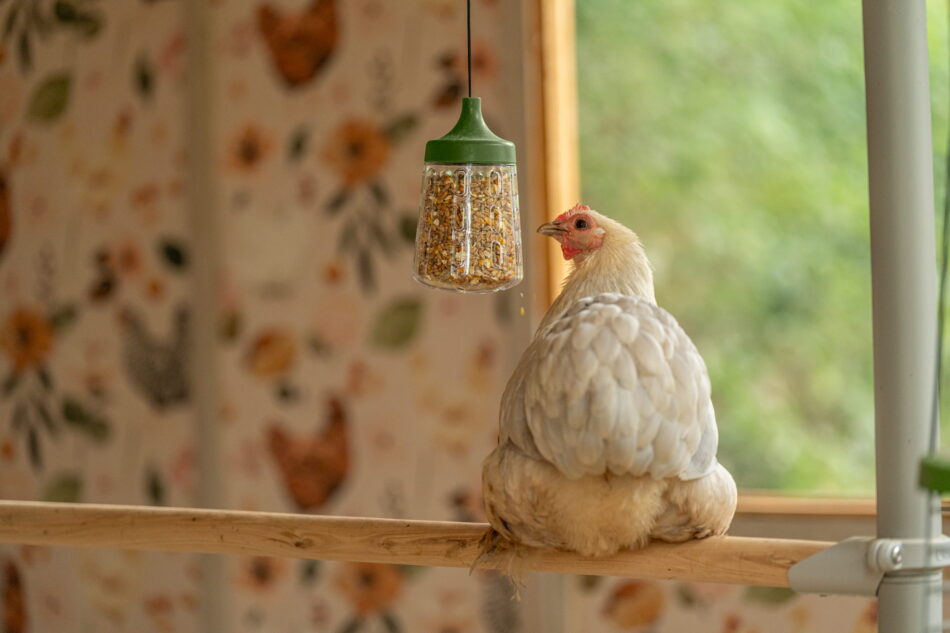
Chicken Toys
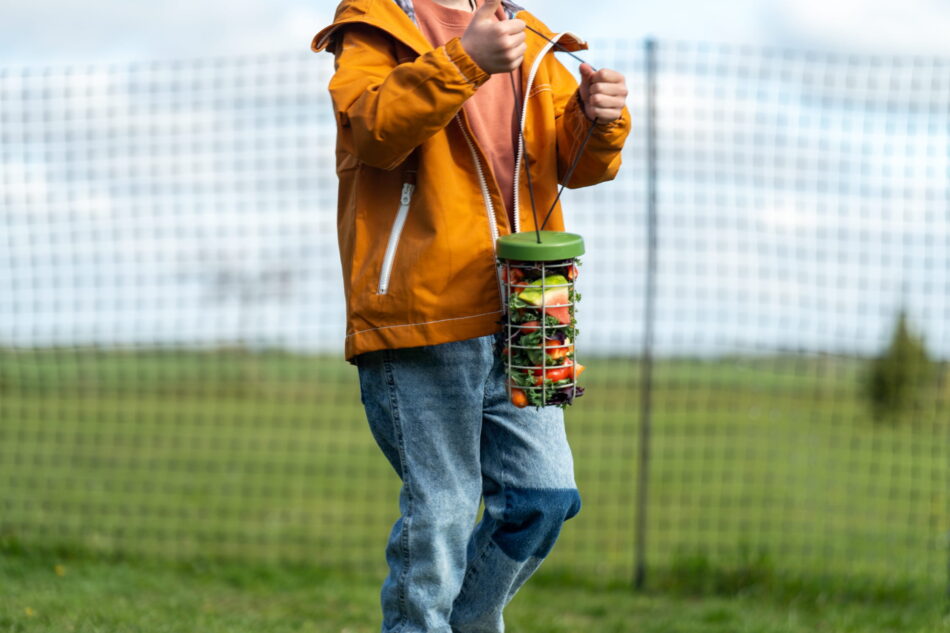
Toys are one of the most satisfying enrichment upgrades because the results are immediate. Hang a Caddi Chicken Treat Holder in the run and watch your flock go to work. The Caddi holds treats off the ground, which is healthier for your chickens and keeps the run cleaner. Because it gently swings as it’s pecked, it creates a moving target that engages the foraging instinct in a way that a bowl of treats simply can’t replicate.
For even more tactile stimulation and visual interest, peck toys like the Pendant Peck Toy and Poppy Peck Toy are brilliant additions. They move when pecked, giving chickens a satisfying and repeatable challenge.
The Chicken Swing offers something different: a perching spot that moves. It’s textured for secure footing and suits chickens of all ages and breeds. Hang it low for younger or more cautious chickens, then raise it as confidence grows. It adds a different kind of physical engagement to the run that standard perches don’t provide.
For DIY options, repurposed xylophones, small mirrors, and bells are low cost and high novelty. The key with any toy is rotation. Swapping items in and out of the run every few weeks maintains interest far more effectively than leaving the same setup in place indefinitely.
Perches and Aerial Space
Perching is one of the most fundamental chicken behaviors, and offering multiple heights within the run makes a meaningful difference to flock dynamics. When chickens can spread out vertically, there’s less competition for ground space and more opportunity for natural territory spacing within the group.
Run-mounted perches are an ideal solution if you’re working with a smaller yard or want to keep the floor clear. The Omlet Chicken Perch clips securely to any run mesh with no floor space lost, and it comes in 3ft and 6ft lengths to suit different run sizes.
The Omlet Freestanding Chicken Perch takes things further. It’s moveable, customizable, and can be positioned anywhere in the yard. You can add eucalyptus perches at any height or orientation, adjust the setup as your flock grows, and move the whole structure whenever you want to give your chickens a fresh perspective on their space.
For keepers with a tall walk-in chicken run, the PoleTree Chicken Perch is one of the most impactful enrichment additions available. It transforms vertical run space into a multi-level activity zone, with perches at different heights and the option to add treat dishes and Caddi holders directly to the structure. The PoleTree attaches directly inside the walk-in run and is designed to fit perfectly within it, making it the obvious choice for keepers who want to make the most of their run’s full height.
Foraging Opportunities
Foraging is what chickens are built to do, and creating opportunities for it throughout the day is one of the simplest and most effective enrichment strategies available.
- Fall: Leaf piles with treats hidden inside will keep your hens occupied for a long time. The combination of rustling material and hidden rewards is irresistible.
- Spring and summer: Fresh grass clippings or grass hay spread across the run floor gives chickens something to scratch through and explore.
- Winter: Alfalfa hay is a warming, protein-rich option with a natural foraging texture that works brilliantly during the colder months when fresh greens are harder to come by.
Varying what you offer by season keeps the experience fresh and ensures your flock is always encountering something new.
Dust Bathing
Dust bathing is essential for feather and skin health, and it’s also one of the most social activities in a flock’s daily routine. Hens often dust bathe together, and providing a dedicated space for it supports both physical wellbeing and social bonding.
Suitable substrates include fine dry soil, sand, wood ash, or a combination of all three. The most important practical consideration is keeping the area dry. A covered dust bath area ensures your chickens can access it regardless of the weather, which matters more than most keepers realize until they see their hens trying to dust bathe in wet mud.
DIY Chicken Enrichment
You don’t need to spend a lot to create a well-enriched environment. Some of the most effective enrichment ideas cost very little, and chickens often respond just as enthusiastically to a cardboard box as they do to a purpose-built toy. The most important factors aren’t cost or complexity. They’re novelty and rotation.
Easy DIY Ideas to Try
Treat-filled cardboard boxes or paper bags are a simple and satisfying foraging activity. Fill a box with some hay or shredded paper, hide treats inside, and let your chickens work for their reward. The box will be destroyed quickly, but that’s part of the fun.
Hanging herb bundles provide sensory enrichment with no special equipment at all. Tie together a bunch of fresh herbs like parsley, oregano, or mint and hang it from the run at pecking height. Chickens will peck at it throughout the day, and many herbs have mild health benefits too.
Repurposed children’s toys like xylophones and bells can be surprisingly effective. The sounds and textures are novel enough to attract attention, and they’re often available cheaply from thrift stores or yard sales.
Homemade treat puzzles are easy to make with materials you already have. Hide food inside flowerpots turned upside down, or place treats under cups that your chickens have to flip over. The problem-solving element engages chickens in a way that simply presenting food doesn’t.
The golden rule with all DIY enrichment is to rotate regularly. Something that kept your flock busy for an hour last week will barely get a second glance if it’s been in the same spot for a month. Freshness and novelty do most of the work.
Human Interaction as Enrichment
Of all the enrichment sources available to a backyard flock, the keeper is one of the most powerful and the most frequently overlooked. Chickens are social animals that learn to associate people with specific outcomes. When those associations are consistently positive, the effect on flock behaviour is significant.
Chickens that are handled calmly and regularly from a young age, and that associate their keeper with treats, calm voices, and gentle handling, tend to be more relaxed overall. They’re easier to manage, less flighty when you need to catch them, and generally calmer within the flock. The stress response that comes from an unpredictable or infrequent keeper presence has a measurable effect on behavior and productivity.
You don’t need to spend hours with your flock every day to see the benefit. Even spending ten to fifteen minutes near the run, talking quietly and offering treats by hand, builds a positive association over time. Introducing novel safe objects during these visits, a new branch to investigate, a different container, a handful of something unfamiliar, provides additional stimulation without any cost at all.
The simplest enrichment of all: sit near your flock, let them approach you and offer treats by hand. It costs nothing and it’s one of the most effective things you can do for a calm, well-bonded flock.
Key Takeaways
- Chickens are intelligent, curious animals that thrive with intentional enrichment in any setup, whether they free-range or live in a run.
- A well-enriched run produces a flock that’s calmer, healthier, and more productive.
- Behavioral signals like feather pecking or pacing are common and easily resolved with simple enrichment changes.
- The most effective enrichment appeals to natural behaviors: foraging, perching, dust bathing, and social interaction.
- DIY enrichment is low cost and highly effective. Rotation and novelty are the most important factors.
- Human interaction is a genuine and meaningful enrichment source that strengthens the keeper-flock bond.
Omlet and Your Flock
A well-enriched setup starts with the right foundation, and that’s exactly what Omlet’s products are designed to provide. Eglu coops are built to be customized and expanded over time, giving you a strong starting point for building an environment that grows with your flock’s needs.
The Omlet Walk-In Chicken Run provides the space and structure needed to spend time with your flock, install perches, dust baths, foraging areas, and toys. Our full range of enrichment accessories, from the Caddi Treat Holder and peck toys to the PoleTree and Freestanding Perch, is designed to work seamlessly alongside your coop, so everything fits together the way it should.
Whatever stage you’re at with your setup, there’s always a next step worth taking.
This entry was posted in Chickens