The Omlet Christmas Shop is back and better than ever!
Tick off Christmas presents for your VIPs (very important pets) with the Omlet Christmas Shop and our wide range of festive toys, treats and more, for all of your beloved pets.
Kick off the most wonderful time of year with our range of advent calendars for dogs, cats, and small animals. A fun, festive tradition which kids (and grown ups) will love sharing with their furry friends.
For dogs, we have a wide range of delicious treats in a variety of Christmas flavours, from Turkey bites to Christmas pudding cookies, as well as fun and cuddly toys that will keep them happy in the excitement of Christmas Day! You can even keep your canine friend cosy and warm this December, with our super cute winter jumpers available in 3 sizes.
For the feline residents of your home a wide selection of treats and toys are available, including a Grumpy Cat LED lights wand and brussel sprouts rattles for interactive play. The Deluxe Christmas Stocking makes the perfect gift for your fellow crazy cat lovers, and are also available for all other animals.
Back by popular demand this year is our delightful Christmas Coop-pourri. Add a fresh scent of Christmas cheer to your girls’ nesting area with our blend of fifteen herbs, flowers and spices, including notes of cinnamon and clover. For chickens, we also have our popular Peck Toys, Caddi Treat Holders, plus new hanging seed decorations. The new Automatic Chicken Coop Door makes a great gift for chicken keepers as it can be fitted to all wooden coops, the Eglu Cubes and all Eglu runs.
For small pets, including rabbits, guinea pigs and hamsters, we have a variety of Christmas themed gnaws, as well as a super cute snowy igloo and a delicious celebration cake!

This entry was posted in Christmas on October 8th, 2019 by chloewelch

Budgies make great pets. They’re easy to look after, intelligent, easily trained, and small enough not to eat you out of house and home or demand lots of space.
Because of the easy availability of budgies, it’s tempting to simply nip to the nearest pet store, bring one home, and take it from there. However, it’s worth answering a few questions first, to make sure you’re making the right choice, buying from the best place, and bringing the budgie home at the ideal time.
Where From?
The best place to source a budgie is from a local breeder. They will know the bird’s pedigree (and may even be able to introduce you to your new pet’s parents!) They will also know the exact age of your budgie, and will be able to give you details of the variety of bird you are getting. This won’t make any difference to looking after it, but will help you understand exactly why your pet has a particular colour or pattern – e.g. Opaline, Spangle, Skyblue, Texas, Yellow Face, Frilled, or a dozen other varieties.
Check online of in a local directory for a list of local budgie breeders. The closer to home the better, as it’s best to minimise car journeys when bringing new birds home.
A good pet shop is the second best option. The budgies here will usually be healthy, but the shop will not have bred the birds itself, and so will not usually have full background knowledge of each individual. They may also be a little vague about the age of the pets they have on sale. Shop birds are often relatively old, and a bit set in their ways. This makes them more difficult to hand-tame.
Where To?
Budgies needs a suitable space in the home, away from direct sunlight, draughts, steamy kitchens, scary dogs and cats, screaming children and bright lights. They also need a cage of a suitable size, equipped with all budgie mod cons. The geodesic Geo bird cage makes a perfect home for all small birds, including budgies.
When to Buy?
A budgie should not be brought home before it has passed the eight-week mark, and ideally it should be no older than 16 weeks. Young birds are much easier to hand-tame and train, and young males have a better chance of becoming talking budgies.
Older birds, especially ones that have lived in a cage with other budgies for a long time, tend to be less trusting of humans and therefore more difficult to train. However, an older budgie that has already had experience of perching on human hands will make the transition easily, regardless of its age.
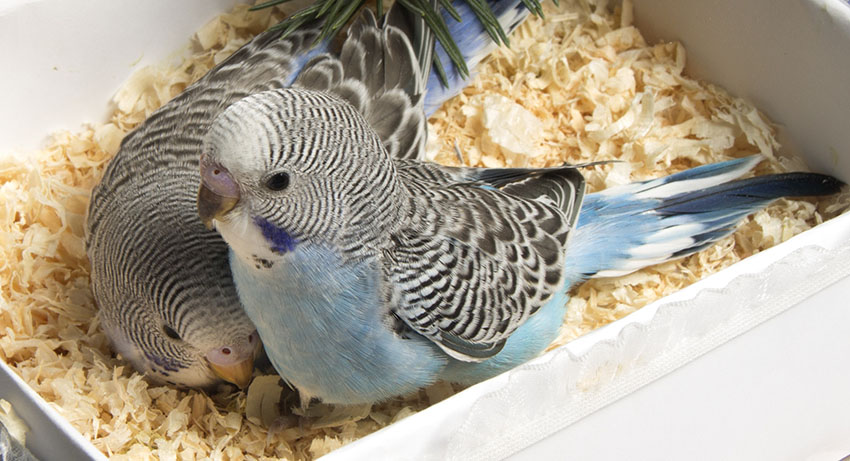
You can check the age of the bird yourself, using a simple visual clue. Young budgies have horizontal stripes across their heads, including the forehead. These disappear after the bird’s first moult, (three to four months after hatching). So, any bird with a barring pattern on the head will be less than 16 weeks old.
As for your own part in the ‘when?’ question, bring your new budgie home at a time of relative peace and quiet. Renovations, house moves and long holidays are not good times to buy a new pet!
Which Type?
All budgies are beautiful, whatever their age, gender, colour or coat pattern. It’s best not be dazzled by colour. Sometimes you’ll see a budgie with unusual or colourful plumage and think ‘That’s the one!’ But there are more important factors to consider, such as age, personality, and gender.
Ideally, you want a young, confident bird. An older budgie will take more time hand-taming; a shy one is likely to remain shy and flighty; and a female bird is not going to talk (if that’s something that’s important for you as a budgie keeper – although bear in mind that no budgie is guaranteed to learn how to talk).
Why?
This is a deceptively simple question. Why do you want a budgie? Is it for you, for the children, as a companion for an existing bird, or a replacement for a budgie that has passed away?
All pets require our time, and budgies are no exception. They should never be purchased simply to make a house look prettier, but should be considered as friends and companions.
Children don’t make good budgie keepers – at least, not if they are under the age of 10. Birds are very fragile, and easy to injure or frighten. They also require regular and reliable care, in terms of feeding and cleaning.
It may sound like a good idea to buy your lonely budgie a new friend, but the birds won’t always automatically hit it off. The newcomer will often end up bullied and unhappy, and you may need to separate them. This is less of an issue if you have a larger aviary, with plenty of space for a new bird to find his feet, to hide if necessary, and to gradually work out his place in the hierarchy.
Why Not?
It’s not all pros – there are cons too, as with any pet. Budgies, although not in the same league as cockatiels and larger members of the parrot family, are still noisier than the average finch or canary. They mix their musical bubbling chatter with squawks that can become very grating.
If the squawking goes on and on, it usually means the bird is unhappy with something in its cage or in the immediate environment. Make sure there are no drafts, ensure that the bird is not trapped in sunlight without shade, make sure the food tray and water dispenser are topped up, and keep other pets out of the room.
Then there’s the mess. Budgies manage to scatter seed husks over the floor, and at moulting time the slightest breeze will send handfuls of downy feathers floating to the ground. They’re not super messy, but obsessively tidy owners may start to get twitchy! By purchasing a cleverly designed cage, like the Geo, you will minimise the spill from the budgie flapping wings.
If you’ve considered these basic questions and decided to go ahead and buy a budgie, the rest is plain sailing and many years of happy companionship with your feathered friend.
This entry was posted in Budgies on October 8th, 2019 by linnearask
 Free returns
 180-day guarantee
 10% off your first order