 Free returns
  180-day guarantee
  10% off your first order
 How to Keep Chickens Healthy in Winter
For any animal living outdoors, winter is likely to be the most challenging time of year, and your chickens are no exception. The days are shorter, there aren’t as many bugs and plants to peck at, and the people they enjoy following around the garden tend to spend less time outside because of the cold weather.
But don’t worry, you can help your feathered friends stay happy, healthy and entertained by stepping in with creative solutions. When your chickens get bored, they might start pecking at their friends or even eating feathers and eggs. That’s why it’s so important for you to ensure that your flock has plenty of stimulation and fun in their run until warmer weather and longer days return.
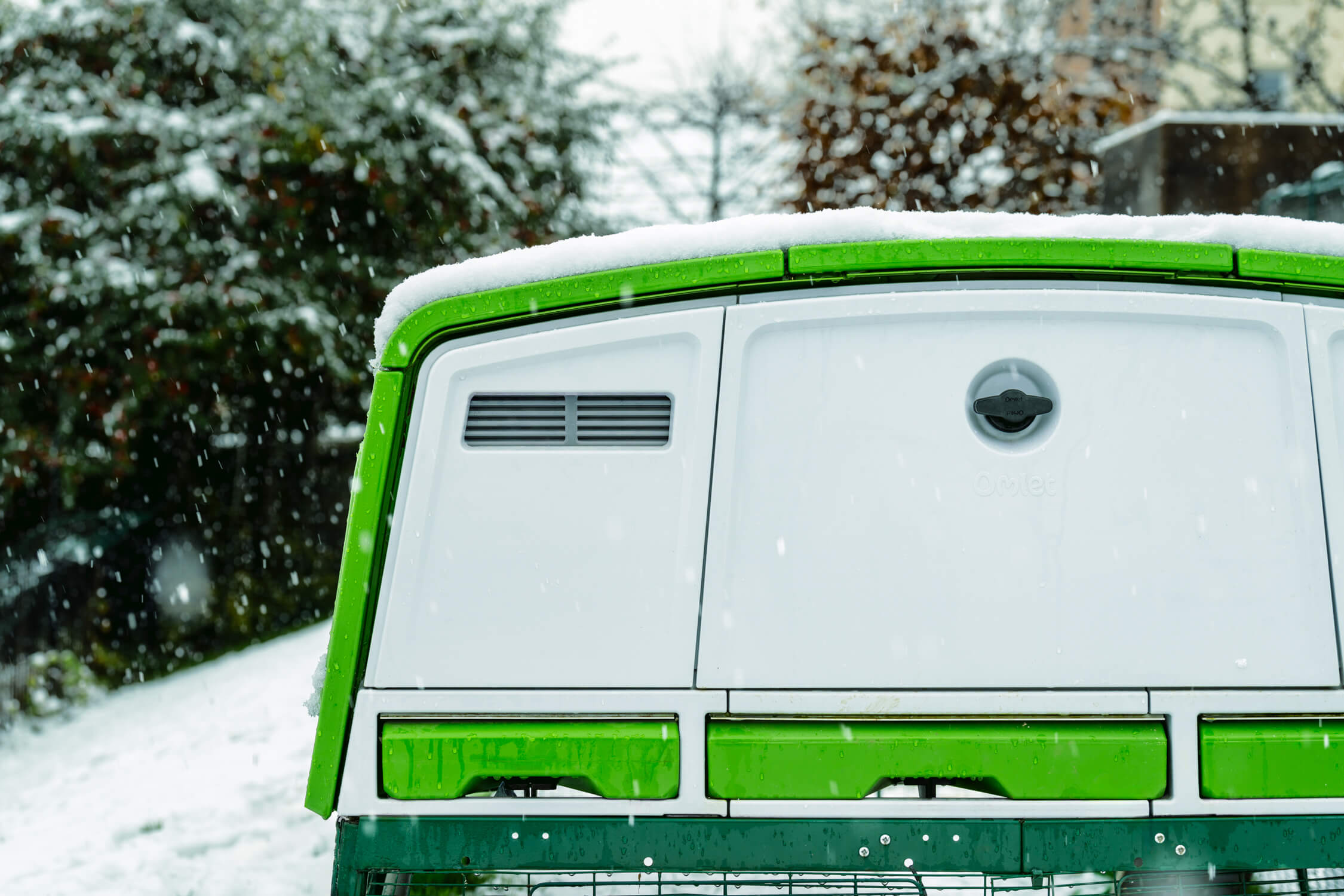
Weatherproof chicken coops keep hens warm and dry
The most important thing to get right for your chickens in winter is their environment, starting with the coop. Wooden chicken coops absorb moisture and without regular maintenance and repairs, can become draughty, damp and rotten quickly in winter. When paired with poor ventilation and insulation, hens are vulnerable to frostbite and respiratory problems.
Before winter sets in, take the time to complete repairs and winterproofing on your wooden coop, or upgrade to something much more suited to cold temperatures, like an Omlet Eglu plastic chicken coop. Here’s why you and your hens will love an Eglu in winter:
- Waterproof panels – keep out rain and snow, don’t absorb moisture and keep hens dry
- Twin-wall insulation – works like a coffee flask to retain your hens’ body heat inside the coop
- Purposeful ventilation – engineered to keep air inside the coop fresh without drafts, preventing moisture build up and respiratory issues
- Quick to clean in 5 minutes – makes it easy for you to maintain optimal hygiene for your hens, even in winter
Chicken perches provide winter entertainment
Enrich your hens’ environment for winter with perches. Perching is not only relaxing but also a stimulating activity for chickens. By offering perches at different heights in the run, you provide your feathered friends with exciting opportunities to relax and explore. Perches also enable chickens to step up off the cold icy ground.
This Chicken Perch, available in 3ft or 6ft lengths, can be easily installed anywhere on any chicken run. You can add as many perches as you like to keep your chickens engaged. Just make sure there is enough space for everyone to perch comfortably, and adjust the perch height to suit the age and abilities of your hens.
Chicken runs offer more room to roam
Sometimes a little extra space goes a long way. By giving your chickens a larger area to move around in, you encourage them to exercise and explore more. If you’re unable to let your flock free range, providing them with a bigger run is essential. The Omlet Walk In Chicken Run can be tailored to the space you have, and keeps your hens safe from predators while offering ample room to roam. Be sure to wrap your run with clear chicken run covers for winter to protect your hens from wind, rain and snow, while still letting sunlight in.
If you already have an Omlet Walk In Chicken Run, remember that you can always extend it with easy-to-add panels. Use the handy extension configurator to explore how to expand your run even further.
Straw and hay bales provide a fun challenge
Have you ever noticed how your hens go wild when they encounter a pile of leaves? They absolutely love demolishing anything they can get their beaks on, always on the lookout for tasty bugs and seeds. Place an appropriately sized bale in the run, and you’ll see your chickens immediately jump on top of it, eagerly pecking away and enjoying the challenge.
Chicken toys offer enrichment
Just like with dogs and small children, the right toys can keep your hens happily occupied for hours. Chicken Peck Toys are designed to release treats slowly, scattering goodies, corn, or grit as your chickens peck them. Omlet’s Poppy Peck Toy is pressed into the ground and shakes corn free with each peck, whereas the Pendant can be hung from the run or another structure, adding fun dynamic movement.
Consider giving your flock a couple of peck toys to ensure that every member gets a chance to play and have fun. This way you minimize the risk of only the dominant chickens enjoying all the treats.
Why winter changes everything about how you feed your chickens
Most chicken keepers know to top up the feeder a little more when it gets cold. But the reason behind that goes deeper than you might think, and understanding it makes you a much better flock manager through the colder months.
Chickens are warm-blooded, which means their bodies are constantly working to maintain a stable internal temperature regardless of what the thermometer outside says. In winter, that work costs energy, and energy comes from one place: food. The colder it gets, the harder their metabolism runs, and the more calories they burn just to stay comfortable.
According to research from Auburn University, a laying hen can consume up to 340 calories of metabolizable energy per day in winter, compared to around 260 calories in summer. That’s roughly a 30% increase in caloric demand, before you’ve even factored in egg production.
Did you know? A chicken’s digestive system is essentially its central heating unit. The act of metabolizing feed generates body heat, which is why chickens instinctively eat more when temperatures drop. Feed really is their furnace.
The practical upshot: if you’re feeding the same amount in January as you were in July, your hens are likely running a caloric deficit. And a hen in deficit will always prioritize staying warm over laying eggs.
How much more feed do chickens need in winter?
The short answer: plan for 10-20% more feed on a typical cold day, and potentially up to 50% more during prolonged cold snaps. A standard laying hen eats around 120-130g of feed per day in warmer months. Once temperatures fall below 10°C, that figure climbs, and it keeps climbing as the cold deepens.
Here’s a rough guide to what that looks like in practice:
- Above 10°C: 120-130g per hen per day, your summer baseline
- 0-10°C: 135-150g, around 10-15% more than usual
- Below 0°C: 150-195g, a 20-50% increase on colder days
These figures assume your hens are housed and not free-ranging. Free-range flocks forage up to 30% of their daily energy needs in summer, but in winter, when the ground is frozen and insects are gone, almost all of that has to come from their feeder.
What about scratch grains?
Scratch grains and cracked corn are popular winter supplements, and for good reason: the digestion of high-carbohydrate grains generates heat over several hours, making them a useful evening treat before your flock roosts for the night. Think of it as a slow-burn log on the fire.
That said, scratch grains are a supplement, not a replacement. Keep them to no more than 10% of your hens’ total daily intake, and always offer them in the evening rather than the morning. Filling up on scratch first thing can put hens off their complete layer feed, which is where the real nutritional value lives.
Did you know? Chickens fed scratch grains in the evening can generate enough digestive heat overnight to raise the temperature inside a well-insulated coop by a couple of degrees. It’s one of the simplest free heat sources available to backyard keepers.
What should you feed chickens in winter?
Adjusting for winter isn’t just about volume. The balance of what’s in that feed matters too, and a few things are worth paying closer attention to as the season changes.
More: complete layer feed
Your complete layer pellets or mash should remain the foundation of every meal, year-round. Look for a feed with 16-18% protein content, which supports not only egg production but also feather maintenance. Feathers are made almost entirely of protein, and winter is peak feather-maintenance season, especially for any hens still recovering from an autumn moult.
More: healthy fats and calories
Some keepers choose to switch to a slightly higher-calorie feed formulation in winter, or add small amounts of high-fat treats like black sunflower seeds. They provide a concentrated energy source that helps hens maintain body condition through the cold. You can use Omlet’s Caddi Chicken Treat Holder to serve these extras and keep the run floor clean.
Keep an eye on: calcium
Calcium requirements don’t change in winter, but egg production often slows down, which means hens may not be cycling calcium through their systems as efficiently. Keep oyster shell or a calcium supplement available free-choice so hens can self-regulate.
Did you know? A hen needs around 4 grams of calcium to produce a single eggshell. During winter, when she’s eating more but laying less, keeping calcium available free-choice means she can take exactly what she needs, nothing more, nothing less.
How winter feed affects egg production and overall health
Reduced daylight hours are the main reason hens lay less in winter, but feed quality is the second biggest factor, and it’s the one you can actually control.
When a hen doesn’t have enough calories coming in, her body makes a very logical decision: it redirects energy away from egg production and towards survival. You’ll see this show up as fewer eggs, thinner shells, or a complete laying pause. The frustrating part is that this can happen gradually and without any obvious signs of illness, so it’s easy to put it down to the season when the real cause is a feed shortfall.
The knock-on effects go beyond the egg box
Under-nourished hens in winter are more vulnerable across the board:
- Immune function drops. A hen running a caloric deficit has less energy to mount an immune response, making her more susceptible to respiratory infections and other cold-weather illnesses.
- Feather condition suffers. Poor feather cover means less insulation, which means the hen burns even more calories trying to stay warm. It becomes a cycle.
- Weight loss. Hens that lose body condition in winter can struggle to regain it before spring, which affects their laying performance well into the warmer months.
The good news is that the fix is straightforward: keep the feeder stocked, keep the feed high quality, and make sure every bird in the flock is getting access to it.
Why waste matters more in winter
If your hens are eating up to 50% more feed than usual, even small amounts of waste add up quickly. Feed that gets spilt, scattered, or stolen by rats, is important feed that your flock aren’t eating.
The Omlet No Waste Chicken Feeder has narrow port openings with a lip that catches and contains loose feed to stop spills. No waste, no mess, no worries.
The Smart No-Waste Chicken Feeder is also expertly engineered to stop spills, plus the ports automatically close at night and open again in the morning, so you don’t have to dash out in the cold and bring the feeder inside at night to stop twilight pests helping themselves.
Winter feeding: a quick-reference checklist
- Increase daily feed by 10-20% once temperatures drop below 10°C
- Stick with a complete layer feed with 16-18% protein as the dietary foundation
- Offer scratch grains or cracked corn as an evening treat only, up to 10% of daily intake
- Swap out watery summer treats for warmer, calorie-dense alternatives
- Keep oyster shell or calcium supplement available free-choice at all times
- Use a no-waste feeder to protect feed from rain, pests, and wild birds
- Check feeders more frequently in winter; hens are eating more and running out faster
An insulated drinker will prevent freezing in cold temperatures
Keep a close eye on your chickens’ water during winter as freezing temperatures can quickly turn it to ice. If you’re fed up of repeatedly having to break the ice in your chicken’s water, consider an insulated chicken drinker. The Omlet nipple drinker is engineered for extreme temperatures, with inch thick insulated walls to stop the freezing temperatures outside from reducing the water temperature inside, so your flock always has fresh flowing water to drink.
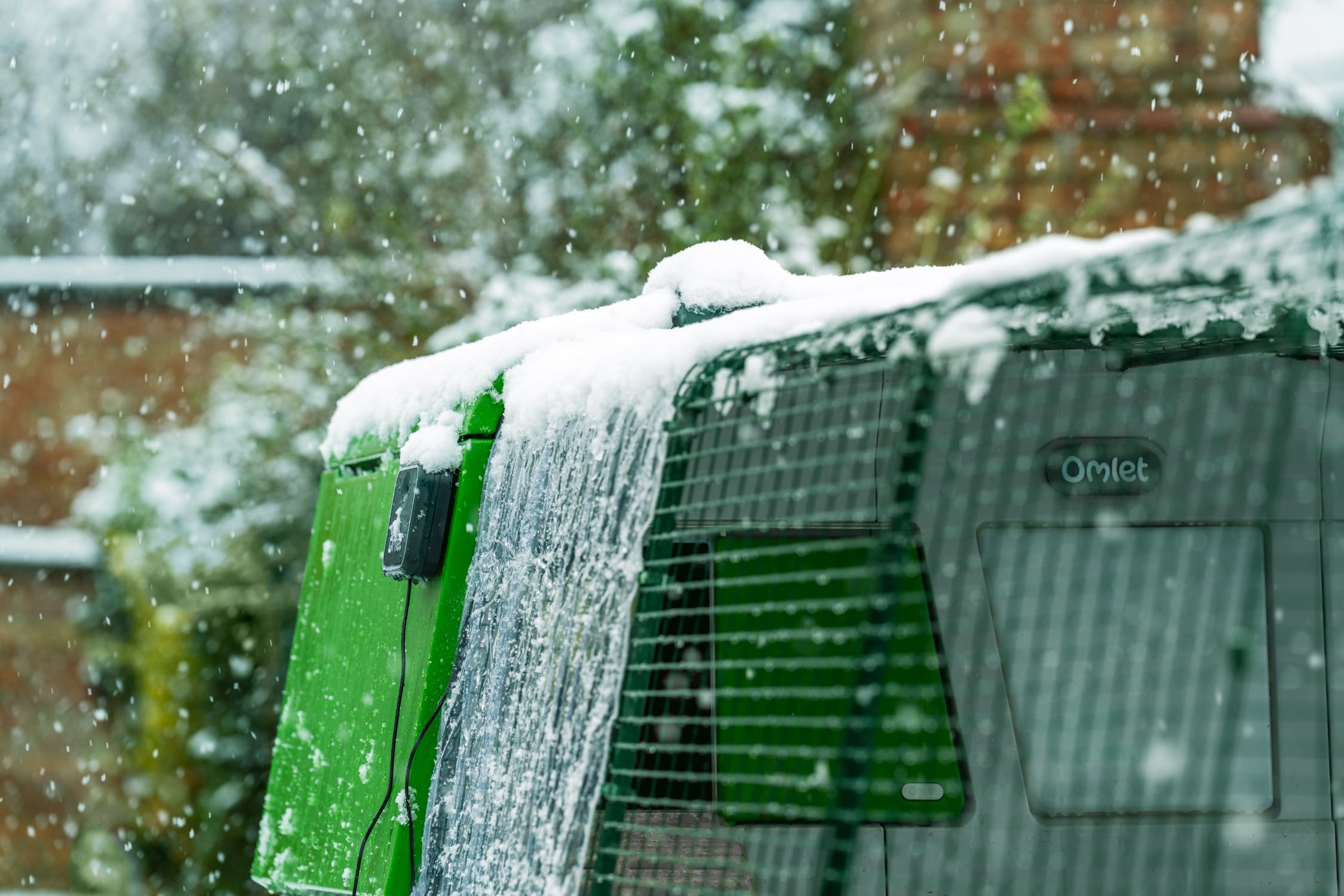
Omlet and your flock
Keeping your chickens happy and healthy this winter is a breeze with a little extra care and the right Omlet essentials. Simple steps can make a big difference, helping your flock stay warm, active, and full of life, no matter how chilly it gets outside. With the right weatherproof chicken coop, an insulated chicken drinker, and fun toys and perches designed just for your hens, you can relax knowing your chickens are safe, comfortable, and ready to enjoy winter.

This entry was posted in Chickens