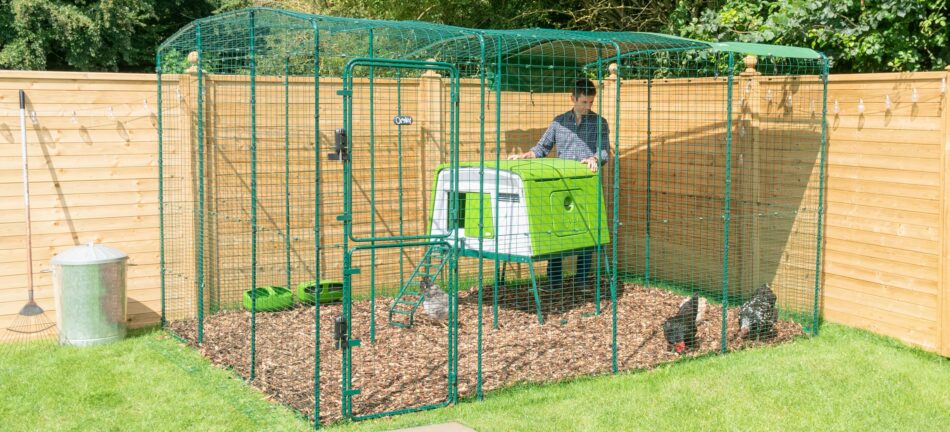
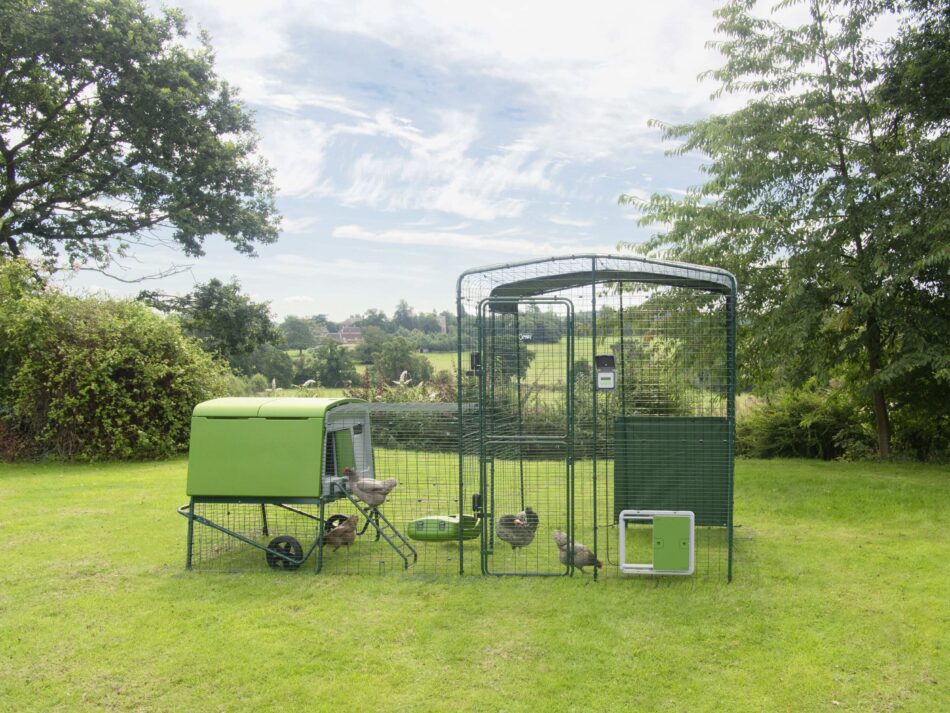
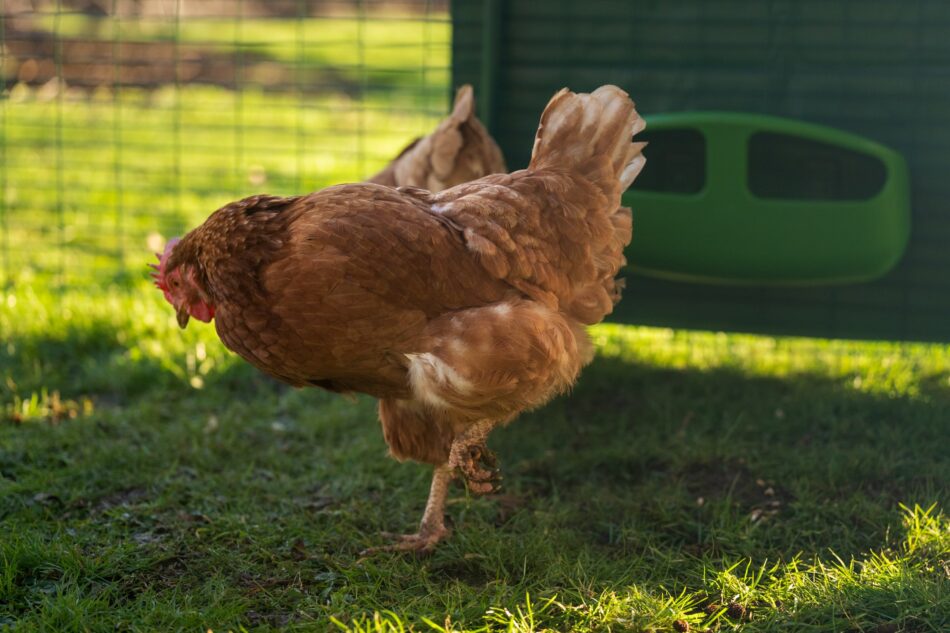
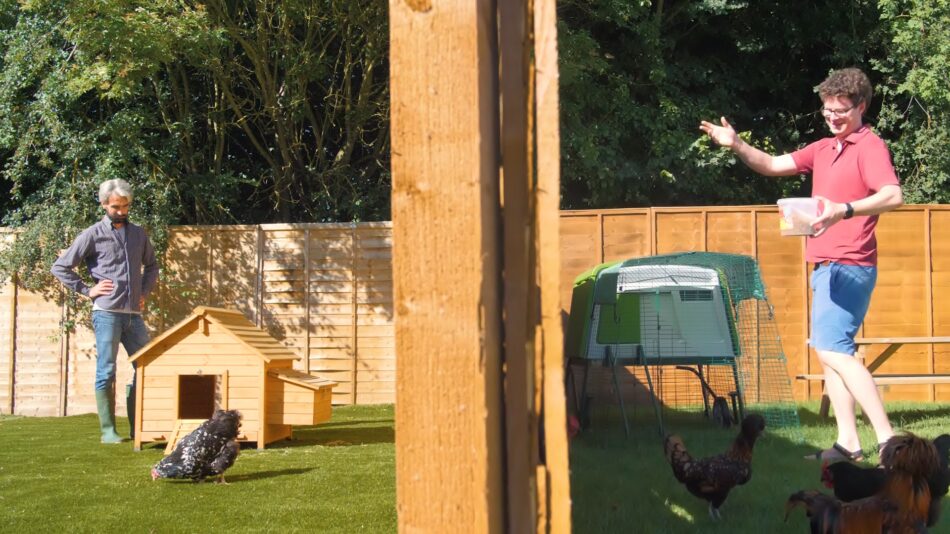
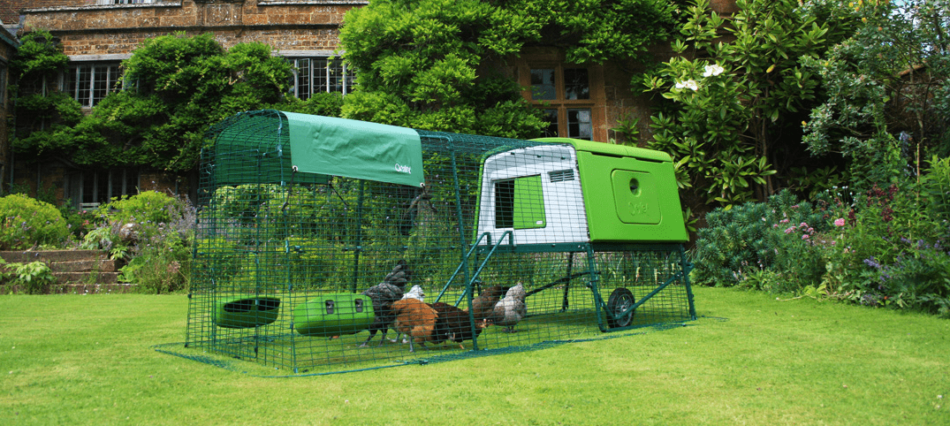
Can you keep chickens and ducks together? This may be a question you’ve raised as you’ve ventured further into the world of poultry. Ducks and chickens can cohabitate, but there are some modifications and considerations to take into account. For example, only female ducks (hens) should be kept with your chickens, and some adjustments need to be made to their waterers. Find out everything you need to know about keeping chickens and ducks together before diving into mixed-flock keeping.
Why keep chickens and ducks?
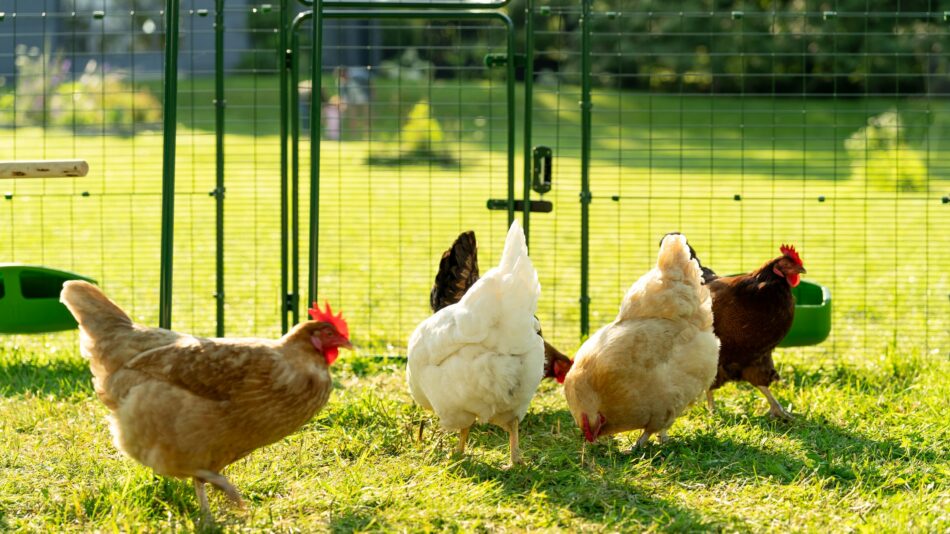
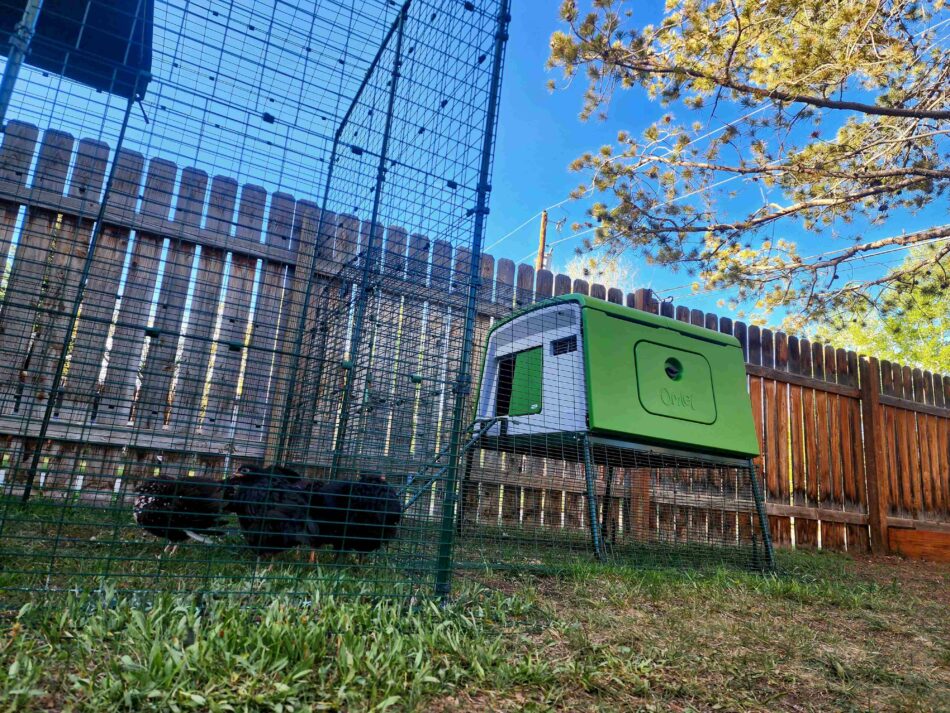
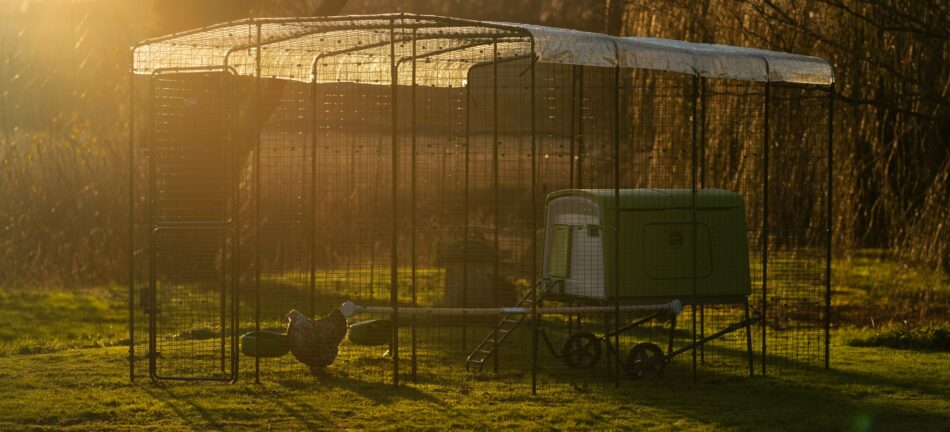
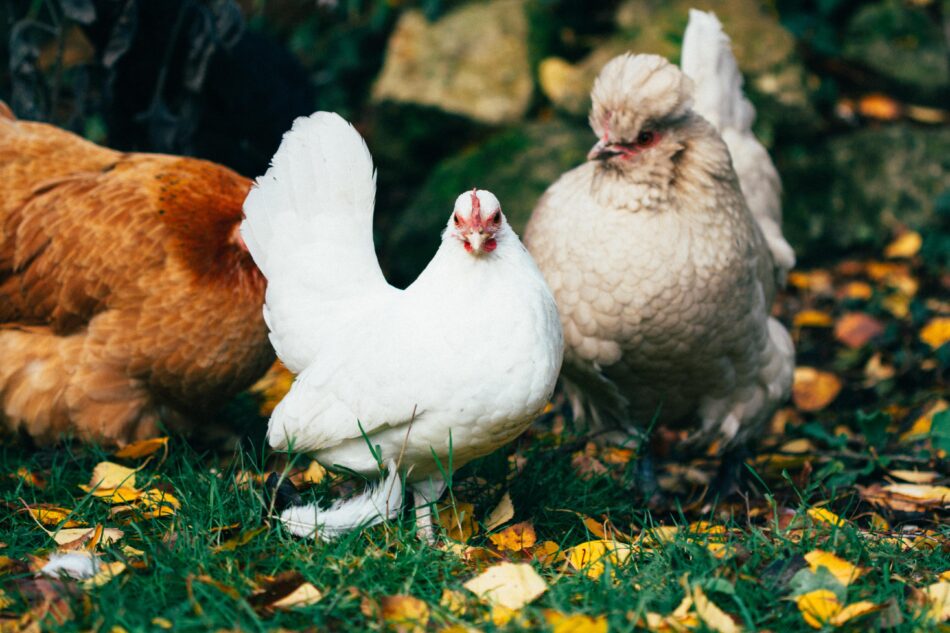
Chickens and ducks have similar dietary and space requirements, so they can easily be kept together. Both species can thrive as a free-ranging flock, or in coops and runs. Ducks also lay eggs, and depending on the breed, can lay as often as one egg per day.
In addition to adding variety to your egg basket, ducks offer an infusion of personality into your chicken flock. Their social behaviours are similar to those of chickens, but tend to be more laid back than hens.
3 tips for chicken and duck harmony
Housing and space
Ducks prefer to roost at ground level, while chickens seek out an elevated sleeping spot. For mixed flock keepers, this leaves a couple of different options:
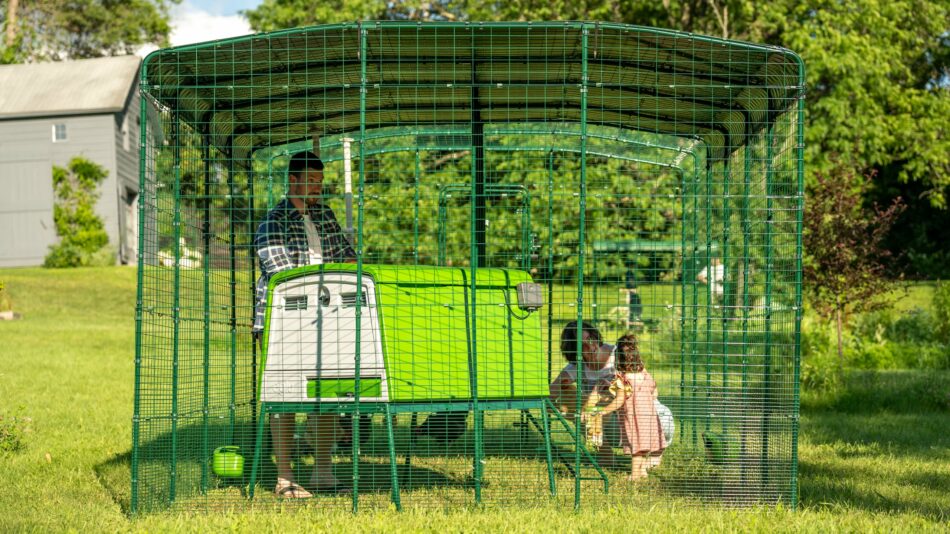
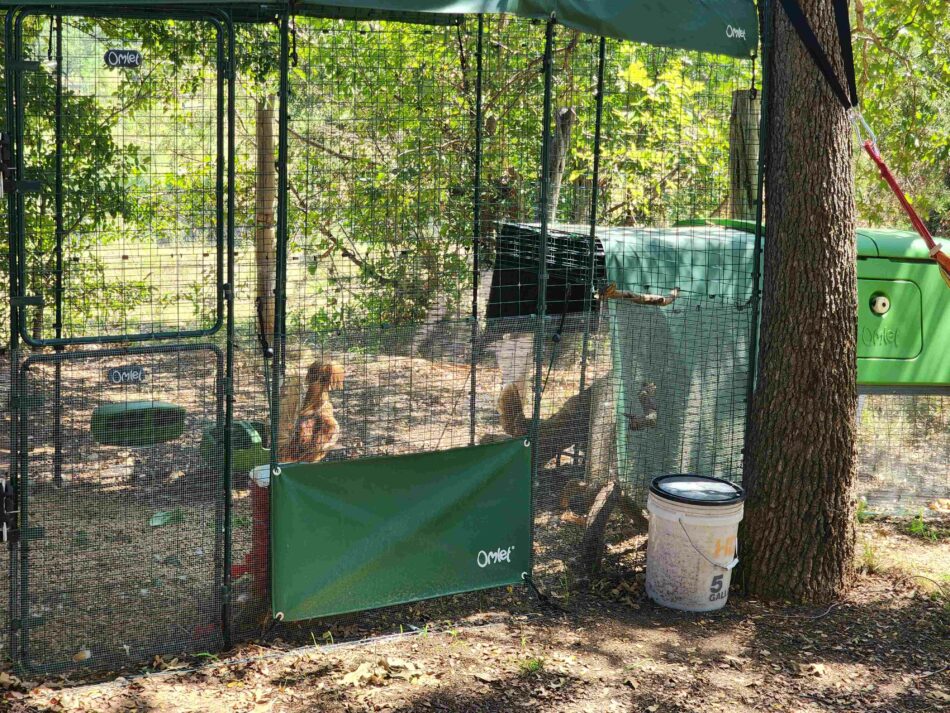
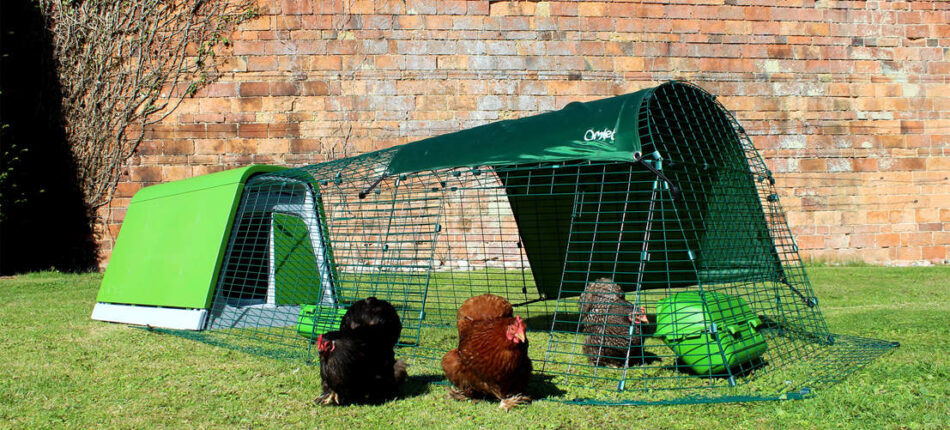
The area beneath the Eglu Cube Chicken Coop can be utilised for your ducks by covering the sides with chicken run covers. You’ll also want to provide your ducks with a nesting box at ground level – which your chickens may utilize as well.
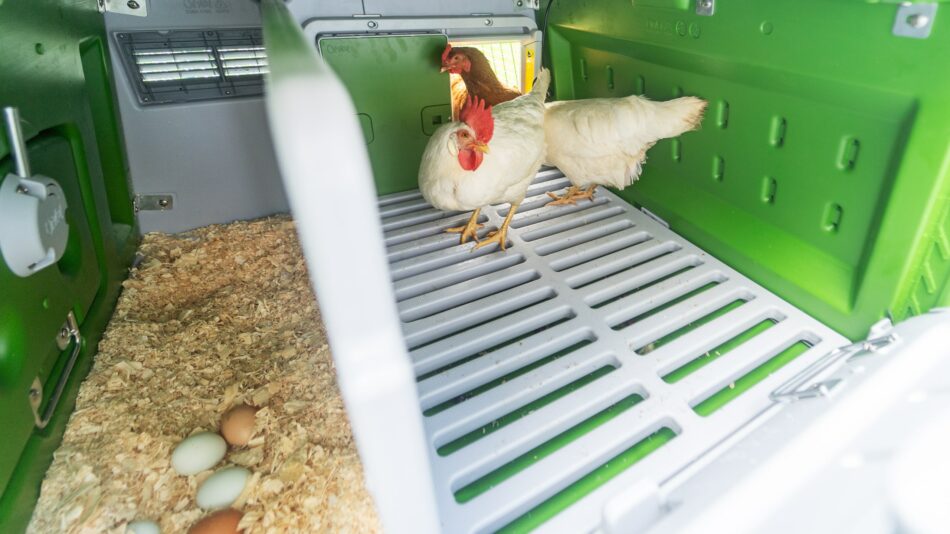
An Eglu Go hen house with the roosting bars removed works wonderfully for webbed-footed flock members. Most domesticated breeds of ducks will fit comfortably inside, but be sure to verify the size of full-grown hens of the breeds of ducks you’re considering to compare with the size of the Eglu Go. If you’re unsure, ourknowledgeable team can help you decide if your ducks will be comfortable in one of our coops.
Beaks and bills
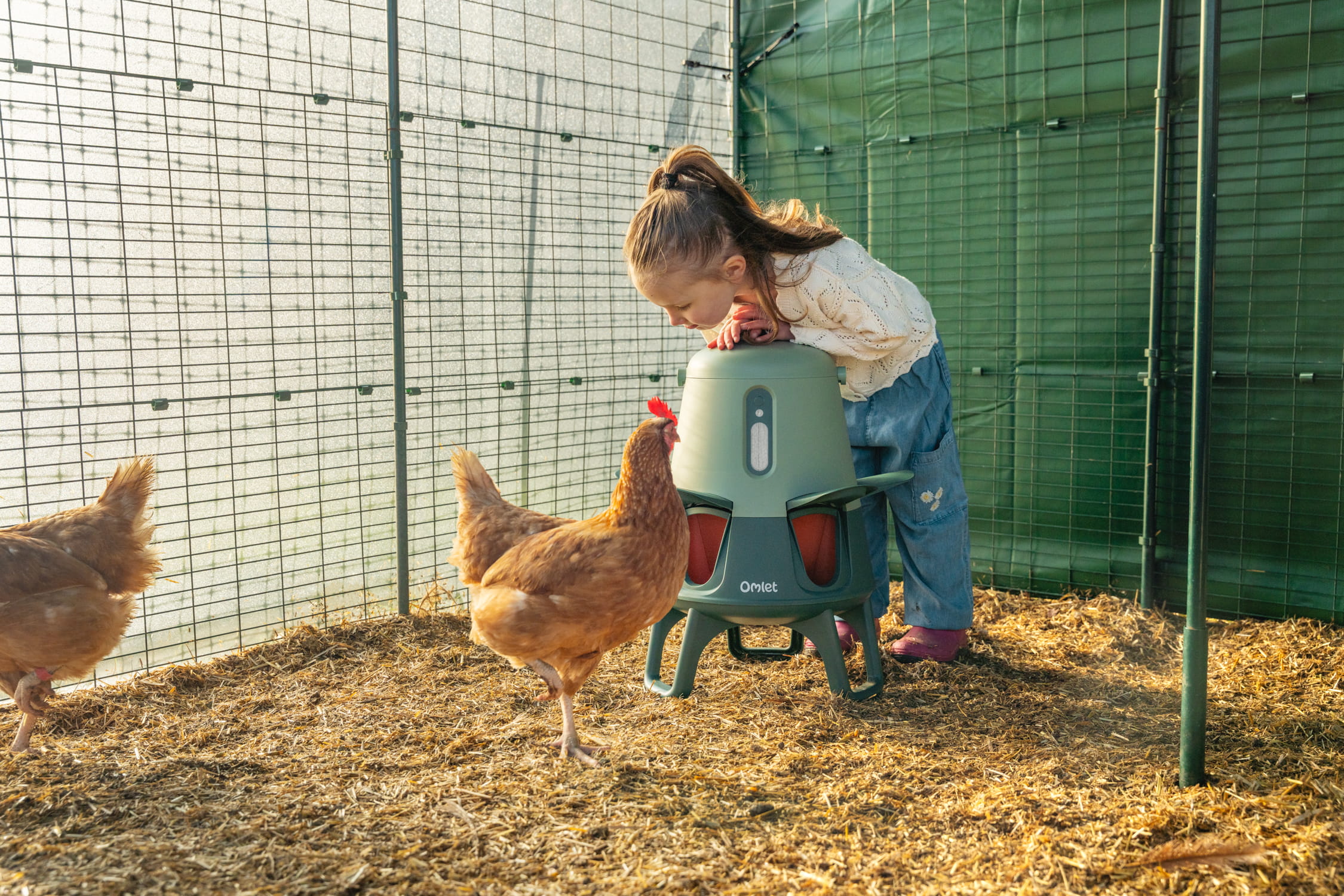
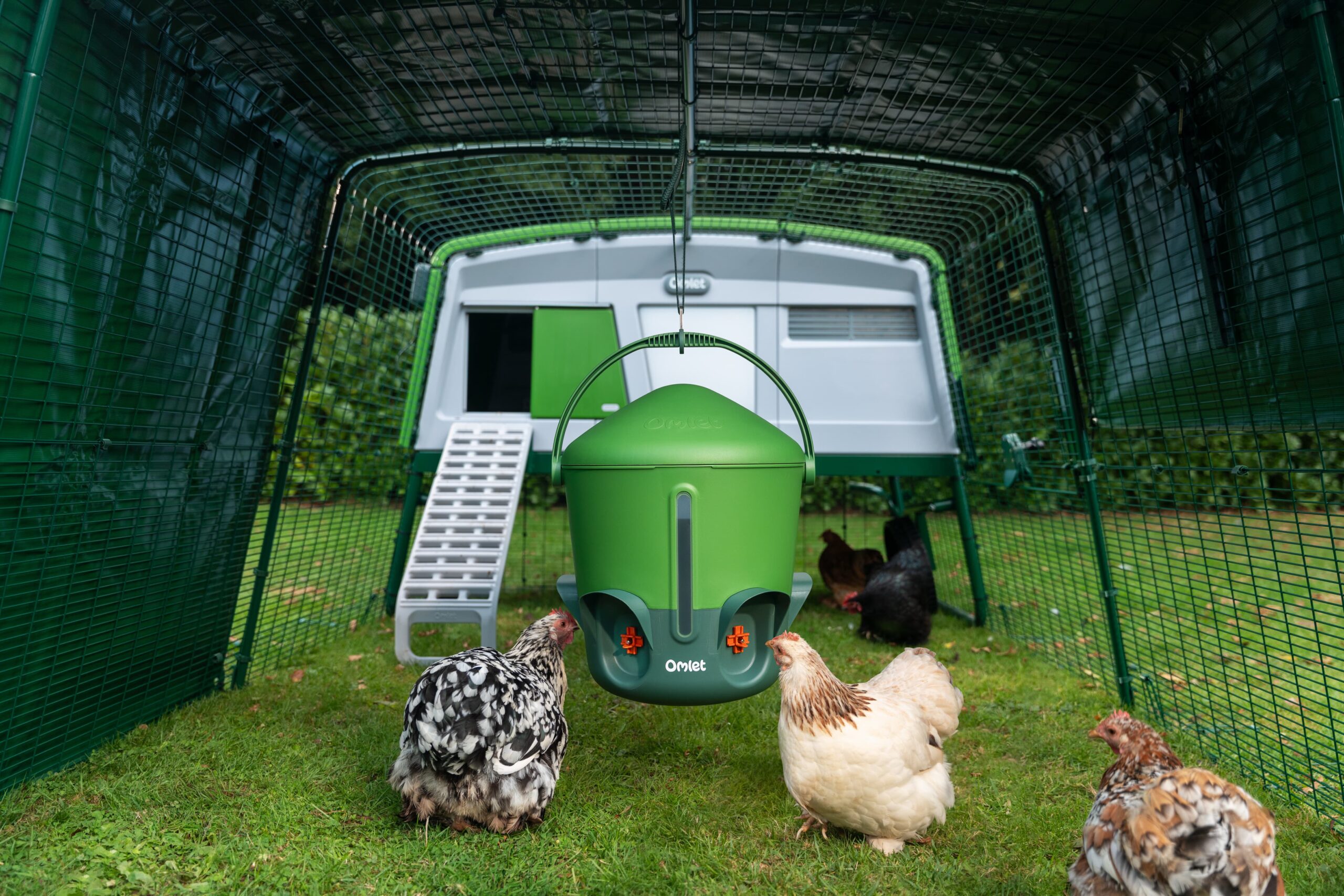
Chickens have beaks, while ducks have bills. Duck’s mouths are shaped mainly to forage in wetlands. Their flat, wide mouths have tiny hair-like structures along the edges called “lamellae” that filter their findings through water and mud. Because of the shapes of their bills, they need open container waterers – but not so large that they’ll want to climb in for a swim. A run-mounted chicken drinker is a great option for both species.
Because chickens have narrow beaks instead of wide bills, serving their scratch grains and treats in chicken peck toys and hanging dispensers will ensure they get their share of the daily allotment. Ducks can scoop grains and treats up quickly with their shovel-like mouths, potentially before more timid hens can get to them.
Create a swimming section
Ducks need access to water, especially during the warm summer months. Children’s wading pools or shallow water troughs make perfect swimming areas for small flocks of ducks. This area should be a separate area from your chickens’ pecking areas – ducks will happily splash water haphazardly and create muddy areas. A chicken walk in run partition can be used to create their own swimming section within the shared run.
Keeping chickens and ducks: what else to consider
Chickens and ducks can eat the same diet – a quality layer feed of 16% protein is fine for a mixed flock. Feeders should have openings large enough for your ducks’ bills to fit into, or be open-topped containers. The same fresh foods, treats, and scratch that you feed your chickens can be given to ducks as well.
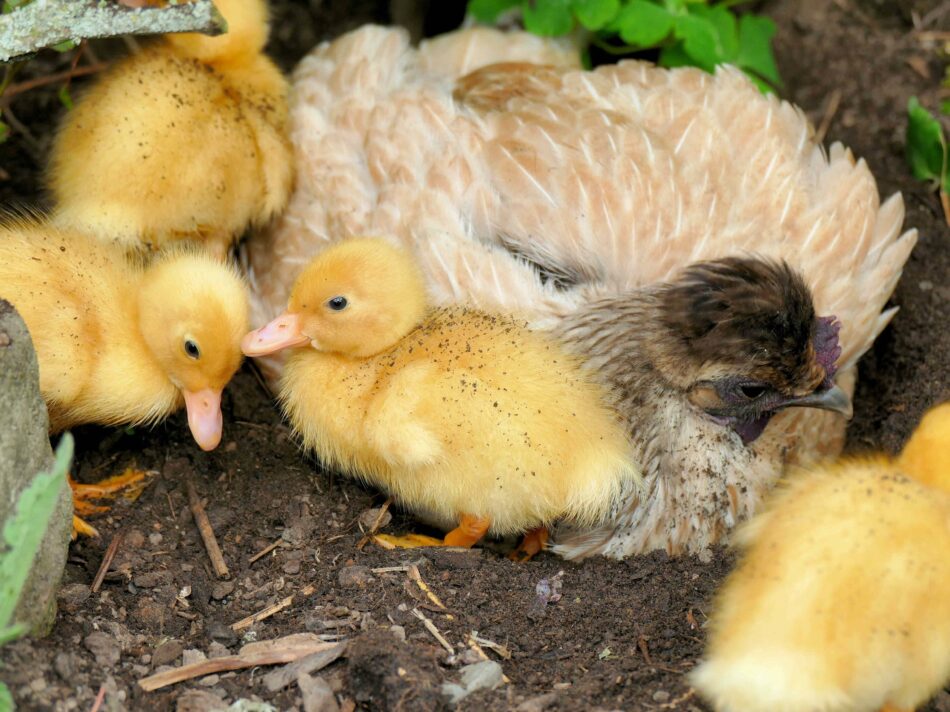
Raising ducklings and chicks together can be done without many adjustments, but be sure that your brooder is large enough to accommodate at least two different temperature zones. Ducks mature faster than chickens, so ducklings won’t need as much heat for as long as chicks will. They’ll also try to play in waterers, so the bedding of the brooder will need to be changed frequently.
And finally, it’s crucial that only duck hens be kept with chickens. Male ducks (drakes) can be very aggressive with hens, and attempt to mount them as a cockerel would. But, not only does this not result in offspring, the size of the drakes will cause injury to chicken hens. Duck hens are much more even-tempered, and can cohabitate with chicken hens without issue.
Again, only female varieties of each species should be kept together to avoid potential injury. There are some dietary and housing considerations to be made for each species you keep, but it’s definitely possible to keep more than one type of bird together.
Omlet and your flock
At Omlet, we aren’t just a group of engineers and inventors – we’re animal behaviourists. We consider first the pets we design our setups for, then how their owners can maintain their health and happiness and deepen their mutual bonds. When considering adding ducks in with your chickens, our Eglu Go hen house and walk in chicken run are an excellent pairing to maintain harmony with your hens of both species.
Hey y’all! My name is Alyssa Holland, and I live on a small hobby farm in north-central Texas. We have all kinds of animals on our farm: horses, goats, a miniature pig, rabbits, guinea pigs, dogs, cats, fish, and of course — chickens! We have around 25 chickens currently, and tend a mixed flock of many different breeds. Most recently, we’ve added a rescue pigeon to our flock that thinks she’s a chicken!
It’s late November, and my chicks have officially made the move from brooder to coop! As I mentioned in my previous blog, a lot of thought and consideration went into where to place them, and ultimately I had to rehome 2 of the 6 chicks that I started with. But, it has worked out wonderfully, and I now have a small flock of thriving pullets — and a surprise rooster! See how we made our final transition, and my top tips and tricks to make the move smooth and stress-free.
Before moving chicks
I had to make some important decisions and modifications before moving my chicks. Even though my chicks were old enough to make the move, I had to assess their strength and agility, determine their future flockmates, and rearrange some of their essentials.
Determine physical capability
The most important thing to consider before moving your chicks is if they are fully feathered or not. Chicks that don’t have all of their adult feathers should never be without a heat source. The brooder temperature should be decreasing each week, but chicks with even tiny amounts of fluffy down feathers should not be removed from the brooder. Most breeds are fully feathered by 5 or 6 weeks of age, but I prefer to wait a little longer to make sure they’re mature enough to weather the elements.
For an elevated coop like the Eglu Cube, it’s important to consider your chicks’ physical ability. I actually outfitted the ladder with a homemade ramp, as my Silkies had trouble navigating the rungs. I’ve left it for the chicks, making it easier for them to go up into the coop.
You’ll also want to make sure that your chicks’ feet won’t slip through the roosting rack slats. This is one of the reasons why Omlet recommends waiting until your chicks are 12 weeks old before transitioning them into their coops. I did a “trial placement” of my chicks before officially moving them into their coop to make sure their feet were big enough to be safe on the rack (they were!).
Lastly, make sure your chicks are old enough to grasp the concept of a schedule. They’ll need to be able to put themselves to bed in the roost each night around dusk. You should see them display this behaviour in the brooder as your chicks mature.
Evaluate flockmates
If you have more than one flock like I do, you’ll need to consider the personalities of each hen. Is there a dominant hen that is vigilant in keeping others in line? Is a rooster in the picture? And, is there room for the new chicks in the coop?
My Eglu Cube and Walk In Chicken Run housed a small flock of 2 Polish hens, 1 Bantam Cochin hen, and a Silkie cross hen. The Polish hens are very submissive, while the smaller hens were a mother-daughter duo that had a tendency of ganging up on more timid flockmates.
Ultimately, I ended up moving the Bantam and Silkie cross, leaving just the 2 Polish hens in the Omlet setup. This ensured that my still-young chicks had the most docile flockmates to join up with. Since I rehomed 2 of the chicks, my 6×9 walk in run was the perfect size for this size flock — and I even had room to later add a Barred Plymouth Rock rooster from our other flock that was being bullied by our older rooster. This brought my Omlet flock total to 7 chickens, and they’re thriving!
Change feeder and waterer heights
Omlet’s chicken feeders and waterers are so easy to move up and down on the wire of the walk in run. I made sure to move the waterer and feeder down far enough for my chicks to access them. I feed my chicks medicated chick starter until they are around 12-14 weeks old, so I also hung a separate feeder of their chick feed in the centre of the run, suspended with some thin rope. The run-mounted Omlet feeder holds their layer pellet, which they eat as well.
Making the move
I had taken my chicks for visits around the coop and run throughout their time in the brooder, so they were already familiar with the journey. We made sure to hold them securely, and carry them into the run before gently placing them on the ground. My nephews happened to be visiting us on chick-moving day, so between them, my two kids, and myself, we were able to move all of the chicks in one trip!
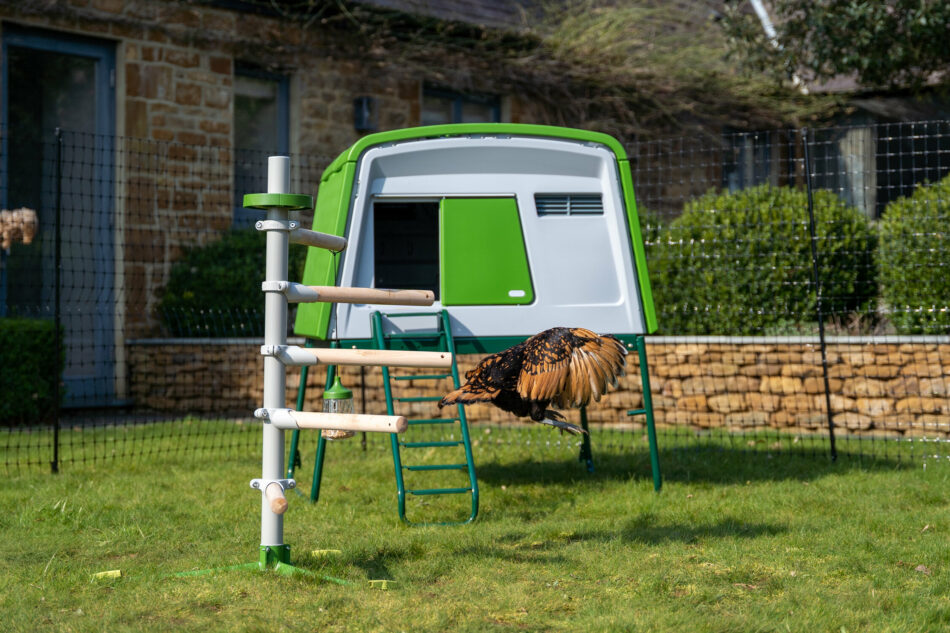
Our two Polish hens were absolutely terrified of their new run-mates for several hours — they would stay under the Eglu Cube while my chicks happily explored the Freestanding Chicken Perch! This standoff lasted only until mealtime, where they cautiously observed each other at a closer distance.
Where chicks fall in the pecking order
In my experience, Polish hens have been the most docile and submissive breeds I’ve owned. That’s why I chose to integrate these newcomers in with my two gentle girls. It’s worked out great so far, but every flock needs a top hen (or rooster).
I purposely moved my Bantam and Silkie cross hens out right before moving the chicks in so that the Polish hens wouldn’t vie for the position of top hen between themselves, and in turn bully the chicks. It worked! The chicks moved in, and the older hens went about their usual business, and the drama was kept to a minimum. Typically, chicks will be at the bottom of the pecking order of flocks — at least until they’re old enough to challenge the status quo.
The main issue we ran into was teaching the chicks to go up into the coop at night. They were much more interested in roosting on the Freestanding Chicken Perch for the first few nights — with the Polish hens actually joining them. Once the mature hens started in, I knew we had to break the habit fast! I put all 6 chickens to bed by hand for 3 nights in a row, and closed the coop door. They call caught on quickly, and now head up into the coop at dusk each night with no problem.
A rooster in the roost
Here’s where things get interesting: a Plymouth Rock pullet from our spring crop of chicks ended up being a rooster. Our large flock already has an old, polite rooster, who was none too pleased to have competition in the coop. So, we moved the pullet imposter to the Omlet setup since our other rooster had kept him relatively submissive.
But the plot thickens! The Laced Wyandotte chicks from this autumn were older straight runs. I knew it would be a gamble, but based on feathering and size, I was fairly confident that I had picked out pullets. Alas, now I have matching set of Laced Wyandottes! So, at some point, we will need to rehome one of the roos, but for now, everyone is living in harmony.
Winter preparations
Coming into December, these chicks are now 14-16 weeks old. Since they’re fully feathered and a healthy weight, the winter preparations will be the same as the rest of the flock. Being in Texas, our winters are very mild — until they aren’t! We’re having a typical late-autumn season: slightly rainy, moderate temperatures, with nights occasionally dipping a degree or two below freezing.
I switch from pine pellets to shavings as bedding under the roost rack during the cooler temperatures to add some insulation. I also close the Autodoor on nights when the temperature is freezing or below. This way, by the time winter is in full swing, this small flock will be accustomed to their Autodoor’s schedule.
Once the temperatures are steadily around freezing, we run extension cords to plug in submersible bird bath heaters for the chickens’ waterers. These work great in the Omlet chicken waterers, keeping the water thawed — even in temperatures well below freezing!
We also feed alfalfa hay to our flocks on cold weather days, along with dried black soldier fly larvae and extra scratch grains. They also get a healthy portion of kitchen scraps and chicken-safe leftovers. The chicks are very excited to be expanding their previously limited palettes!
My top takeaways
So, overall, my first experience raising chicks in the autumn was very positive! It wasn’t much different than raising them in the spring — in fact, in our climate, it was even easier. I didn’t have to worry about the chicks overheating in the brooder during warm spring/early summer days. And, preparing chickens for winter in our area is much easier than the scorching summer heat. Here are my top tips and takeaways from this experience:
I 100% recommend raising chicks in the autumn if you live in the hot southern states. Since chickens fare better in the cold than heat, it’s much easier to transition chicks outside in the more temperate weather.
Finding chicks during early autumn wasn’t as challenging as I thought, but the selection was more limited than in the spring. Hatcheries still produce chicks throughout the autumn, so next year I may place an order for specific breeds rather than shopping local.
Move your chicks in with hens that are calm, non-combative, and well-established in their routine to show the younger pullets the ropes.
We wrapped the bottom 4 feet of our walk in run with hardware cloth. This will keep snakes out, which in our area, are very active in both spring and autumn. Chicks are prime targets for rat snakes in particular, which can infiltrate a run through the top if it’s near a tree or shrub. We keep chicken run covers on the top of the run to prevent drop-ins.
If you’re like me and miss the longer, warmer days of summer this time of year, chicks are an excellent anecdote! It’s like having a piece of spring with you all autumn and winter long.
And there you have it! I hope you take the plunge next year and try raising chicks in the autumn. It’s been a fun experience that I definitely plan to repeat!
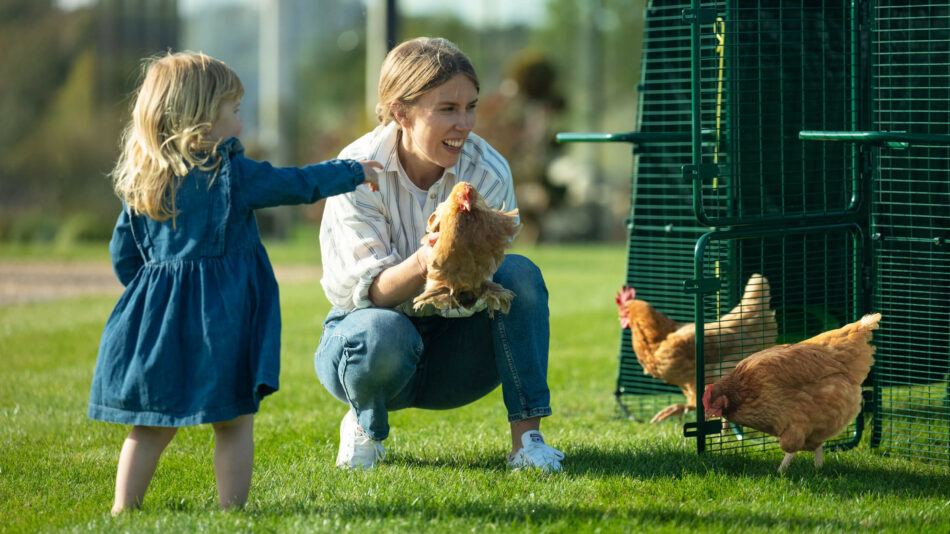
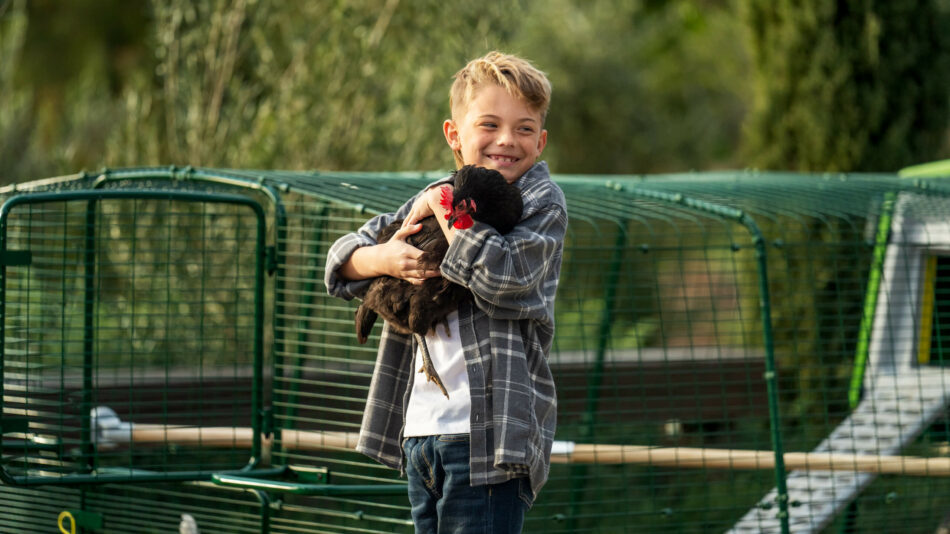
Chickens can bond with their owners, much like other domesticated pets. While holding hens may not be what immediately comes to mind when people envision owning chickens, there are breeds that will tolerate or even enjoy being held by their owners. Chickens aren’t hatched with an innate desire to be handled, but you can take steps to familiarise chickens with the human touch – no matter how old they are. Find out how time, patience, and your setup can help build a deeper bond between you and your flock.
Are chickens affectionate?
As prey animals, chickens aren’t naturally trusting of humans – but that doesn’t mean they can’t be persuaded by your efforts. While some individual chickens may be more outgoing and comfortable around their owners, it’s possible to earn the trust of your other flock members. Patience and consistency are key when gaining the trust of your flock.
The easiest chickens to tame are those that have been handled since they were hatched. Talking to, petting, and handling chicks from a young age will help them understand that you are a friend and not a foe. Physical contact should remain consistent throughout their development to make them as tame as possible as adults.
Chickens that have been rescued can become comfortable with being handled, but you’ll need an abundance of patience. While trust is hard-won, it’s easily lost through mistreatment or neglect. Or, it may be that rescued hens have simply never had any human contact. Whatever the case may be, the steps to familiarise chickens with the human touch are the same for rescued hens as it is for chicks or mature hens.
What about cockerels?
Cockerels are a bit of a wild card when it comes to being handled. Some cockerels are extremely affectionate, while others can be stand-offish or even aggressive toward humans. Since they are at the top of the pecking order in a flock, most cockerels have big personalities one way or the other. Keeping cockerels is a matter of personal preference, but the same methods used for taming hens can be applied to cockerels.
Most affectionate chicken breeds
Just like other pets, each chicken will have their own personality. Some breeds and individual chickens will be more receptive to being petted, held, and handled. Here are the breeds of chickens best known for being the most affectionate toward humans:
Silkies are known as the “lap dogs”, and Orpingtons are known as the “golden retrievers” of chickens. These comparisons to man’s best friends pay homage to the personalities of their breed, but unlike dogs, they still aren’t hardwired to accept human touch. All of these breeds that make the list for being the most affectionate toward humans still need to be won over by their owners – but they’re the most likely to be easily swayed, making them a standout choice for those wanting a flock that can be handled.
3 steps to familiarise chickens with the human touch
Familiarizing your chickens with human touch can be accomplished through time and patience. Depending on your hens’ personalities, age, and background, you can expect being able to handle them effortlessly to come only after a period of training and consistency.
Handle early
If possible, handle your hens from an early age. Newly hatched chicks can be handled with care from the time they’re 2 or 3 days old. If you have older pullets or mature hens, let them settle into their new home over the course of a week or two before introducing the concept of human touch. Establish a routine from the start that your flock can expect. When they’re let out, when they’re fed, and when treats are brought should be highly anticipated events for your hens.
Having a Walk In Chicken Run for your flock makes this process even easier. Stepping into their habitat regularly with positive experiences reinforces trust and affection between you and your chickens. By walking with your flock daily, they’ll start to see you as a normal and enjoyable aspect of their everyday routine and environment.
Beyond the Walk In Chicken Run, you can use Chicken fencing to create a safe perimeter for your flock to enjoy. Our chicken fencing has convenient gates for you to easily enter into your hens’ area to enjoy time with them.
Handle often
Once your hens have accepted you as the giver of food and a regular run visitor, it’s time to incorporate human touch. Start with a chair or stool inside of the run and simply sit with your flock while they go about their business. This new sight might inspire more curious hens to approach you. You can reach out slowly to pet these bolder hens, or sit quietly and let them set the pace.
Keep scratch grains, dried insects or leafy greens with you to reward their curiosity with hand-fed treats. After a few sessions of hand-feeding, move to sit on the ground if possible and encourage your hens to take their treats from your lap. If sitting on the ground isn’t comfortable, move your chair over toward a chicken perch and encourage them to hop onto your lap for their treats.
Repeat this process as often as possible for maximum benefits. Some hens will warm up to you in just a few hours, while others may take several days or weeks. But, once one hen has the courage to make the leap onto your lap, the rest are usually soon to follow.
Handle with care
Once your hens are confidently taking treats from your hand or lap, it’s time to embrace them – literally. Slowly start wrapping an arm around your hens, being sure to encompass both of their wings to prevent them from flapping. Pet them gently and offer more treats by hand. Start out with short holding sessions of no more than a minute or two, working toward longer embraces.
After your hens become used to being held this way, stand up slowly and go for a short walk with them. If your hens object or become nervous, stand still and pet them until they have calmed. Reward their compliance by placing them down near their favourite chicken toys, or another favourite spot in the run.
Your hens are making great strides at this point, but it’s important not to push them too quickly. As the old adage goes: two steps forward, one step back – too much too soon can set your hens back and diminish some of the confidence you’ve helped them build.
What not to do
It may be tempting to rush through the process, or throw in the towel when you don’t think you’re making progress. But, as with many endeavours, success is just around the corner. Be patient with your flock, keeping in mind that as prey animals they can be stressed or startled easily.
When training your chickens to accept human touch, remember:
Never chase or grab at your hens as they pass you in order to catch them
Don’t expect too much too soon – every hen progresses at their own pace
Wait for your hens to complete one milestone before moving on to another
If you let your chickens set the pace, you’ll be delighted to find your bond growing through mutual respect and thoughtful consideration. Remember: your hens are regarding and evaluating you, just as you are them.
Omlet and your flock
Our Walk In Chicken Runs, Chicken Fencing and Chicken Toys and Accessories make building a bond with your flock easy and enjoyable. Foster their natural behaviours and curiosity with our expertly designed products, while making spending time with your chickens effortless. See why chicken keepers who choose Omlet for their flocks’ needs enjoy a more fulfilling experience and deeper relationships with their hens that last a lifetime.
Chicken nesting boxes come in so many shapes, sizes, and materials that it can be hard to decide which type will be best for your flock or coop. Hens need sturdy, safe, and secluded areas to lay their eggs comfortably, and choosing the right nesting box will help achieve this setting. We’ve created the ultimate chicken nesting box guide so that you can maximize your flock’s egg-laying experience while reducing your workload.
What are chicken nesting boxes?
Chickens will instinctively lay their eggs in what they perceive is the safest place to make their nest. Multiple hens will use the same nesting area, trusting the judgement of the first hen who chose the spot. The majority of hens feel most at ease in an elevated station to lay their eggs, but will also seek a dark and secluded area at ground level.
Providing egg-laying hens a comfortable nesting box is an essential role in chicken-keeping. Without a nesting box, hens will become nervous as they prepare for the arrival of an egg, and various negative behaviours or outcomes can sprout as a result of not having a safe nesting area. These include:
Random eggs littered around the run can attract rodents or predators, and encourage flock egg-eating
Stressed hens with missing feathers, poor appetite, or dull appearance
A decrease in egg production
Young hens can start laying eggs as early as 16 weeks old, so it’s important that your chicken coop has appropriate nesting boxes from the time you move your pullets in.
Chicken coop nesting box problems
If your flock’s nesting area is not in the right place, or is unable to maintain ideal conditions, your hens will abandon using them. Here are some common problems with nesting boxes.
Placement
One of the main reasons a chicken is not using their nesting box is because of poor placement. Nesting boxes are best utilized when they are part of the coop and not out in the run. They should be in a designated, secluded area where hens neither sleep nor frequent for any other reason than to lay their eggs.
Accessibility
Another key design feature of a nesting box is accessibility – for both you and your chickens. Hens should be able to easily access nesting areas. Nesting boxes should be between 1-3 feet off of the ground, and have a comfortable ramp or ladder leading up to them. The path to the nesting boxes should be kept free of obstructions, and not in an awkward position of the run that has you bending down or squeezing in to collect eggs. If hens can’t easily access their nesting boxes, you’ll find your chicken hiding eggs around the run. It might sound like fun to have an Easter egg hunt every day, but this method of nesting is stressful for hens and can easily lead to unwanted long-term behaviours like egg eating or refusal to use even an accommodating nesting box.
Comfort level
Chickens not laying eggs may be the direct result of them not feeling comfortable in their nesting box. If the nesting box is well placed, and can be accessed easily, but your hens are still not laying their eggs in it, it’s time to consider the comfort of the nesting box. For optimum comfort, make sure your hens’ nesting box:
Isn’t in a high-traffic area
Doesn’t receive direct sunlight
Has low noise levels
Is well ventilated
Maintains its cleanliness
Chickens shouldn’t sleep in their nesting boxes, so bedding doesn’t need to be changed as frequently as the rest of the coop. Depending on your bedding of choice and the number of hens you have, the nesting box can be refreshed every 2-4 weeks.
Inappropriate bedding
There are many different choices for bedding in a nesting box, but hens feel best making a nest in loose, fluffy bedding like shavings or straw. Avoid using faux turf pads, kennel liners, or rubber mats in nesting boxes, as these feel unnatural and don’t offer much padding for the eggs being laid. Aspen fibre nesting pads can be fluffed up to make an acceptable nest, and are a good alternative option for chicken keepers wanting to use removable substrate in their nesting boxes.
How many nesting boxes are needed per chicken?
Four hens can happily share one nesting box, but five may become a crowd. Some larger flocks share one nesting box just fine, but it’s largely dependent on your hens’ personalities and laying frequency between chicken breeds. And, any nesting areas need to be large enough for your hens to stand up, turn around, and avoid crushing eggs, while being small enough to feel cosy and secure.
While the term “nesting box” implies a square shape, you can think outside the box when it comes to nesting areas. Oblong nesting areas are a great alternative to traditional boxes, as they give hens more space to fluff their bedding and settle themselves into whatever position is most comfortable for them. Omlet’s chicken coops come in a variety of sizes, all with integrated nesting areas to accommodate any size flock or hen. The Eglu Cube in particular is a favourite among flock-keepers for its elevated structure, dedicated nesting-area door, and sliding partition between the roosting and laying areas. The spacious nesting area allows for 2 hens to lay at time when schedules overlap, and gives your hens options of where to lay their eggs within the space.
There are many different types of chicken nesting boxes. Some are DIY projects, while others are commercially made from metal or other materials. Some are anchored to the coop, while others may pull out or be removed for cleaning. There are pros and cons to each type of construction, but as most chicken keepers would agree, integrated nesting boxes that are easy to access and clean are the best type of nesting areas.
Wooden nesting boxes
Wooden nesting boxes get the job done, but are notorious for harbouring bacteria, mildew, and mites. Because wood is porous, wooden nesting boxes are difficult to keep clean or sanitize thoroughly. They’re relatively inexpensive to make, but can easily be made too heavy to mount to a chicken coop. Because of this, they often require their own support like legs or even a table to be mounted to – something that most backyard flock raisers don’t have room for. Those opting to buy rather than make a wooden nesting box should note that they are usually made from flimsy, cheap materials that will break down quickly.
Pros:
Inexpensive to construct or obtain
Cons:
Absorb moisture and bacteria, and house mites
Heavy, cumbersome, and impractical for most flock raisers
Commercially made versions are cheap and flimsy
Metal nesting boxes
When thinking about nesting boxes, most people conjure up the image of traditional chicken nesting boxes made of metal. These structures can have anywhere from 1-10+ “holes” that lead into a nesting box. They stack in rows, which takes up less space, but may become too tall for some hens to reach the top row. Metal outlasts wood, but still succumbs to the elements – especially in hot, humid areas. Rust is common in metal nesting boxes, and the boxes themselves can become very hot and stuffy.
Pros:
Longer lasting than wood
Easier to clean than wood
Cons:
Rusts over time
Can easily become too hot for hens
Expensive
DIY nesting boxes
This inexpensive option can get the job done, but should only be used for supplemental or temporary nesting areas. DIY nesting boxes can be made from repurposed milk crates, storage bins, or 5-gallon buckets turned on their side. These materials are difficult to place and anchor in ideal locations. They also require alterations to make them safe, which may cost more than the project is worth.
Pros:
Inexpensive
Readily available
Cons:
Flimsy
Uncomfortable
Potentially dangerous without modifications
Plastic nesting boxes
The best material for nesting boxes is plastic. This non-porous material is easy to clean and outlasts other types of nesting boxes. It wards also off parasites and prevents moisture buildup. While plastic nesting boxes might not be as popular as other types, their long-term value makes them well worth it.
Pros:
Long-lasting
Easy to clean
Free of parasites
Cons:
Not as readily available as other options
More expensive to obtain
The best of both worlds: integrated plastic nesting boxes
Thankfully, there’s an all-in-one option with modern hen houses. Omlet’s plastic chicken coops all have integrated nesting boxes and roosting bars for a convenient and comfortable interior. The nesting area is part of the removable tray, which can be pressure washed and refreshed in minutes.
Creating the ideal chicken nesting box with Omlet
With Omlet, making and maintaining the ideal nesting area is fun and easy. Your hens will feel safe and secure in the elevated and spacious Eglu Cube and its integrated nesting area. This large chicken coop even has a dedicated nesting box door to collect eggs without disturbing the rest of the coop.
With happy hens, you’ll have lots of eggs to gather, giving your family a fresh egg supply. Not only will a clean and tidy nesting box make your hens feel comfortable, but you’ll also have the unique satisfaction that comes from collecting a still-warm egg from the nesting area.
Chicken care with Omlet
Keeping your hens happy isn’t just limited to providing the ideal nesting area. At Omlet, we have chicken-keeping essentials for every area of flock raising. From enriching chicken toys and accessories to technology likeautomatic chicken coop doors that make your schedule simpler and your flock safer, you can have confidence that your chickens are happy in their coop.
In need of some chicken coop door ideas? Should a chicken coop even have a door? We’ll explore the ins and outs of doors and how they benefit a chicken coop. And, we’ll share how your chicken coop door can act as a sentry against predators, extra insulation in the elements, and even as a babysitter when you aren’t home.
Should a chicken coop have a door?
Your chicken coop should have a door to maintain the safety and comfort of your flock. Chicken coop doors serve two main purposes:
Protection from predators
A shield against the elements
Closing the chicken coop door at night is essential to ensure that your hens are as safe as possible against animals that seek to prey on them, and from precipitation or drafts. The ideal time to close your chicken coop door is right after all of your hens have headed off to bed — usually just before nightfall.
The best types of chicken coop doors
There are a few options when it comes to choosing a chicken coop door, and they are largely dependent on the type of chicken coop you have.
Traditional doors
Traditional chicken coop doors are either full-size doors for keepers to walk through, or a smaller version of a wooden door on hinges just large enough for hens to walk through. The problem with these is that wood warps and shifts over time, making them more and more difficult to open and close over time. Gaps along a chicken coop door are dangerous — drafts or predators can slip through any openings that result from shifting or settling doors. Plus, wooden chicken coop doors can’t be attached to just any coop material.
Automatic doors
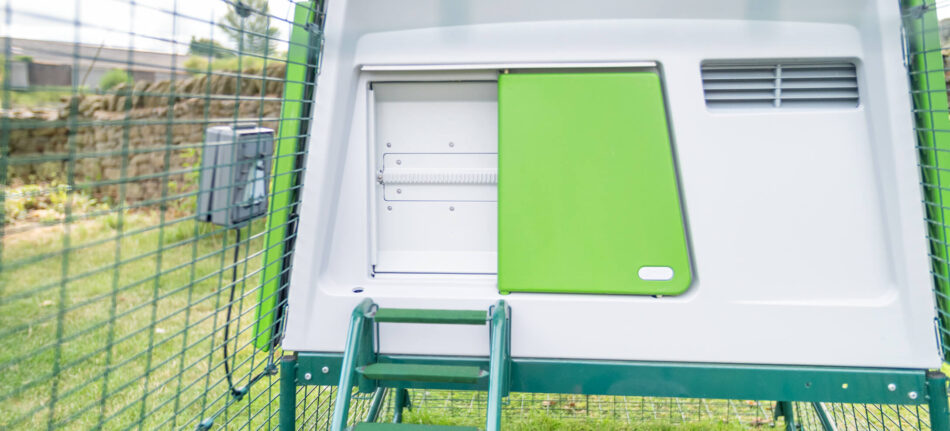
An automatic chicken coop door is made of easy-to-clean plastic that won’t shift or warp in the elements. It opens the same, smooth way each and every time, and in any weather. Omlet’s Autodoor can be installed on any material: wood, wire, or directly onto the Eglu Cube chicken coop.
In addition to standing the test of time, the Autodoor can be programmed to open and close on a schedule based on the sun or the clock, making it a coop concierge for your flock.
Light-sensing automatic chicken coop doors with Omlet
The Autodoor by Omlet is a sophisticated light-sensing automatic chicken coop door that can be programmed to open and close on a schedule of your choosing. Some standout features of our Autodoor include:
Light sensor for customized open and close times
Time setting to set a schedule based on the clock
Reliability in all weather conditions
Horizontal opening mechanism for hen safety
Extra coop security against predators
Can be installed on any coop or run
Integrates seamlessly with the Eglu Cube
Chicken keepers love the Autodoor because of its versatility, functionality, and performance. Taking control of your flock’s schedule and having it enforced even while you’re away takes your chicken keeping to a whole new level. The Autodoor’s light setting really shines during the winter months — your hens can be closed in before the sun is finished setting, and stay warm and comfortable in their coop until there is plenty of sunshine the following morning. You and your hens can both sleep in during the coldest hours of the morning, knowing the Autodoor has made winter chicken keeping easier than ever.
Easy steps to install a chicken coop door
The Autodoor is easy to install on any existing setup. Just choose the fixings pack that corresponds to your coop when you purchase your Autodoor, and you’ll have everything you need for installation when it arrives. Choose from wood or wire for your fixings pack, and follow the detailed instructions for installing your Autodoor. If you have an Eglu Cube chicken coop, no additional fixings need to be purchased — you can install the Autodoor right out of the box.
Once installed, the control pad makes programming your schedule quick and easy. If you choose to use the light setting, the amount of daylight can be selected on the Autodoor for both open and close times, and custom delay open and close times can be adjusted. This would give your hens a buffer for the weather to warm up, or for storms to clear if the light sensor hasn’t been able to receive its programmed amount of light.
Should I make a chicken coop door?
Making a chicken coop door is an option, but significant attention to detail and considerations need to be taken into account. Chickens have fragile legs that can be caught easily in doors, and materials like wood will rot and warp over time, making a path for crafts or predators to penetrate the coop. You’ll also need to manually open, close, and secure your DIY chicken coop door each day to ensure safety, which means trudging out in harsh weather or going out in the dark when you’re home late.
Choosing an Autodoor is a one-step solution to your flock’s security and comfort. You won’t worry about safety or functionality, and with the added ability to automate your flock’s schedule, you can rest assured that your hens are being cared for — while you enjoy the comfort of your own bed.
Pet care with Omlet
Omlet makes keeping your hens easy and enjoyable. We take the guesswork out of caring for your flock, because we’ve asked both the obvious and the unexpected questions when it comes to creating the ideal chicken setup. Our chicken runs, chicken tractors, and hen houses are all designed to accommodate both you and your flock for an unparalleled chicken-keeping experience.
We worked with Jeremy Gary, Omlet Ambassador and backyard chicken keeper from Venice, Florida, to put this guide together. Jeremy’s hands-on experience raising chickens in a hot, humid climate gives him a practical perspective that’s hard to find anywhere else.
If you’ve noticed feathers on the ground and your hens looking a little patchy, don’t panic. Your chickens are almost certainly moulting – a completely natural, annual process where they shed old feathers and grow new ones. It’s normal, it’s temporary, and with a little extra care, your flock will come through it just fine.
Is it a moult? How to tell
Before you worry, run through this quick checklist. Moulting is the most likely explanation if:
Feather loss follows a pattern – it typically starts at the head and neck, then moves down the back toward the tail
More than one chicken is affected – moulting often happens across a flock at the same time, usually in autumn
Egg laying has slowed or stopped – this is one of the first signs, and it’s completely normal
Your chickens seem a little off – reduced activity, smaller appetite, and wanting more alone time are all common during a moult
You can see pin feathers – these are the new feathers coming in, and they look like small, waxy spikes emerging from the skin
If feather loss is patchy, concentrated in one spot, or accompanied by visible irritation or injury, it could be feather pecking or mites rather than a moult. Our guide to chicken health covers what to look for if you’re not sure.
What is moulting, and why does it happen?
Moulting is the natural process of feather replacement in chickens. Feathers are critical for insulation and protection, but they wear out over time. The moult gives chickens a chance to replace damaged, dirty, or worn feathers with a fresh set before the colder months arrive.
All animals go through some kind of seasonal transition. Dogs shed their summer coat. Wild birds migrate. Chickens moult. It usually happens once a year, though the timing can vary depending on breed, age, and environment.
Understanding that moulting is normal and natural is the first step to supporting your flock through it. Once you know what to expect, it’s much less stressful for everyone – including you.
A practical timeline: what to expect
Moulting can last anywhere from a few weeks to a few months, depending on the individual chicken. Here’s a rough idea of how it typically unfolds.
Weeks 1-2: Pre-moult
This is the quiet before the storm. You may notice your chickens slowing down – less activity, a smaller appetite, and egg laying starting to taper off. Their bodies are conserving energy in preparation for feather replacement, which is a surprisingly high-energy process. This phase can last anywhere from a few days to a few weeks.
Weeks 2-6: Active moult
Feathers start falling. Loss usually begins at the head and neck, then works its way back toward the tail. Your chickens may look bare and patchy during this phase – that’s completely normal. They’re also likely to be more irritable and may want to spend time away from the rest of the flock. Handle them gently and give them space.
Weeks 6-12: Regrowth
New feathers begin emerging from the follicles where the old ones fell out. These pin feathers – the thin, waxy-looking spikes you’ll see on the skin – are sensitive and can be easily damaged, so avoid unnecessary handling during this phase. You may notice your chickens preening more than usual as they work to remove the waxy coating and fluff up their new feathers. Once regrowth is complete, normal activity, social behaviour, and egg laying all return.
How to help your hens through a moult
Nutrition: prioritize protein
Feathers are made almost entirely of protein, so your chickens’ nutritional needs increase significantly during a moult. A high-protein diet is the single most important thing you can do to support healthy feather regrowth.
Switch to a higher-protein feed during the moulting period if possible
Supplement with protein-rich treats like sunflower seeds
Always make sure your flock has access to clean, fresh water – hydration matters just as much as feed
General care tips
Go easy on handling. Moulting chickens are more sensitive and irritable than usual. Be patient if they want a little alone time.
Keep them sheltered. Without a full set of feathers, your chickens are more vulnerable to temperature extremes, rain, and predators. Make sure their coop and run offer proper protection.
Keep the coop clean. A clean environment helps prevent parasites and infections, which can make moulting harder on your flock.
Adjust for your climate. In colder areas, consider adding extra warmth to exposed areas of the coop. In hot, humid climates like SW Florida, shade can make a real difference.
How your coop setup can help
A clean, secure, well-ventilated coop makes moulting easier on your flock – and this is exactly where a well-designed setup like the Omlet Eglu Cube earns its keep.
The Eglu Cube’s smooth plastic construction makes it easy to keep clean, which is especially important when your chickens are more vulnerable to infection. Its robust build keeps predators out during the moulting period when your hens are at their most exposed. And its insulation and ventilation design helps regulate temperature and humidity – critical for comfort whether you’re dealing with a Florida autumn or a cold snap in the Northeast.
Moulting is one of those things that looks alarming the first time you see it – feathers everywhere, patchy-looking chickens, egg laying grinding to a halt. But it’s one of the most natural parts of keeping chickens.
Give your flock a protein-rich diet, a clean and secure shelter, and a little extra patience, and they’ll come out the other side with a beautiful new set of feathers ready to last them through the year.
As Jeremy puts it: the most important thing of all is an extra-large portion of chicken-owner love.
Jeremy Gary is an Omlet Ambassador based in Venice, Florida. He owns and operates a building science consulting business, and his expertise in temperature and moisture dynamics has proved invaluable in keeping chickens in a hot, humid climate. He purchased his first Omlet product – an Eglu Cube – long before joining the Ambassador Program, and says it transformed his family’s chicken-keeping experience.
Hey y’all! My name is Alyssa Holland, and I live on a small hobby farm in north-central Texas. We have all kinds of animals on our farm: horses, goats, a miniature pig, rabbits, guinea pigs, dogs, cats, fish, and of course — chickens! We have around 25 chickens currently, and tend a mixed flock of many different breeds. Most recently, we’ve added a rescue pigeon to our flock that thinks she’s a chicken!
Welcome back to my autumn flock-raising adventure! My group of six chicks are thriving in the cool(ish) temperatures, and they’re growing like weeds. Their personalities are starting to shine, and preparations for their future accommodations are being made. See what we’ve been up to, and what I’m expecting throughout the rest of the season.
How they’re growing
Y’all, chicks grow fast! And, since I started with older chicks, time has flown. Both breeds were fully feathered around 6 weeks old and are growing at the same rate — which has made brooding them together a breeze!
The chicks are around 7-8 weeks old now. The Silver Laced Wyandottes are beginning to show their gorgeous colouring, and the barred pattern of the Plymouth Rocks are on full display. I removed their brooder plate last week once they were fully feathered. I usually keep a heat source in with my chicks until they are closer to 8 weeks old, but since the weather is still very warm during the day (high 80s to mid 90s°F) and has not been dipping below 75 degrees°F at night, I went ahead and removed their heat.
We hopefully have all pullets from this batch! I rolled the dice a bit by getting the Silver Laced Wyandottes — they were straight runs that had outgrown their pen. Our Tractor Supply store was kind enough to let me hand pick my own chicks, so I compared feathers and combs and selected what I hoped were 3 females, but only time will tell. The Plymouth Rocks were pullets, but earlier this year I purchased two Plymouth Rock pullets, and we now have a beautiful Plymouth Rock rooster! It was a good reminder that unless a breed is a sex link (can be sexed at the time of hatching by feather patterns or colour), mistakes can happen. Thankfully, our property isn’t subject to animal restrictions, so we are able to keep roosters, so long as they live peaceably with the rest of the flock (and don’t chase my children!).
Future flockmates
Normally I don’t count my chickens — before or after they hatch! Chicken math gets me every time. So instead of counting my birds and measuring the square footage of our coops and runs, I measure our “chicken saturation” by their health and happiness. If everyone is thriving, it’s a stable and sustainable flock!
We have two setups: one is a very large chicken coop and run that my husband built shortly after we moved in over 5 years ago, and the other is an Omlet Eglu Cube with an attached 6×9 ft Omlet walk in chicken run. Our homemade setup houses around 18 hens and 2 roosters, with another 4 hens and 1 rooster calling the Eglu Cube home. The chicks I’m currently raising will be placed in the flock that best matches their personalities, with some consideration given to space requirements. I try to keep my smaller or more docile hens in the Eglu Cube setup partly because of the size, but also because it’s easier for my kids to access both the eggs and the run to play with their favourite hens! We try not to play favourites, but every flock inevitably has favourites that steal the hearts of their keepers.
It’s hard to determine where chicks will fall in the pecking order, but usually, newly introduced chicks will be toward the bottom of the hierarchy. Since my chickens are kept in runs, I have fellow flock-raising friends that free-range on standby to accept any birds that don’t fit in with my flocks. It’s a rare occurrence, but occasionally a dominant hen or a very low-ranking hen has to be rehomed to a friend to maintain the peace. So, there’s a possibility that one or more of my older hens (or these new chicks), will find their homes on another farm. It’s a win for my friends and a win for the hens — we’re always looking out for the best interest of our flocks!
Establishing a schedule
Chickens thrive on schedules – starting at a young age. Because my chicks are in an outdoor pen, they’re able to follow the natural schedule set by the sun. And, with our other setups within their line of sight, they can take their cue to head to bed from their future flockmates.
Schedules and routines are also helpful when it comes time to handle your chickens. From performing health checks, to just wanting to spend some quality time together – you’ll need to be able to catch your chicks at some point. Schedules are also important to your growing flock’s safety. For example, our miniature pig let herself into our chicks’ pen and they went on a happy excursion through our wisteria vine-covered terrain. But, because they knew their schedule, they headed in to roost when it was time, effectively saving me the trouble of having to chase them down. We decided to let them have their (supervised) free-ranging experience, but even at their young age they were able to put themselves to bed when it was time.
If possible, I highly recommend brooding your chicks in an area that receives natural light. This is another reason why I love using a brooder plate over a heat lamp. Not only do brooder plates carry a lower risk of causing a fire, they don’t emit any light. If your chicks are able to sleep and rise along with natural patterns from early on, it makes the transition to their forever home much easier for everyone!
Activities at this age
Chicks around 8 weeks old are beginning to resemble miniature versions of their full-grown selves, rather than fluffy hatchlings or patchy youngsters. Their colours and patterns are more vibrant, and you can sometimes start to see characteristics of roosters versus hens at this age. And, because they’re bigger and more coordinated, you’ll start to see them display their personalities and desire to play and explore.
I’ve adjusted the angle of their tree limbs and makeshift perch to accommodate their growth and skill level. My son also helped me hang a “chick swing” from the front of their run. And, while it should be noted that it’s not recommended to offer anything other than their chick feed at this age, I’ve started giving small tastes of dried mealworms and dried herbs as treats by hand to my chicks. This gets them used to me being the “treat lady”, and now I can easily get their attention when I shake the treat bag!
Another favourite activity at this age is scratching and dust bathing. They’ve made their own dust bath at the end of their enclosure, but I added some dried oregano to the area for extra incentive. I also give them coastal hay to scratch around in, which is a favourite afternoon activity! Hiding some of their herbs and mealworms in the hay keeps their minds and bodies occupied while I clean their brooder.
I also added a favourite activity of my own to their area: a spot to read! By hanging a hammock across from their enclosure, I can enjoy watching my chicks play and forage and take advantage of the cooler weather. Plus, the central location lets me see my other flocks, so everyone is used to seeing their caretaker curled up with a good book!
What’s next
In the weeks ahead, my chicks will be moved to their permanent homes. As they continue to mature, their genders will be apparent, which will play a large role in how they are placed. Their growing appetites will call for laying feed soon, and we will start introducing them to scratch grains and other protein-packed treats to help them gain weight and maintain healthy plumage throughout the cooler months.
Eggs are amazing, nutritious feats of nature that chickens give back to their keepers. They come in a variety of sizes, colours, and sometimes even shapes, but sometimes their appearance can surprise those who come to collect them. From the normal to the not-so-normal, we’ll cover it all in our What are your hens’ eggs telling you? guide.
Why are chicken eggs sometimes misshapen?
An oddly shaped egg can be produced for various reasons. It often takes young hens an egg or two before they settle into their regular pattern. Stress in the chicken coop can lead to misshapen eggs too. This is usually due to a hen having the urge to lay but finding the space in the laying box occupied by another bird.
Misshapen eggs can be:
Elongated, or they may have a thin, pointy end.
Rough with bumps
Thicker around the middle, appearing in a band pattern
Round rather than the traditional oblong appearance
A ball-shaped egg is usually a sign of slight calcium deficiency. The round shape requires less calcium than a normal oval egg. In all these cases, the egg inside is unaffected and is perfectly safe to eat.
Infectious bronchitis can lead to misshapen eggs. An infected hen will stop producing eggs for a few days or will only lay intermittently. The eggs that are laid will have thin, wrinkled or rough shells, and the white of the egg will be watery. It is also common for the affected eggs to have lighter-coloured shells than usual. This condition is uncommon, and should be diagnosed by a veterinarian.
Laryngotracheitis is another illness linked to egg abnormalities, but should also be diagnosed by a veterinarian. It’s important to note that any ailment can cause a hen to become stressed, which can cause a hen to lay misshapen eggs.
Why do chickens lay freckled eggs?
Some breeds always lay speckled eggs. However, if a hen that typically produces plain eggs lays speckled ones, there are various possible causes. She may have been stressed in some way while the egg was forming, or she may have developed an anomaly in the pigment-producing part of her egg-laying system.
Freckling is often the result of excess calcium production, sometimes associated with the ‘end of season’ laying at the beginning of winter. On some eggs, there is a marbled pattern rather than an area of freckles.
The speckling is usually smooth, but it sometimes manifests as raised blotches of excess calcium. These can be spots or wormlike strands, and they often occur as single spots on an otherwise standard egg. This may be linked to dehydration, so make sure your hens have enough water, and that a timid hen isn’t being bullied out of being properly hydrated.
Why do chicken eggshells sometimes have a white ring?
Viewed from the side, an eggshell with this peculiar oddity has a thick white ring, looking like an x-ray of the egg that lies beneath. It is usually caused by an interruption in the formation of the eggshell, caused by stress or by a second egg entering the internal production line.
The second egg produced in this process will usually have a flattened side, as it has bumped into the first egg during the early stages of shell formation and has been ‘squashed’ into an odd, flattened shape.
Why are chicken eggs sometimes wrinkled?
An eggshell with wrinkles can be a sign of stress or illness, but is usually a hereditary condition. Some older hens begin to lay wrinkled eggs too. The wrinkles are often deep grooves, giving the appearance of a very misshapen egg that is perhaps the most unusual of all egg oddities.
The wrinkles sometimes look like a series of cracks in the shell. This results from an egg cracking during calcium formation. The cracks are the chicken’s repairs – laying calcium over the fissures. Once again, the underlying cause is usually stress or illness, although sometimes it is simply the result of a second egg ‘crashing into’ the first due to an over-productive system.
Why do some eggs have double yolks?
In a rare, but completely normal phenomenon, chickens can lay eggs with two yolks inside. If fertilized and incubated or kept under a broody hen, double-yolked eggs can hatch twin chicks – but it’s more common for only one embryo to fully develop.
If you crack one of your chickens’ eggs and see two yolks, it’s the result of the hen releasing two yolks at the same time during ovulation, which then becomes encapsulated within one shell. It’s more common for newly-matured hens to lay double-yolked eggs, as their bodies are adjusting to ovulation. Laying eggs with two yolks can also be genetic, and the hen may continue to do so for the duration of her egg-laying career.
You do not need to crack the shell to find out what is inside – you can spot a double-yolker by ‘candling’ the egg. The word candling comes from the ancient practice of holding an egg in front of a candle flame, but a small flashlight does the job just as well. If there are two yolks inside, they will be visible as two dark blobs against the bright light as it shines through the shell.
Although double-yolkers are estimated to occur in just one per thousand eggs, the huge population of laying hens over the world means that they are a common sight on the plates of chicken keepers. Triple yolks are possible, but are very unlikely to grace the breakfast table– this ultra-rare phenomenon is found in just one per 25 million eggs.
Why do chickens lay less eggs sometimes?
Breed, age, health, and time of year all affect how many eggs chickens lay. Among the many different chicken breeds that are considered good layers (those that can lay upwards of 300 eggs per year), some well-known egg producers include:
In contrast, most ornamental and smaller chicken breeds lay less frequently, with some only laying a few eggs each month.
Depending on their genetics, hens will begin to ovulate (release a yolk) every 24 hours on average, starting at 6 months of age. Once a yolk has been released, it takes 19-20 hours to finish forming and be fully dressed in an eggshell. After an egg has been laid, the process repeats again – good layers can begin ovulating again within an hour after laying an egg. A hen will lay the most eggs during the first two years of life. After that, production begins to decrease by 10-20% each year.
Hens that are not feeling well, or are malnourished will lay less frequently. Flock discord, inadequate nutrition, and overcrowding are a handful of stressors that can take a toll on egg production. Make sure your hens have access to clean water and quality layer pellets at all times to ensure they’re getting the calories and nourishment they need. Adding scratch grains, chicken treats, and healthy kitchen scraps or safe foods from the garden to their diet will also give hens a nutritional boost.
Hens will inevitably lay less, or stop laying eggs altogether in the winter. A hen’s ovulation cycle is based on daylight hours, so once the days shorten, you can expect egg production to slow down. This is a hen’s natural reaction to the changing seasons as they prepare to reallocate energy to keep warm instead of laying eggs. Your hens will resume a normal laying schedule closer to spring, as days grow longer.
Another annual reason for a decrease in egg production is moulting. Moulting is the process of shedding old feathers and regrowing new ones to replace them. Moulting also occurs during the fall in preparation for winter – so as the days grow shorter, your hens will begin to lose their dingy feathers in favour of new, denser ones to keep them warm. The result is a beautiful, vibrant new feathery outfit for your hens – but fewer eggs for you to gather. Moulting takes a lot of energy, so expect your chickens to be on “lay-cation” for 8-16 weeks. There are some things you can do to help your chickens through a molt to offer relief during your flock’s annual feather renewal.
Why do chicken breeds lay different-coloured eggs?
You’ve probably seen white and brown eggs, but some chickens can lay eggs in shades of green, blue, and even pink. But what causes such a variety of colours?
Genetics determine what colour eggs a hen will lay. Some breeds of chickens have a standard colour you can expect from them. For example, you can count on Leghorns to lay white eggs, Orpingtons to lay brown eggs, and Ameraucanas to lay blue ones. But different shades such as olive are the result of a hybrid hen – a hen bred from a combination of blue and brown egg genes. For example, if you breed an Orpington (brown egg genetics) cockerel with an Ameraucana (blue egg genetics) hen, the result would be an “olive egger” hen that would lay green eggs. Egg colour should be consistent with the hen laying them, and different-coloured eggs are not a cause for concern unless a hen suddenly starts laying a different shade from usual.
All eggs begin with a white shell, but the hen laying the egg adds a pigment to them as they make their way to be laid. This pigment only colours the shell, and does not penetrate the membrane. You’ll have to add food colouring if you want green eggs and ham!
Other breeds known for laying colourful eggs include: Rhode Island Reds, Plymouth Rocks, Wellsummers, and Marans. Hybrids (bred through selective pairing), such as Olive or Easter Eggers, can produce eggs varying in colour based on their genetics.
Pro tip: you can get an idea of the colour eggs a hen lays by looking at their earlobes. Hens with white earlobes will lay white eggs, and hens with red earlobes will lay brown eggs. This technique is not as accurate for pigmented eggs (blue, green or pink), as hybrid chickens will have a variety of colours to their earlobes. Still, it’s fun to try this prediction test with your flock.
Why do my chickens’ eggs have a thin shell, or no shell at all?
Have you ever collected eggs, only to find yourself flabbergasted by a naked egg? Thin-shelled eggs or those with no shell at all feel like partially filled water balloons and can be very disconcerting to find in the nesting box. These strange, spongy eggs are actually laid without the presence of the shell; only the membrane. This most often occurs with high-producing hens, when their bodies simply cannot keep up with yolk production. Oftentimes they will lay a fully-formed egg, then lay a shell-less egg a few hours later.
The other most common reason for eggs having thin or missing shells is inadequate calcium in their diet. Warning signs leading up to shell-less eggs can be thinner shells, so take note if your hens’ eggs are suddenly much easier to crack, or if you find broken eggs in the nesting box. A lot of calcium is required to “fully clothe” a yolk, so be sure to feed quality layer pellets that contain added calcium. If you notice thinner shells or “naked” eggs, supplement your hens’ feed with crushed oyster shells or other chicken calcium supplements. You can also save egg shells after cracking them to crush or grind up and sprinkle on top of your hens’ feed. Be sure not to offer shells that have not been broken down into smaller pieces, as chickens can acquire a taste for eggs and can actually eat them straight out of the nesting box.
Boost your hens’ shell-producing ability with chicken supplements to ensure they have all of the vitamins and minerals they need. As an added bonus, supplements such as omega-3 fed to your chickens are passed onto their eggs– and then to you when you eat them!
Why do chickens sometimes eat their eggs?
Hens will actually eat their own eggs, usually for specific reasons. This behaviour can usually be corrected when adjustments are made to their environment.
Dehydration
Chickens that eat their eggs may be dehydrated. Since eggs contain a large amount of water, your chickens may be resorting to eating them in an effort to keep themselves hydrated. To stop egg eating due to dehydration, make sure that your hens are supplied with clean water at all times.
Vitamin deficiency
Your chicken’s diet is fundamental to their well-being, and a poor one could be depriving them of their nutritional requirements – leading them to feast on their eggs in an effort to recoup missing nutrients. It’s important to provide your chickens with a balanced diet of enough protein, carbohydrates, vitamins, and minerals. For added calcium, offer crushed oyster shells.
Issues with the nesting box
Your nesting box needs to be a secure and safe space for your hens. Egg eating can occur when your hens are uncomfortable with the nesting box, most commonly due to the bedding itself or exposing your chickens to too much light. Make sure that their nesting area:
Has adequate bedding made of a comfortable nesting material
Remains free of droppings or debris
Does not receive direct sunlight
Has enough space for the number of hens you keep
Is completely separate from the roosting area
Our chicken coops are designed for easy cleaning, and with integrated and private nesting boxes, while leaving plenty of space for roosting. This ensures a comfortable and hygienic habitat for your hens that will support them in their laying efforts.
Behavioural
Chickens found to be eating eggs can also be suffering from stress or anxiety, which hens can experience for a number of reasons. Stress-inducing scenarios can be related to:
Being handled
A new environment
The introduction of new chickens
Extreme heat
Visits from predators
Some stressful situations are easier to alleviate than others, such as introducing new chickens or excessive handling.
Chickens that eat eggs may simply be bored. Boredom in chickens can occur when they don’t have enough space to roam, or they lack activities to keep them entertained.
For a happy hen, provide as much space as possible outside of the coop with a walk in chicken run or chicken fencing. Chicken toys are another great way to keep your chickens entertained.
Omlet and your hens’ eggs
The more love and care you put into your flock’s setup and your interactions with them, the happier and healthier your hens will be – and the more delicious and healthy their eggs will be. Hens that are kept in clean, safe chicken coops will lay eggs more regularly and without difficulty. The joy and companionship you’ll reap from sowing a great relationship with your hens will accompany the steady supply of eggs for you to display in your kitchen – a visual reminder of the bond you share with your flock.
Hey y’all! My name is Alyssa Holland, and I live on a small hobby farm in north-central Texas. We have all kinds of animals on our farm: horses, goats, a miniature pig, rabbits, guinea pigs, dogs, cats, fish, and of course — chickens! We have around 25 chickens currently, and tend a mixed flock of many different breeds. Most recently, we’ve added a rescue pigeon to our flock that thinks she’s a chicken!
As a small hobby farmer, springtime has always been my favourite season – animals being born, flowers blooming, warmer weather, and of course, new chicks! So when I thought about raising chicks any other time of the year, the idea seemed very foreign and honestly, intimidating. But as it turns out, it’s one of the best-kept chicken keeping secrets! I’ll give you a firsthand look at raising chicks in the autumn, and why so far it’s been a much easier and more enjoyable experience than I ever imagined.
Why I chose to raise chicks in the autumn
Spring is the natural season for all things new. On our small farm, our goats, rabbits, and chickens usually have their babies this time of the year. Animals instinctively know when is the best time to raise their young, but where we live, late spring and anytime in the summer can be unyielding in both temperature and weather. We live in north-central Texas, and it’s not uncommon for us to reach the triple digits in Fahrenheit by June. And, spring is primetime for severe weather like hail storms and heavy rainfall.
When I started thinking about setting up a brooder in the autumn instead of the spring, I immediately noticed several advantages over springtime chick-rearing:
The brooder temperature can be kept much more stable with the cooler ambient temperatures
Humidity levels are lower, making the brooder much less stuffy and smelly
Outside visits are easier without excessive heat or rainfall
I’m not a sweaty mess after cleaning the brooder and handling my chicks!
Autumn brings a collective sigh of relief to everyone on our farm – a welcome respite from the sweltering summer heat. But it’s also a time when the plants that managed to survive the summer go into their dormant phase, daylight hours dwindle, and there’s an overall sense of stillness that settles over the property. It’s not entirely unpleasant, but after two seasons that teem with life, autumn can be a foreboding of winter (which no one around here enjoys!). So, the thought of having chicks to raise throughout this season of transition seemed like the perfect way to incorporate new energy into a world that seems like it’s falling asleep.
Where I found chicks this time of year
We have a large flock with multiple roosters, so oftentimes I will incubate our eggs and hatch chicks in our schoolroom. It makes for a great biology lesson for my first grade and pre-k children! But, in our experience, we end up with a large yield of roosters from our home-incubated batches. We have to find homes for them, and listen to the cacophony of competing roosters every morning…and afternoon, and evening. I love a good cock-a-doodle-doo in the morning, but not all day every day! So, for this batch of chicks, I reverted to my old standby to purchase pullets (sexed hens) to avoid accumulating more roosters.
My go-to for chicks is local feed stores – specifically our Tractor Supply Company. They know me there (on a first-name basis!) and they consistently have a healthy variety of chicks during their “chick days” in the spring. To my surprise (and delight), this year I noticed they still had chicks well into late summer when ordinarily they stop ordering chicks around mid to late June. I asked the staff members, and was informed that they would keep stocking chicks through the end of September. Consider my interest officially piqued.
Bringing chicks home
The second week of September I brought home 6 chicks: 3 Plymouth Rocks and 3 Silver Laced Wyandottes. Prior to their arrival, I decided to change up the way I normally set up their brooder. Typically, we keep our brooder pen in our shop, but with our weather still being warm I was concerned that it would get too hot and stuffy. So, along with trying my hand at raising chicks in the autumn, I decided to go a different direction with their brooder.
I have an Eglu Go with the attached run that I’m using as their brooder. Omlet doesn’t recommend placing chicks under 12 weeks old in their coops, so I’m definitely using this product “off label”. I did make the following modifications to make it small-chick friendly:
Left out the roosting rack to accommodate small feet
Because of their small size, I wrapped the run in aviary netting
I’m using a brooder plate instead of a heat lamp so that the coop doesn’t get too hot
Use a run cover to shield from rain
Placed in an area where our outdoor cats and livestock guardian dog can patrol for predators
So far, it’s worked wonderfully for my purposes. My chicks have plenty of space, are able to interact with nature, and aren’t reliant on me to take them on outdoor excursions. I realize this isn’t an option for everyone, so I’ll share what type of activities my chicks enjoy while they’re outside of their brooder for those that take their brood out for daily visits.
Outings and activities with your chicks
I chose pullets that were already 3-4 weeks old – they just looked so sad being the biggest in their brooder with other shoppers going home with their smaller, fluffier counterparts! But, as our temperatures can fluctuate wildly this time of year, I decided that starting out with chicks that are a bit older would be beneficial for 3 reasons:
They can go outside sooner and enjoy outdoor excursions
Because of their size and agility, they’re less likely to be threatened by one of our main autumn foes: snakes
Older chicks can be handled more than newly hatched chicks
At about a month old, my chicks love exploring the grass, leaves, dirt, and insects they can find during their outings in the Eglu Go run. With the roosting rack absent, they can hang out inside of the Eglu Go during these excursions — which also gets them accustomed to going inside of a coop. No matter what type of outdoor playpen or run you set up for your chicks, make sure it’s fully covered, and that any openings aren’t large enough for your chicks to slip through.
Some supplemental things I’ve added to the run for additional fun include:
Tree branches for climbing over and under
“Practice perches” repurposed from an old bed headboard – the rungs are perfect for little feet to practice gripping
Piles of leaves to scratch in
An area for dust bathing
A repurposed pallet to lift food and water up off of the ground to keep it free of dirt and debris
Our temperatures have stayed in the mid to low 90s during the day, so chicks this age can tolerate several hours outside without a heat lamp. Their run is covered, and is in a shady place under our wisteria vines to keep them out of direct sunlight.
Planning for their futures
The chicks will eventually call our Eglu Cube and attached walk in chicken run, or our homemade chicken coop home once they’re 12 weeks old. While they mature, we will evaluate their personalities and see which flock they will best fit in with. I’m excited to share their journey from chicks to pullets, and their transition from brooder to permanent home!
Chicken roosts are an essential part of a flock’s setup. They’re simple in their concept, but chicken roosts can prove difficult to perfect in their construction and placement. Omlet has taken the guesswork out of the perfect chicken roost, and we’ve incorporated them in all of our chicken coops. Read on to see how to help your hens make the most of roosting time for their well-deserved beauty rest.
What is a chicken roost?
You can think of your chickens’ roost as their bed — and like a mattress, a roost can make or break a good night’s rest. Chickens will spend anywhere from 8-12 hours roosting, depending on the amount of daylight. When the sun starts to set, your hens will instinctively head to their cosy chicken coop.
Setting up the perfect roost for your chickens
The perfect place for chickens to go to roost is:
Set up above ground level
Separate from egg-laying areas
Shielded from the elements
Safe from chicken predators
Chicken roosts should be constructed of easy-to-clean materials, and should be comfortable for your hens’ feet. Traditionally, roosts have been either round or rectangular bars that are small enough around for chickens’ feet to grasp. But, since chickens squat down to cover their feet when they roost, these bars have them performing a balancing act all night long. A much better alternative is a flat, textured surface for them to get comfortable on.
Creating an ideal roosting area is a vital part of how to take care of your chickens. This secluded, comfortable area should make your hens feel safe and protected all night long. Quality sleep contributes to your flock’s overall health and well-being, making their roosting area a fundamental element of their setup.
Why do chickens roost?
A “roost” is both a verb and a noun: chickens roost at night in their roosts. Roosts are where birds congregate in order to sleep, and their biological clock tells them when to roost. Some birds roost on the ground, but many species of birds, both wild and domestic, seek roosting places that are above ground level. Chickens are part of the elevated-roosting group of birds.
Protection from predators
Being elevated while sleeping makes hens feel safer from chicken predators and the weather. In the wild, many birds roost in trees that offer a canopy of shelter from the elements. Similarly, your chickens will seek a place that is both elevated and shielded from the wind, rain, and snow.
Pecking order at night
When night begins to fall, your hens will begin to head in to roost in their coop. If you observe the order in which they turn in, it’s common for hens at the top of the chicken pecking order to claim their spot in the roost first, and the rest will follow suit down to the lowest-ranking hen. In an established flock, the top-ranking hens will make sure every flock member has a place in the roost.
Keeping your hens safe whilst roosting
By the time the last hen has turned in for the night, it will be past sunset. This is when predators are most active, which is why hens instinctively roost before nightfall. To add an additional layer of protection, an automatic chicken coop door can be installed on your hens’ house to make sure everyone is tucked in safely after dark.
Difference between chicken perches & roosts
Not to be confused with a roosting area, chicken perches are bars set up inside of your flock’s run to give them space to climb and exercise. Many hens enjoy being above ground level at various times throughout the day to observe their surroundings. Hens will flap, fly, or hop their way up to their perches, which help to strengthen and stretch their wings.
Chicken perches like the PoleTree Customisable Chicken Perch or the Freestanding Chicken Perch are designed for play and enrichment, or maybe the occasional afternoon nap in the sun – but not for overnight sleep. Roosting overnight on a chicken perch in the run leaves your hens exposed to the elements and at higher risk of encountering predators.
Common chicken roost problems
Many chicken keepers mean well when they set up their flock’s roosting area, but most homemade constructions fall flat when it comes to creating restful roosts. Oftentimes homemade roosting bars or racks:
Are hard to clean
Invite mites
Weaken over time
Any poorly placed, wobbly, or unlevel chicken roosts will be deemed unfit for sleep by your flock. You may also notice older hens avoiding roosts that are too high, as their joints can’t support them when they dismount each morning. Heavier hens may also have trouble flying up to roosts that are too high.
Uncomfortable, unsafe, or cramped roosts can lead to a chicken not going to their coop at night. Instead, your hens may find their roost in nesting boxes or on perches out in their run. This behaviour can quickly become frustrating and dangerous, and should be addressed as soon as possible.
How much roosting space per chicken?
Another potential problem with homemade roosts is inadequate spacing. Sometimes there’s just not enough room for the last hen or two to find a comfortable spot in the roost at night. On the flip side, if there’s too much space, hens may feel vulnerable. This is a problem particularly in the winter months, as hens will huddle together for warmth overnight.
Different chicken breeds have varying space requirements, but as a general rule, you should aim to provide approximately 8-12 inches of space on the roost per hen. Omlet’s large chicken coop has a roosting area that can accommodate up to 10 hens comfortably.
Best chicken roosting bar material
There are different types of roosting bars and racks. We’ve outlined the most common materials, and the pros and cons of each.
Wooden roosts
Wood is the most traditional material for constructing chicken roosts. It’s affordable, easy for chickens to grab onto, and readily available. However, wood has its fair share of disadvantages as well.
Cons:
Absorbs moisture and odours, allowing bacteria to breed
Harbour mites and other insects
Can splinter off into your hens’ feet
Warps, rots, and deteriorates over time
Hard to clean
Pros:
Affordable
Readily available
Cut and placed easily
For all of its popularity, wooden roosts are not the most practical solution. There is a lot of maintenance and upkeep involved in wooden roosts, and most chicken keepers would do well to avoid them.
Metal roosts
At a cursory glance, metal roosts may look appealing. They’re easy to clean, long-lasting, and don’t require much upkeep. But even with these advantages, the biggest drawbacks involve your beloved hens.
Cons:
Slippery and hard for hens’ feet to grasp
Easily affected by temperature – they can be burning hot or freezing cold to the touch
Expensive
Difficult to adjust or cut to size
Pros:
Long-lasting
Easy to clean
As you can see, metal roosting bars and racks can be very dangerous for your hens. In cold weather, chickens can actually become frozen to metal roosts, and in hot weather, the metal can burn your hens’ feet. Their longevity might be appealing, but it isn’t worth the risk to your hens. There’s an even better, long-lasting solution.
Plastic roosts
Plastic has the best of both worlds: easy to maintain and safe for your hens. Here are the pros and cons of plastic:
Pros:
Easy to clean with a pressure washer or sponge
Doesn’t absorb moisture
Not hospitable to mites and insects
Easy for your hens’ feet to grasp
Is not easily influenced by the temperature
Long-lasting and does not require routine maintenance
While plastic roosts may be hard to make yourself, Omlet has perfected the plastic roosting rack that is included in all of our chicken coops. The ergonomic design fits perfectly in the coop with a slightly textured surface to give your hens’ feet purchase on the smooth material. And, being made of heavy-duty plastic, your Omlet setup will be the only one you’ll ever need to buy.
Cons:
Difficult to cut to size
Not readily available (apart from an Eglu chicken coop)
Chicken roost ideas
The ideal chicken roost will be:
3-4 feet off of the ground
Made of an easy-to-clean, comfortable material
Large enough to accommodate your flock, but small enough to make them comfortable
Separated from their nesting boxes
This particular setup may prove to be difficult to design within an existing coop. Plastic is extremely durable, but difficult to cut with common tools – not to mention hard to come by. So what’s a chicken keeper to do when pursuing the perfect chicken roost? Thankfully, Omlet has the solution to this conundrum.
Creating the ideal chicken roost with Omlet
The Eglu Cube has a divider that can be closed to prevent hens from roosting in the nesting area, and has designated doors for both the roosting area and nest box. Additionally, the Eglu Cube’s roosting area has:
A roosting rack constructed of heavy-duty plastic with a textured overlay to help your hens grip the surface
Small openings for droppings to pass through to the tray below, which also offers small footholds for your chickens
A large, flat area perfect for your hens to hunker down for the night
The fully enclosed Eglu Cube makes it a formidable fortress for your flock during their most vulnerable times. With the dual-insulated walls and ample ventilation, your chickens will never be more comfortable.
Both of these coops are for smaller flocks of 2-6 hens, and include the same style of roosting rack as the Eglu Cube. In addition to a plastic chicken roost, both coops also feature:
Dual insulated walls and ample ventilation
The ability to add on wheels and handles to convert them into mobile chicken coops
Easy-to-clean interior components that can all be pressure washed or wiped down
All of our chicken coops help foster your flock’s natural behaviours and habits, including a comfortable and secure roosting routine.
Chicken care with Omlet
From roostime to playtime, give your chickens the best when you choose Omlet for all of your flock-raising needs. All of our products have been rigorously tested by both our team of experts and through daily experience from our customers. Our dynamic chicken tractorsand unique toys like the Chicken Swing are sure to be a delight to both flocks and their raisers.
Chicks grow up quickly and soon it will be time to transition your chicks into their Eglu chicken coop. Their brooder will start to feel crowded after a few weeks, and your fully feathered pullets will be ready to strut out in a coop of their own. We’re here to help you make moving day an easy and stress-free experience.
What age can chicks move into their Eglu chicken coop?
Chicks are usually fully feathered by the time they’re 6 weeks old, but not all chicks are ready to venture beyond their brooder at this age. Even though they’ve traded their fluffy down for mature feathers, they’re still very young. At Omlet, we recommend transitioning your chicks from their brooder to their Eglu chicken coop at 12 weeks of age.
Waiting until your chicks are 12 weeks old will give them time to become more coordinated and build the strength they need to navigate ladders, and give them plenty of time to become familiar with their rise-to-roost schedule.
From brooder to coop
These 12 weeks will go by in a blink of an eye, so be sure to prepare for (and enjoy) your chicks’ time in the brooder. Caring for newly hatched chicks is exciting, and will set the tone for the rest of your relationship with them. Handling your chicks daily will help build a bond and before long your chicks will trust you, and there’s no better time than when they’re in their brooder to kickstart this relationship. Once your little flock trusts you, it will make their transition to their coop even easier.
In the meantime, you can set up your flock’s walk in chicken run to take your chicks outside once they’re fully feathered. Keep these excursions short to make sure they don’t get chilled or draw the attention of other animals (including your other pets). If you plan to use an automatic chicken coop door, you can open and close it while your chicks are on their outing to get them used to the noise. Show your small flock where their chicken feeders and waterers are so that they’ll know where to find them once they move in.
Once your chicks are 12 weeks old and are all healthy and happy, it’s time to make the move to the coop. The big moving day should be based on the weather rather than a specific date. You want to look for a sunny day with moderate temperatures – ideally between 18-26°C Avoid moving your chicks on windy or wet days, and try to move them as early as possible so that they can experience a full day and be ready to head to bed when night falls.
Tips for your chicks’ first night
If your brooder utilises a brooding plate rather than a heat lamp, your chicks may already have the hang of going to bed at nightfall. But, being in a brooder is much different than being out in the big world, so even chicks that have an established sleep cycle may be caught off guard during their first night out.
First and foremost, you’ll want to keep your chicks safe from predators. The attached runs of the Eglu chicken coops are predator-resistant, but they will be much safer and more comfortable overnight in the roosting area inside of the coop. You may need to manually tuck your chicks in on their first night (or two) and close the door until they learn when bedtime is.
If you have an Autodoor, the coop light acts like a nightlight to guide sleepy heads to the roost. This is particularly helpful for chicks that were raised with a coop light – they’ll associate light with warmth and will seek it out when darkness falls.
New chicks and the existing pecking order
If you’re introducing your chicks to an existing flock, your older hens will help them learn the tips and tricks of the coop. But, older hens will also let newcomers know who’s in charge. Every flock of chickens has a hierarchy, and by understanding the pecking order in chickens you’ll be able to recognise what is normal hen behaviour, or what constitutes bullying and the need to remove your chicks for their safety.
Most chicks fall into line quickly, just as most hens at the top of the pecking order aren’t ruthless tyrants. There are exceptions to the rule though, so be on the lookout for concerning behaviour like:
Hens keeping chicks away from food or out of the coop
Scuffles severe enough to draw blood or cause excessive feather loss
Pinning chicks down
If you notice your hens not accepting your chicks into the flock, try setting up an adjacent run or add walk in chicken run partitions to your setup to allow them to get to know each other through a safety barrier. It’s rare for hens to forever hold a grudge against new additions, so be patient, but also conscientious of the safety of your chicks.
Omlet and your chicks
Our products are designed to keep your flock safe – no matter their age, and to make caring for your chickens less of a chore and more of an enjoyable activity. The Eglu Cube chicken coop is perfect for growing flocks, especially when paired with our walk in chicken run. And, by installing an Autodoor, you’ll have peace of mind from the start. Make moving day an enjoyable and memorable experience for you and your chicks, and set the tone for a lifetime of adventures together.
There are many references to spring and chickens, but hens are not exclusive to just one season. In fact, there are some breeds of chickens that prefer autumn and its cooler temperatures. But, no matter if you have spring chickens or an autumn flock, we’ve got the products to keep your hens happy all year long.
Should you get chickens in autumn?
Autumn and spring have a lot in common: moderate temperatures, change in the amounts of daylight and vegetation, and a great opportunity to try something new. Because of these ideal conditions, autumn is an excellent time to consider getting chickens. Here are some reasons why autumn may actually be better than spring for adding chickens to your garden or existing flock:
Cooler temperatures mean less stress for hens
Shorter days encourage hens to learn their roost and wake routines quickly
Less vegetation means more treats and opportunities for you to bond with your new hens
There’s also shorter, less dense grass in the autumn — giving you the perfect opportunity to practice manoeuvring your chicken tractor or to position your chicken coop.
Why do some chicken breeds do better in autumn?
What makes one breed of hen better than the next when it comes to seasonal changes and cooler temperatures? Hens have advantages that are displayed in the way they are built that will clue you in as to how likely they are to be a fan of autumn. Their feathering, size, and even their combs and wattles are good indicators of if your hen is hardy in autumn.
Since chickens release heat through their combs and wattles, breeds with larger head adornments tend to do best in the heat. Conversely, hens with smaller combs and wattles are less likely to experience frostbite in the winter. Lean chickens fare better in the heat, and heavy hens weather the winter with ease. And so, in order to have a well-rounded chicken that will best tolerate the changing of the seasons, a balance must be found.
We’ve outlined some breeds of chickens that thrive in autumn because of their general hardiness in all temperatures. Not all chicken keepers will experience cold temperatures during autumn, just like not all flocks are frozen in autumn. The best hens to keep in the autumn are those that are both cold and heat-tolerant.
Plymouth Rocks
Plymouth Rock chickens are known for their hardiness in most temperatures. They have moderate-sized combs and while they’re considered a heavy breed, they aren’t oversized. Plymouth Rocks are excellent layers of large brown eggs, and have a long lifespan of up to 10-12 years. Plymouth Rocks are typically “barred”, meaning their feathers are striped in pattern. Their black and white colouring will make them easy to spot among the autumn foliage.
Possibly the most popular breed of chicken, Rhode Island Reds are hardy in just about every climate. They’re a dual-purpose breed (bred for both meat and eggs) but aren’t as heavy as hens bred exclusively for meat. They have moderate-sized combs and wattles, and are excellent layers of brown eggs. Rhode Island Reds are active, making them great choices for autumn insect control.
Brahmas
They may be large, but Brahmas are surprisingly adaptable to both hot and cold climates. Their dense feathers keep them warm in cooler temperatures, and as long as they have access to cool water and shade, they will fare just fine as the weather warms up. Their legs are well protected by their feathers, but it’s important not to let them stand in mud — it can cake in their fluffy feet and lead to soreness. Due to their size, Brahmas won’t hop your garden fence to sample your autumn harvest.
Australorps
Australorps are essentially smaller versions of Orpingtons, but with just as impressive laying ability, with the world record of 364 eggs in 365 days being set by an Australorp hen. In addition to their prolific egg-laying, they are both heat and cold-hardy, adjusting to each season with ease. Their unique “beetle black” colouring sports a green hue when their feathers are fresh from their autumn moulting cycle.
Easter Eggers
Not an officially recognized breed, Easter Eggers are the result of crossing an Araucana and any other breed of chicken that lays brown eggs. The result is a rainbow of possibilities for eggshell colour: from blue, green, and even pink-coloured eggs. Because they can vary widely in appearance and build, Easter Eggers that are best suited to all seasons are of medium build with small or medium-sized wattles and combs. That being said, hybrid breeds are known for their health and hardiness — making them an excellent choice to start with in the autumn.
Orpingtons
Orpingtons are generally recognized as a cold-hardy breed, but in recent years have gained a reputation for being tolerant of most weather. They may be on the heavier side, but their large combs and wattles help disperse heat to keep them cool in the summer months. Their head adornments may need some Vaseline in the winter to keep them from becoming frostbitten, but since Orpingtons are known as the “lapdogs” of chicken breeds, it should be an easy task. Their rich colours are a perfect complement to an autumn palette.
Flock-raising in the autumn
Regardless of breed, all chickens need a sturdy, comfortable home to thrive in the autumn. The cooler temperatures, changes in vegetation, and shorter days all affect how your hens feel and behave. During this particular change in the seasons, you may be wondering how chicken keepers can prepare for autumn. Some things to keep in mind are:
Shorter days mean earlier roost times, so be sure to feed your flock earlier and adjust your automatic chicken coop door schedule accordingly.
Give your flock chicken toys to keep them active and entertained in the absence of fresh grass and insects.
Preparing your chickens for autumn can be an enjoyable task when you have the right setup. An easy-to-clean chicken coop goes a long way in helping to prepare for autumn, allowing you to get it fresh and clean for the new season with minimal time and effort.
Chickens scratching through your freshly raked leaf piles? Chicken fencing is a fast and easy solution to keeping your flocks from reaching certain areas. Omlet’s chicken fencing comes in multiple lengths, and can be arranged in any shape you desire. And, when the seasons change once again, the poles are easy to pick up and move to create a new area for your hens.
Omlet and your autumn flock
Omlet supplies chicken keepers all over the world with products that not only last through the seasons, but provide ultimate support and comfort to chickens and their raisers. Our Eglu Cube chicken coop, chicken toys, and chicken fencing will meet all of your hens’ needs this autumn – and make this season, and every season, the best experience with your flock.
Have you considered rescuing chickens? Whether you’re just starting out with a flock, or growing an established one, adopting hens can be an emotionally rewarding experience. Hens can be in need of rescue for a number of reasons: owner surrender or confiscation, retiring breeding or laying hens, or chickens with special needs – there are chickens in search of their forever homes. We’ll share our 6 top tips for rescuing hens, and show you how Omlet can support them, and you, in the journey.
1. Find the perfect chicken coop
Creating the perfect setup for rescue hens is essential in helping them adjust to their forever home. Hens in need of rescuing may have been confiscated by law enforcement due to neglect or unsuitable living situations or may be leaving a noisy egg production facility. No matter what their story may be, all rescued hens will be in desperate need of a safe place to land.
Having an Eglu Cube chicken coop ready for your hens’ arrival will provide them with peace and comfort from the start. With its elevated design and secluded egg-laying area, hens can find rest in the shade and a secluded place to lay their eggs privately. The attached run offers space to peck at the grass – which may be something rescued hens have never experienced before. The Eglu Cube is also available as a chicken tractor to offer your newly rescued hens fresh patches of grass and a new selection of insects to munch on.
Adding an automatic chicken coop door will help your hens feel even more secure overnight. The gently closing door will tuck them in tight and keep potentially stressful sights and sounds from keeping them awake. And, with the ability to open and close on a light or timed schedule, rescued hens can seize the day at the crack of dawn while you sleep in.
2. Give them plenty of space
Space is not something generally afforded to hens that are coming from less-than-ideal living conditions. Whether they’ve been crowded or caged, your newly rescued hens will appreciate having some room to spread out. And, as their new owner and forever-home-provider, you’ll want to spend time with them in their setup.
Our Walk In Chicken Run gives rescued hens the space they deserve, while giving you the opportunity to spend time with them. The convenient and secure stable-style doors let you access your hens with ease, and the fully enclosed run keeps your hens safe from predators. The anti-dig skirting helps prevent predators like foxes from tunnelling in, and the roof panels keep aerial predators away from your flock.
Customise their walk in run with chicken perches, the PoleTree customisable chicken perch, or Freestanding Chicken Perch for unparalleled perching opportunities. Perches or chicken toys and the enrichment they provide are probably elements that rescued hens have never encountered before, but are excellent ways to let your new flock members know that they are loved and safe in their new home.
3. Allow them to settle
Depending on their previous living conditions, rescued hens may take longer to settle into their new homes than those raised in ideal situations. At first, they may be distrustful of humans – either from negative experiences or lack of contact. Give them plenty of time to become used to seeing you. With patience and routine, your rescued hens will soon figure out that you mean them no harm.
As tempting as it may be to get to know your new chickens, don’t attempt to handle or pet rescued hens for the first week or two. Chickens make great family pets, but children should be taught how to handle hens properly and to respect their space when needed. Rescued hens will be overwhelmed enough trying to get used to their new surroundings, so incorporating unfamiliar physical contact may be too much for them. Instead, try to sit quietly with your flock while they eat or peck in the grass. Speak softly to them to get them used to your voice. Over time, you can offer treats or scratch grains by hand – just make sure to let your hens come to you.
4. Understand the pecking order
Chickens are social animals that have a hierarchy within their flocks known as the “pecking order.” To new chicken keepers, the act of establishing this pecking order may be confusing or even concerning to witness. To understand the pecking order in your hens, you’ll need to watch them closely when introducing them – both to each other and to a new home. Normal behaviours for chickens establishing a pecking order include:
Raising the feathers around their neck
Squaring off with each other through posturing or staring
Squawking or clucking at each other
Brief scuffles that include sparring and/or feather pulling
Every flock has a pecking order, which can be challenged periodically even once it’s established. It’s normal to see minor and short-lived disagreements within an established flock, but chickens should be separated from each other if:
Physical altercations occur more often than once or twice a day for consecutive days
Bleeding or extreme feather pulling occurs
Dominate hens are keeping other hens from coming into the coop to roost or lay eggs (even the “top ranking” hens should see that the lowest ranking hens have a safe place to sleep and lay)
Flock members are keeping others from eating or drinking
5. Keep an eye on their health
If you’re adding rescued hens to your own backyard flock, you’ll want to be absolutely sure they’re healthy first. All new chickens should be quarantined away from your flock for 14 days to make sure they don’t have anything contagious. Consider having a secondary chicken setup such as the Eglu Go chicken coop to quarantine new hens, or to separate ill or fighting flockmates.
Even if your rescued hens are your first flock, you’ll want to give your chickens a health check before releasing them into their setup. Once they’re in their forever home, keep a close eye on them to make sure they are eating, drinking, and acting normally.
The appearance of rescued hens varies, but some common ailments seen in rescued hens include:
Dull or missing feathers
Clear, thin discharge from the eyes or nose
Irregular gait or hesitant to walk much (usually due to being confined in a wire cage – their feet may be sore and their legs weak)
These minor discomforts should resolve within a week or two after eating a nutritious diet. If your hens don’t improve, or get worse, be sure to call your veterinarian.
6. Provide them with the right diet
Feeding your hens a nutrient-dense diet will help them feel and look their best. If they are a laying breed of chicken, be sure to feed them quality laying pellets containing 16-18% protein. Your hens can have feed left out for them all day – even rescued hens that may have been deprived of food will not overeat. It’s also helpful to feed chicken supplements to help hens bounce back from stress. Protein-rich treats will help hens feel more energised – and are also a great bargaining chip when it comes to winning their trust.
As with any flock, make sure rescued hens have unlimited access to fresh water. Adding a small amount of apple cider vinegar to their water will help boost your hens’ immune system and help them grow healthy feathers. You can also toss herbs like fresh oregano into their water or feed for an added immunity boost.
Where to rescue hens
There are various resources when it comes to adopting rescued hens. A great place to start would be the BHWT. You can get in touch with the BHWT via their website to find out more on how you can help rescue hens in the UK.
Omlet and your rescue hens
Adopting an animal in need is a beautiful thing. Rescuing hens from dire situations or temporary care and bringing them to their forever homes is a balm for both chickens and their keepers. Omlet’s Eglu Cube, Walk In Chicken Run, and Autodoor will help your rescued hens feel safe and secure from the first moment in their new setup. A difficult living situation can be turned into a distant memory with your love and care, and with our chicken products that are designed to help hens live their best lives.
The best automatic chicken coop door is one that serves multiple purposes. One that is programmable to fit your schedule, provides a layer of protection from predators, and opens horizontally with built-in safety sensors. Read on to see how an Autodoor can revolutionize your chicken-keeping routine.
Why your chicken coop needs an automatic door
An automatic chicken coop door turns your ordinary coop into a technologically advanced smart hen house. Like a personal chicken coop concierge, the best automatic chicken coop door keeps your hens on schedule and protected while they roost. The addition of anAutodoor will:
Let you sleep in while your hens are let out
Give you peace of mind if you’re away from home at dusk
Establish and reinforce a routine that fits your flock
There are many different types of automatic chicken coop doors, but there’s a clear choice for the best option when it comes to flock comfort and safety.
The Automatic Chicken Coop Door from Omlet
TheAutodoor by Omlet has been thoughtfully designed. Made of heavy-duty, rot and rust-free materials, it’s easy to clean and will last a lifetime. The ingenious horizontally opening screw-style gearing makes it incredibly difficult for predators to pry open. Omlet’s Autodoor also increases the insulating effects of ourEglu Cube chicken coop, and is designed to integrate into it seamlessly without having to remove the existing door. The Autodoor can also be installed on an existing wooden chicken coop,Omlet chicken runs, or on traditional chicken wire runs.
Light sensors for dawn/dusk automation
Want to sleep in or stay out late, but still have your flock tended to? The Autodoor can keep your hens on schedule based on the sun. And, since chickens seek out their roosting space based on the amount of daylight, you’ll never need to worry about changing the Autodoor’s settings when winter comes around. The various hours of sunlight during the year will prompt the Autodoor to close at the desired light level – no matter the season. And, the sophisticated Autodoor takes into account storms or overcast conditions, ensuring the door doesn’t close during brief fluctuations in lighting.
Set your own schedule
Some flocks roost at the same time each day rather than waiting for the sun to go down. If you have hens that prefer to turn in early, the clock setting may be the best option. Simply choose the designated time to open and close each day, and the Autodoor will see that your chickens keep to their schedule.
Install on both wooden & plastic coops
Additional fixings packs can be purchased to install the Autodoor on our chicken runs, or traditional chicken wire, making the Autodoor universal in fit. Install it on any existing traditional wooden chicken coop or Omlet chicken coop attached run – which makes it easy to transfer from a wooden coop to an Eglu Cube when you upgrade.
Predator resistant
The best automatic chicken coop door keeps your flock safe from predators. By securing the coop door each night, your hens will be protected during the most active time for chicken predators.
Protecting your flock from predators poses a particularly difficult challenge, as they are very adept at prying doors open. However, the horizontal opening of the Autodoor is much more difficult to pry than other automatic chicken coop doors that open vertically. And, with the spiral gear mechanism instead of a pulley system, the Autodoor will stump even the most persistent of predators.
Reliable in heat & cold alike
Worried about the weather? The Autodoor withstands all weather conditions and temperatures. The door will still function in sub-freezing temperatures, effectively keeping your flock warm in the winter. With fewer daylight hours, your flock will stay toasty in their coop until the desired daylight levels or scheduled time is reached.
In the summer, the Autodoor will let your hens out during the cooler morning temperatures to help your flock through the warmer months. The longer daylight hours mean your flock will be able to enjoy a breeze and shade outside of the coop for as long as possible, while still being protected and kept comfortable at night.
Built-in safety sensors
Sophisticated safety sensors ensure your hens aren’t accidentally caught in the closing Autodoor. If any part of a hen is obstructing the Autodoor, it will re-open and attempt to close again a few minutes later. The gentle bump from the Autodoor is usually enough to get your hens moving if they’re resting on the threshold, and soon they’ll learn their schedule so they don’t dawdle at the door.
Pair your Autodoor with a coop your flock adores
The Eglu Cube chicken coop and the Autodoor are made for each other. The Autodoor installs quickly and easily on the Eglu Cube, without requiring any additional attachment kits. And, due to the integrated design, there’s no need to remove the existing swivel Eglu Cube coop door. In fact, the standard coop door can still be opened and closed separately from the Autodoor.
When you pair the best chicken coop with the best automatic chicken coop door, you’ll ensure your flock has the absolute best setup. Omlet’s chicken coops are predator-resistant, dual-insulated, and provide optimum ventilation for your flock’s comfort.
The best chicken care with Omlet
Omlet creates the best chicken products available. Designed for a lifetime of ease and comfort, ourchicken runs,chicken tractors, andhen houses set you up for success from the beginning and all throughout your chicken-keeping journey. Choose the best automatic chicken coop door and other poultry products from Omlet, and help your hens live their best lives.
Keeping chickens is a great pastime for people of all ages and walks of life. Chicken keeping is rising in popularity, with more states and cities allowing small flocks in residential areas. With a few tips and tricks and a great setup, you can enjoy keeping your own flock of chickens in your own garden.
Chickens make wonderful pets that provide entertainment, companionship, and of course, eggs. The time needed to keep hens healthy and happy is flexible – and largely dependent on the breeds you’ve chosen and how you choose to keep your chickens. You can plan to spend anywhere from 1 to 4 hours per day tending to your flock.
Your flock will thrive on as much space you can feasibly provide them with. Hens naturally want to explore, forage, and scratch around in the earth, so the bigger the area, the more room for these activities.
These breeds need more space than other breeds due to their desire to run and forage, or their size. Breeds that do well in confinement or smaller spaces include:
You can obtain your flock from chicken breedersor you may be able to adopt grown chickens from individuals and rescue groups such as the BHWT.
Chicks are fluffy and cute, and it may be tempting to start out with chicks instead of adult hens, but they require extra care and supplies that grown chickens do not. To raise chicks you’ll need:
A special enclosure called a brooder pen
Heat lamps or brooding plates
Chick-specific feeders and waterers
Feed formulated for chicks
Chicks need a heat source until they’re between 6 and 12 weeks old, depending on their breed. During this time they must be kept in their brooder pen and out of the elements, with short visits outside to slowly acclimate them to their environment.
Raising chicks can be rewarding, but if you don’t want to wait several months for your first eggs, or have to go through the process of keeping chicks in a brooder, starting with adult hens may be the best choice for you. Adult hens can go straight to your setup. And, with most breeds beginning to lay eggs by 16-20 weeks of age, older hens will be able to provide eggs for your family right away.
Choosing a coop
The best beginner chicken coop is one that will last a lifetime, with the ability to grow and be customised to accommodate your flock. Large chicken coops are best to start with, so that you have plenty of room to add to your flock, and to give your existing hens as much space as possible.
Omlet’s chicken coops have everything you need to get started keeping chickens. When choosing your chicken coop, you’ll want to weigh what is most important. Safety, comfort, and functionality should never be compromised in your chickens’ coop. When choosing between a wooden and plastic chicken coop, consider all of the upkeep involved with a wooden coop, and how difficult they are to clean. Our plastic chicken coops are easy to clean and keep your flock comfortable and protected all year round.
Choosing a chicken run
A chicken run will benefit your flock in many ways. From keeping them out of your prized flowers, to keeping them protected from predators, chicken runs help keep your hens healthy and happy. And, with the right chicken run, it will make keeping chickens even easier.
Walk in chicken runs are perfect for both keepers and flocks. They’re tall enough to give you access to walk with your flock, and offer enough space for them to exercise and explore their surroundings. All of our walk in runs feature anti-dig skirting to help prevent predators from tunneling in, and are fully enclosed with roof panels. And, with walk in chicken run extensions and chicken weather protection it’s easy to customise their experience and keep them sheltered from the elements.
Keeping your chickens protected from predators
Chickens are animals of prey, so it’s up to their keepers to keep them safe from predators. Along with a strong chicken coop and predator-resistant chicken run, an automatic chicken coop door is an extra layer of protection against invaders. Chicken predators are most active at night, so by having a coop door that closes automatically either based on the sun or a certain time, you’ll make sure they’re tucked in tight when they’re at their most vulnerable.
Your flock should also have clean, fresh water available at all times. In the summer, toss ice cubes into their waterers to keep them cool. In the winter, break ice often to make sure your hens have access to thawed water.
Entertaining your flock
Like most pets, chickens enjoy toys. It’s a way for them to entertain themselves and engage both their bodies and brains. Our unique flock favourites include:
When you add these enrichment items to your hens’ space, you’re adding joy for everyone. There’s nothing quite like watching your chickens exhibit their natural behaviours through play.
Encouraging egg production
When provided with quality food and safe housing, hens will start laying sometime between 16-20 weeks of age. There are ways to encourage your hens to lay eggs during periods of stress, but healthy hens will lay all year round with the exception of moulting season (usually mid-late autumn). Your chickens’ eggs can remain in the coop for several days without compromising their nutritional value, but gathering them daily is the best practice.
Store fresh, unwashed eggs at room temperature for weeks, or even longer in the refrigerator. Egg skelters are unique and functional display pieces to showcase the fruits of your laying hens’ labour.
Dump the droppings tray, wipe it down, and refresh bedding
Top off feeders and waterers for the day
Afternoon
Check for eggs
Ensure water is fresh and at a palatable temperature
Evening
Ensure your hens are in their coop for the night
Remove any leftover food from the run to discourage rodents from visiting
You’ll quickly learn the best time to offer treats and socialise with your hens based on their personalities. Some hens are more active in the morning, while others may be more willing to socialise in the evenings. Hens will usually lay their eggs late morning through late afternoon, and it’s best to give them their privacy during this time. Plan coop cleanings around your flock’s laying schedule.
The best way to keep your hens healthy is to perform regular chicken health checks. If you find anything unusual or suspect your chicken is ill, report your findings to your veterinarian.
Rarely, garden flocks can contract avian flu, which is spread through the droppings and saliva of wild birds. Since there is no treatment for avian flu in chickens, covering your chickens’ run is the best way to prevent them from contracting the illness. You can find out more about avian flu in the UK in our Everything you need to know about avian flu blog.
What to avoid when chicken keeping
Keeping chickens should be relaxing and enjoyable for both the flock and their owners. To eliminate potential stress while tending to your hens, avoid:
Starting out with roosters
Buying a wooden chicken coop that will rot and need constant repairs
Setups without enough space for your flock
Coops and runs that cannot be added onto or customised later
Chicken keeping with Omlet
Omlet is here to support you through your chicken-keeping journey – right from the beginning. From our fun and quirky chicken clothing to our practical and beloved chicken perches, we’ve got everything you need to get the most out of your newly forged relationships with your backyard flock. So sit back, relax, and know that Omlet is here to make keeping chickens easier and better than ever.
Summer is a great time to enjoy your chickens. But along with the summer fun comes sweltering heat and high humidity for many chicken keepers. Being aware of the signs of heatstroke in chickens can keep your flock safe and enable you to enjoy the warmer months along with them.
What is chicken heatstroke?
Heatstroke is what animals, including chickens, can experience when they become overheated to the point of it causing internal organ failure. Also known as heat exhaustion, heatstroke in chickens is more than just a hot hen — it’s the result of their body temperatures being elevated beyond a safe level for an extended period of time. Chickens that are too hot for too long simply can’t cool themselves anymore, and will succumb to heat exhaustion. When not treated properly and promptly, heatstroke can quickly become fatal to any affected hens. It’s important to help your chickens stay cool in the summer to avoid their body temperatures reaching this dangerous level.
Are any chicken breeds more susceptible to heatstroke?
Some breeds of chickens are more heat tolerant than others. The breeds that tend to not fare as well in hot climates are those that are bred primarily for meat such as Jersey Giants, and Delewares. Most egg-laying breeds of chickens do well in the hot weather as long as they have the right provisions — though some may need a little more support than others.
Silkies are a breed that doesn’t thrive in hot weather. This is largely due to their unusual feathers, as they can’t circulate air as proficiently as their regular-feathered cousins. Their head plumage can also obstruct their vision, making it more difficult for them to find water readily. Heavy breeds like Brahmas and Orpingtons may also struggle more in the heat due to their size.
Heat hardiness also depends on where chickens are raised. Hens that are adapted to the heat will fare much better than those that were relocated from a cooler climate to a warmer one. If you’re adding new chickens to your flock and experience intense heat in the summer, it’s best to obtain hens that are already accustomed to the warmer temperatures.
How to prevent chicken heatstroke
The old adage “an ounce of prevention is worth a pound of cure” is applicable when protecting your flock from heatstroke. One of the most important methods of keeping your hens cool in the heat is proper coop ventilation. Traditional wooden coops get stuffy and humid, keeping hens hot and uncomfortable. This can spell trouble quickly when the temperatures rise.
The Eglu Cube chicken coop by Omlet provides ample ventilation to move cooler air into the coop, which helps keep the internal temperature down. You’ll also want to provide as much shade as possible in your chickens’ run. This will help keep their body temperatures down, as well as keeping water sources cooler. Other preventative measures to combat heatstroke in chickens include:
Providing plenty of fresh, cool water
Letting your chickens dust bathe
Offering frozen treats like corn or other chicken-safe vegetables
Adding electrolytes to their water
Frequently checking in on your flock to see how they are faring
6 signs of heatstroke in chickens
Recognizing heatstroke in chickens quickly can make all the difference when treating it. Overheated chickens need prompt care in order to make a full recovery, so be on the lookout for the following signs of heatstroke in your flock.
1. Decrease in egg production
Chickens take their jobs of supplying eggs for your family seriously, so if they slow down or stop producing eggs then there is likely something amiss. Summertime is not part of the usual moulting season for chickens — which is the only natural reason for young (non-broody) hens to stop laying eggs. You should investigate the cause of any decrease in egg laying by your hens, especially in the summer months, as this can be a warning sign to your flock getting too hot.
2. Lethargy
Hens that aren’t willing to move, seem dull, or appear sluggish should be evaluated for heatstroke. When hens are merely resting they will be stirred easily by food or human contact. Lethargic hens may be slow to respond or refuse to get up for food or after a gentle nudge from their owner.
3. Panting
The open-mouthed breathing associated with dogs is actually a cooling mechanism employed by chickens as well. While chickens may not loll their tongues out of their mouths, they will pant with their beaks open. Panting for short periods of time is a natural response to the heat, but keep a close eye on your flock if you notice panting. Offer cool water or frozen treats when you first notice them displaying this behaviour.
4. Increased thirst
Are your flocks draining their drinkers? It’s good for chickens to drink more water during the summer, but make sure their waterers stay full and clean. Chickens can become dehydrated quickly on a hot day, and if their thirst can’t be slaked they will deteriorate rapidly. If you notice that you’re filling your flock’s drinkers much more often than usual, it could be a sign that they’re getting too hot.
5. Reduced feed intake
Healthy chickens also take eating very seriously. Any hens off of their feed need to be checked thoroughly. Make sure your chickens have access to quality laying pellets at all times, and offer frozen treats and fresh fruits and veggies often during the summer. Scratch grains are best offered in the evenings, as these grains increase your chickens’ metabolisms, which causes their bodies to heat up. The amount you feed your chickens should not need to be adjusted in the warmer months, and you can expect healthy hens to go through the same amount of feed as they normally would. Many animals (chickens included) will naturally eat less during the warm months, but it should not make a significant difference to your flock’s feeder.
6. Wings outstretched
Chickens don’t have sweat glands, so they have to find creative ways to expel heat from their bodies. Panting is one way, but stretching their wings or holding their feathers more erect is another. This allows more air circulation around their bodies and through their feathers in an effort to bring their core temperature down.
All of these symptoms can be signs of chicken heatstroke, but they can also point to other problems that can plague your hens. Familiarize yourself with chicken ailments so that you’ll be able to differentiate between conditions that may require different treatments.
How to treat chicken heatstroke
Preventing heatstroke in chickens is the best way to combat it. But, should you find any of your flock presenting with symptoms of heatstroke, you’ll need to act quickly. And, if the following actions don’t have your hen improving, it’s time to call your veterinarian.
First, you’ll need to move any affected hens to a cool, shaded area. It may be tempting to bring them indoors, but cooling them down too quickly can actually cause them to go into shock — which can be lethal.
If your hen is conscious and compliant, you can fill a bucket with enough cool (not ice-cold) water to submerge them from their neck down. It’s very important to not use very cold water, as cooling a hot hen down too quickly can cause them to go into shock, which is often fatal. After this brief soak, place the hen in a cool, shaded area until they are acting normally once again.
Omlet and keeping your hens safe
The Eglu Cube chicken coop by Omlet was designed to keep your hens cool in summer and warm in the winter. We want hens all over the world to be comfortable all year round. By putting chicken run covers over your flock’s outdoor space and providing them with the twin-insulated Eglu Cube, both you and your birds will be able to get back to enjoying a carefree summer.
Chicken eggs are considered one of the healthiest food sources. Packed with essential nutrients and protein, it’s a staple in most family diets. But even more than a food source, chicken eggs are fun to gather, display, and hatch. Learn how to encourage your hens to lay beautiful eggs all year long, store these labours of love, and even hatch fertilised eggs with the help of an incubator or broody hen.
Creating the perfect environment for chicken egg laying
First and foremost, hens need a safe, quiet space to lay their eggs. Hens will naturally seek out the most suitable place to lay a chicken egg – so if a designated nesting area isn’t supplied to them, hens will venture off in search of the right spot. The ideal nesting area is in a covered space like achicken coop, away from your flock’s active areas. Enclosed nesting boxes or spaces are preferred, as hens will instinctively want their eggs safe fromchicken predators.
Omlet’s hen houses have designated nesting areas inside that are comfortable and secluded. Hens will feel safe inside of their enclosed coop’s nesting area, and with the rest of the flock out for the day, will have the privacy needed to encourage egg laying.
How to encourage egg laying
Good laying hens can produce over 250 eggs per year without much supplemental encouragement. As long as they have adequate space and nutrition, their natural egg-laying cycles should remain intact. Aim to give your flock as much space as possible outside of the coop, whether free-ranging with the help ofchicken fencing or in achicken run.
Free-choice of high-quality layer pellets or crumbles, with protein levels between 16%-18% depending on their breed
Fresh greens or grass as often as possible
What to do if your hens stop laying eggs
If you notice fewer eggs in the nesting area, it’s time toperform a health check on your chickens. Any hens with noticeable discomfort should be quarantined, and you should contact your veterinarian. If all of your hens appear healthy, there are 6 otherways to boost egg production among your flock:
Make sure your hens are visiting the nesting box, as they could be laying eggs elsewhere
If you have a broody hen among your flock, it may affect your other hens’ cycles
Make sure your hens are not moulting, asegg production will decrease for several weeks during a moult
If these methods don’t help or give you insight into any potential issues, contact your veterinarian.
How and when to collect your hens’ eggs
It’s important to collect your chickens eggs daily. Eggs left in nesting areas are at risk of being cracked or broken by multiple hens using the nest. And, eggs left in the coop may draw in pests or predators.
How often hens lay eggs
Good laying hens will produce an egg approximately every day and a half. The majority of hens will lay their eggs in the late morning or early afternoon hours, but there may be some stragglers toward the end of the day. It’s very uncommon for hens to lay their eggs overnight. This means that early evening would be the best time to check your coop for chicken eggs.
If you’re concerned abouthow long your hens’ eggs can stay in the coop, try to collect them at least once a day. But, in general, eggs are still safe to consume even if they are left to sit in the coop for several days. The hot summer months will reduce this timeframe, but eggs are still safe to consume after exposure to the heat. Winter months pose a challenge due to the risk ofeggs freezing in the coop. If your area experiences prolonged temperatures below freezing, you may want to check your coop several times a day before eggs have a chance to freeze solid.
Daily egg collections
Daily egg collections will also help deter hens from going broody. If you want tokeep hens from becoming broody, remove any eggs from under a hen that has been sitting for longer than usual to lay an egg. Be cautious – even the most docile hens can get aggressive when protecting a clutch of eggs they’ve decided to sit on.
How to tell if a chicken egg is fertilised
Eggs require a cockerel in order to be fertilised. Cockerels fertilise the eggs before they are laid, so if you have a cockerel in your flock, there’s a potential for any of your hens’ eggs to be fertilised.
There are some misconceptions about cockerels, eggs, and fertilisation. The most common ones are:
Hens do NOT need a cockerel to produce eggs – they will lay eggs regardless
Not all chicken eggs will be fertilised if you have a cockerel in your flock
The only way to know if a freshly laid egg is fertilised is to crack it open
If you’re interested in hatching your own chicken eggs, the best method is to pay attention to the eggs you’re eating. When you crack them open, look for a “bullseye” pattern in the yolk. This subtle change that appears as a target will be your clue that the egg is fertilised. If you notice most of the eggs you’re cracking are fertilised, start saving a few to place in an incubator. After 1 week in the incubator, you’ll be able to candle the eggs to see if there is embryonic development.
How to hatch eggs
Hatching your own eggs is an exciting experience. If you choose to incubate your eggs instead of having a broody hen sit on them, you’ll be able to document their progress by using an egg candler. This special light will help you see how the chicks are developing, and will help you dispose of any unfertilised eggs before they spoil and burst.
To hatch your own chicken eggs, you’ll need:
An incubator
Thermometer (if not included in your incubator)
Hygrometer to monitor humidity level
Egg candler (optional)
Chicken eggs take 21 days to hatch from the time of incubation. It’s best to place eggs in the incubator as soon as possible, but if you muststore eggs before incubation, they can be kept in temperatures between 13-18°C for up to 7 days.
On day 18 of incubation, you’ll want to “lockdown” your incubator. This means you’ll add water if needed (humidity levels need to increase to 65-70% in the final 3 days before hatching). Turn off any automatic turners, or stop hand-turning your eggs on day 18, and place a non-slip covering on the hatching floor of your incubator so that newly hatched chicks do not develop splayed legs. A paper towel or non-slip shelf liner that will allow ventilation are both good options.
Taking care of chicks once they’ve hatched
Once your chicks have hatched, be sure to leave them in the incubator until they are dry and fluffy. This will ensure they don’t get chilled when they’re moved to their brooder pen. The nutrients that fed chicks while they were inside of their eggs will sustain them for up to 48 hours after hatching, so it’s safe to allow them to fully dry before moving them.
A secure brooder pen with a top to prevent escapes
A heat source like a brooder plate or lamp
Chick starter crumbles – medicated or non-medicated depending on your preference
Chick-specific feeders and waterers
Absorbent bedding like pine shavings or pellets
Adequate time to check in on your chicks daily
Chicks can be quite messy as they work on their coordination. Waterers should be checked frequently for debris to make sure they have access to clean water, and feed should be refreshed. Growing up is tough work, and chicks will need to consume a lot of feed.
The benefits of having your own egg-laying chickens
Having your hens help with pest control and lawn care
The opportunity to experience owning a unique pet
There’s nothing like gathering freshly laid eggs from your own flock of chickens. Proudly display your hens’ labours of love in anegg skelter on your kitchen counter, or gift friends and family members withsmall packs of eggs.
Best breeds for egg laying
There are many differentbreeds of chickens, many of which are known for their proficiency in laying eggs. Some of thebest breeds for egg laying include:
Chickens that are bred for ornamental purposes will still lay eggs, but at a much lower volume than laying breeds. Bantam (miniature varieties of full-sized breeds) also lay eggs, but they are much smaller and less frequent than their full-sized counterparts.
Leaving them unwashed and set out at room temperature
Washing them and storing them in the refrigerator
It’s very important that any eggs left out at room temperature remain unwashed. Introducing eggs to water or cleaning solution removes the bloom (microscopic protective barrier) from the shell. Egg shells are semipermeable – meaning air and moisture can pass in and out. Once the bloom has been washed off, the eggshell loses its natural barrier to keep harmful bacteria out.
Unwashed eggs can also be stored in the refrigerator, but washed eggs must be stored in the refrigerator to remain fresh. That’s why store-bought eggs are refrigerated – they have all been washed.
If you choose to wash your eggs, you can either make a DIY egg cleaning solution from vinegar or purchase ready-made egg cleaning products. Or, if you want to simply use water, soak your eggs in warm water, as this will help keep bacteria from entering through the pores of the shell. After a nice soak, gently rub your eggs with a cloth or soft-bristled brush. Dry with a towel, and promptly place your cleaned eggs in the fridge.
Chicken egg colour guide
Did you know yourhens’ eggshell colours are the result of genetics? Hens will lay the same coloured eggs their entire lives. Some breeds are bred to lay specific colours, while other breeds differ from hen to hen. Sometimes nutrition or health changes can subtly impact the colour or appearance of your hens’ eggs, but you should expect consistency from your hens.
Common chicken eggshell colours include white or cream, and browns in various hues. Chicken eggs can also be blue, green, and even pink. Most eggs are a solid colour, but some breeds likeMarans,Barnevelders, andWelsummers can lay speckled eggs.
Yourhens’ eggs tell about their health. Sometimes misshapen, discoloured, or eggs laid with shell anomalies point to a nutritional deficit. If you notice your hens laying eggs that aren’t consistent with their previous appearances, it’s best to evaluate their diet.
Frequently asked questions about chicken eggs
How frequently do chickens lay eggs?
Every hen is different, but peak age for most laying hens is around a year and a half through 2 or 3 years of age. During that time, a good laying hen should produce anywhere from 250-350 eggs per year depending on their genetics. Egg production will decrease as hens age, and will also dip or stop altogether during their yearly molting cycle. Some hens may also decrease egg production in the wintertime to reallocate energy to stay warm.
Do chickens stop laying at a certain age?
Depending on their breed, most chickens will stop laying eggs by the time they are 4 or 5 years old. There are some breeds of chickens that will lay well into their later years, while others will drastically decrease production by year 3 or 4.
How do chickens lay eggs?
Chickens ovulate in order to lay an egg. Ovulation takes about 24 hours to complete, and starts in the ovary. The yolk is formed first, then passes through the oviduct where it is surrounded by the white (also called the albumen). Finally, the egg is encased in its shell inside of the hen’s uterus (or “shell gland”).Shell formation takes roughly 20 hours, after which the egg is laid by the hen via the cloaca or “vent”. All excretions from the hen exit through the vent, but during egg laying a hens’ uterine lining stays with the egg until it has been deposited – keeping it nice and clean.
Do chickens eat their own eggs?
Hens may begin to eat their own eggs for the following reasons:
Nutritional deficiencies – usually low calcium intake
Dehydration
Boredom
Stress
Feeling unsafe in the nesting area
Keep your hens from eating their eggs by supplementing their diet with calcium. Crushed oyster shells can be purchased from feed stores, or you can save the eggshells from eggs you are using to crush and feed back to your hens for a boost in calcium. Always make sure your hens have plenty of fresh water to ward off dehydration.
Provide boredom-busting activities withchicken toys, and make sure your hens are housed in securechicken coops andchicken runs. Hens that don’t feel safe may eat their eggs to hide evidence of their presence fromchicken predators. Consider installing anautomatic chicken coop door to make your hens’ feel more secure in their home.
Get more chicken eggs with Omlet
All of our chicken products are designed to promote safety, comfort, and security for hens, and for ease of use for their caretakers. Healthy, happy hens lay more eggs – so give them plenty to occupy their busy minds. Awalk in chicken run gives your flock ample room outside of the coop to forage and play. Add aChicken Swing to give your hens a unique place to relax in between egg-laying sessions, and to provide versatility in their space.
Looking for a beginner chicken coop? The best chicken coop for beginners are those that can grow along with flocks and their keepers – making it the first and last chicken coop you’ll need to buy. There’s a lot hinging on your hens’ home: their health, safety, and comfort. You’ll also want a coop that is easy and quick for you to clean, and is enjoyable to use. Omlet has the coops to check all of those boxes – and more.
The best Omlet chicken coops for beginners
The best chicken coops grow with their flocks and keepers’ level of experience. And, the best beginner chicken coops are easy to use from the start, but also functional and practical enough for even the most advanced chicken keeper.
We’ve made keeping chickens easy for all ages and stages of flock-raisers. Omlet’s line of Eglu chicken coops not only provide superior safety and comfort to the hens they house, but also allow owners to spend less time cleaning and worrying and more time enjoying their flock.
All of our coops are:
Easy to build
Simple to clean
Predator resistant
Have the ability to be mobile with the addition of our wheels and handles kit
Are twin-wall insulated, keeping your flock comfortable all year round
Choosing your chicken coop depends on your space and how big of a flock you intend to keep. Once you’ve got an idea of where you want to place your coop and how many hens you want to have, you’re ready to find the coop that best fits your needs.
Types of chicken coops
There are a few choices to make when it comes to buying a beginner chicken coop. Some popular options are:
Each type of chicken coop has their own advantages, so you’ll need to decide which option best fits your lifestyle and space. For example, mobile chicken coops allow you to move your flock around your garden whenever you’d like. This lets your hens peck new grass and prevents a permanent spot from being worn into your lawn. Large chicken coops can house up to 10 small breed hens comfortably, and can also be converted into chicken tractors. Ground-level coops are best for chickens that don’t have a strong roosting drive, or for gardens subject to height restrictions.
Purchase a plastic chicken coop at the beginning of your chicken-keeping journey, and it will serve you and your flock for years to come.
DIY vs ready-made chicken coops
Deciding whether to buy or build your first chicken coop? Building a proper chicken coop from scratch is hard – especially if you’re new to chickens. Hens have essentials when it comes to their home, and it’s hard for DIY plans to get them right. Most DIY plans look aesthetically pleasing, but leave much to be desired in functionality, safety, and practicality.
Omlet coops come as a kit to be assembled and have everything you need to get started with your flock right away. Our designs have been keeping hens healthy and happy for over a decade – so there’s no guesswork for you.
Choosing the perfect size coop for your flock
There’s a term that all chicken keepers will experience at some point: chicken math.
It’s used to describe the phenomenon of bringing home more chickens than you originally intended. This can occur right off the bat, or take a few months to set in, but at some point, most (if not all) chicken keepers crave more chickens.
That being said, it’s always best to get the biggest coop you can for your space and budget. Chickens thrive when as much space as possible is available to them, and extra space allows room for the inevitable chicken math conundrum.
What needs to be in your new chicken coop
A good chicken coop keeps hens comfortable, safe, and shielded from the elements – but a great chicken coop offers entertainment and enrichment as well. Chickens get bored if they don’t have enough stimulation, which can lead to behavioural and health issues. Be sure to offer a variety of things to keep your flock busy when they’re in their coop’s attached run. To bust boredom, try offering:
The more space and activities your hens have, the happier and healthier they’ll be. Some other ideas to keep boredom at bay include: serving fresh veggies in a Caddi Chicken Treat Holder, socialising with your flock, or moving a mobile chicken coop to fresh pecking grounds.
Top chicken coop care tips for new keepers
New chicken keepers should keep the following in mind when taking care of their chicken coops:
Clean out your chickens’ coop daily to keep it fresh and to keep your hens’ in good health
Use an odour-absorbing bedding such as pine pellets or shavings
At least once a week, remove the roosting rack and droppings tray from your coop to pressure wash, or scrub with soap and water
Collect eggs daily to help prevent broody hens and visits from predators
Keeping your chicken coop clean is one of the best ways to ensure that your hens are in a healthy atmosphere. Like most birds, chickens keep themselves clean through preening and dust bathing – but it’s up to their owners to keep up with their housekeeping.
Choosing a run your flock will love
Companion pieces to most chicken coops are chicken runs. Even if you want your hens to have access to most of your garden, there will inevitably be times that you’ll want to keep them penned up in a run. Large chicken runs give flocks that free-range feeling, without the hazards.
The best option for large spaces is a walk in chicken run. Not only does it maximize your chickens’ space, but it allows you to walk with your flock and get closer than ever to your hens. Omlet’s walk in chicken runs can also be extended at any time to accommodate a growing flock. Covers for walk in chicken runs can be added to give your flock shade from the sun or a barrier from snow, rain, and wind.
Other considerations when choosing your coop
Once you’ve researched and chosen the type of coop that best fits your lifestyle, you’ll also need to consider: chicken predators, the changing seasons, and zoning laws that may be applicable to you.
Predators
Omlet coops are designed to protect against chicken predators. The types of predators vary depending on your location, and you can bet that at some point they will come after your hens. Common chicken predators include:
Foxes
Badgers
Neighbourhood cats and dogs
Adding an automatic chicken coop door to your chickens’ coop adds an extra layer of protection against predators. The Autodoor ensures that your flock is safely closed into their coop each night, and the horizontal opening mechanism makes it extremely difficult for predators to pry open.
Seasons
Chickens are amazingly resilient, being built for life outdoors. However, not all breeds fare well in extreme temperatures. That’s why it’s so important to choose breeds that are suited to your location’s climate. Cold hardy breeds typically don’t fare well in the heat, while heat-tolerant breeds may struggle in the bitter cold. Ageing hens may also not weather the changing seasons as they once did, and some minor coop modifications can go a long way in helping them through more extreme temperatures.
The same tarps and covers can also be used for hot weather conditions by providing shade on scorching days. Hens often do well in warm weather as long as they have adequate shade and water.
Keeping chickens for the first time
Getting chickens for the first time is an exciting experience. But don’t forget that preparation goes a long way when getting ready to bring your flock home. Make sure you have the time, space, and supplies for your hens before committing to being a flock’s forever home. Some additional things to consider when keeping chickens:
A safe, comfortable chicken coop
Chicken run
Perches
Food
Feeders and waterers
Make sure all of your equipment is assembled, and familiarise yourself with it before introducing your flock. You may find yourself wanting to make minor adjustments such as moving feeders and waterers or perches around, but the majority of your chickens’ set-up should be well established by the time your hens come home.
Your first and last chicken coop with Omlet
Choosing your chicken coop is a commitment, but when the creators of the coop are as committed to chickens and their keepers as Omlet, you’re sure to have the best experience possible. And, don’t forget to have fun with your flock. Accessories for your chickens take flock-keeping to the next level, and chicken treats help you quickly bond with your hens.
When you choose Omlet for your chickens’ coop and accessories, you’re not just purchasing your first coop – it’s the only coop you’ll ever have to buy. Unless of course you fall victim to chicken math and need more chicken coops. Don’t say we didn’t warn you!
You may not find a class on how to raise chickens at your local college or university – which is why we’re here to help you get started on your chicken-raising journey. Lots of information about chicken care for beginners can be found online, but it can all be a bit overwhelming. The surest way to succeed is to stick to the basics, opt for a high-quality, long-lasting set up, and to keep things simple. Omlet has the knowledge and the products to help you succeed when getting chickens for the first time.
Reasons to start raising chickens
If you’re new to poultry, getting chickens for the first time can seem daunting. Hens are often viewed as farm-specific animals whose main purpose is to lay eggs. But chickens actually make wonderful garden pets that are full of personality and character.
There are so many benefits of raising chickens. These include, but are not limited to:
Other family pets that may pose a risk to your hens
Selecting your chicken coop and run
Chickens don’t require as much hands-on care as other pets do, but will still need to be looked after daily. Make sure you have adequate space for the number of chickens you want to keep, giving them as much space as possible. Secure your chickens’ area to prevent other pets or predators from reaching them.
The best beginner chicken breeds
It’s a good idea to research and decide whichbreeds of chicken you want to keep before bringing any hens home. Different breeds have different qualities and temperaments, but here are some that are known for being great hens for first-time chicken keepers:
Consider your climate, available space, and egg-laying expectations when selecting which breeds you want to keep. Keeping a “mixed flock” is common among chicken keepers, as it adds variety to your egg basket. You may also find “barnyard mix” hens, which are a mixture of several different breeds. These hens are often bred to be excellent egg layers, be cold or heat-hardy, or to have a specific ornamental appearance.
If you’re getting full-grown chickens, select your hens based on temperament and appearance. As with other pets, hens have unique personalities and some may be more in sync with your own personality.
Getting started with chicks vs mature hens
If you want to start your flock from baby chicks, it’s best to familiarise yourself with the breeds you want to keep. Once you’ve decided on which breeds you want, you’ll need to knowwhere to find and buy your chicks. No matter where you purchase your chicks from, be sure they are reputable establishments or breeders for the types of chicks you’ve chosen.
Raising chicks can be a very rewarding experience for any flock-keeper – beginner or experienced. Chicks grow fairly quickly, but do require extra care and equipment until they’re old enough to be more self-sufficient. To raise baby chicks, you’ll need:
A secure brooder pen
A heat lamp or brooder plate
Chick-specific feeders and drinkers
Chick-feed and grit
With each newstage of raising chicks comes different necessities. Newly hatched chicks will need a special enclosure called a “brooder” for the first several weeks of life. A brooder should be predator-resistant and kept somewhere out of the elements. Garages or barns are ideal places to keep brooder pens. Baby chicks will also need a heat source (which mother hens would ordinarily provide) that is adjusted weekly to help them adjust to life outside. You can expect to house and care for your chicks in their brooder until they are around 12 weeks old.
One of the greatest benefits of raising chicks is being able to handle them from a young age. Handling your chicks daily will help to make them more docile as adult hens. After a short while of being handled and housed in the brooder, your chicks will be ready to be moved to their permanent home.
Best chicken coops for beginners
Aside from the chickens themselves, achicken coop is the most important aspect of keeping chickens. And, as a beginner, you’ll want a coop that works with you, not against you. For example, DIY chicken coop plans may look appealing, but they often lack fundamental provisions for your flock. It’s important to have a safe, easy-to-clean, comfortable coop for your hens to support their health and well-being.
Think of your garden’s space, and how large of a flock you intend to keep. If you want to keep more than four hens, you’ll need alarge chicken coop.
Determine how much time you want to dedicate to cleaning and maintaining your chicken coop and run. It’s important to remember that wooden chicken coops all require routine maintenance, updating, and take several hours to clean thoroughly.
Plastic chicken coops don’t rot, peel, or succumb to the elements – so they require zero maintenance. Omlet chicken coops are also incredibly easy to clean: simply remove the droppings tray and roosting rack, dump the bedding, spray or wipe clean, add fresh bedding, and place the components back in the coop. Our coops take all of the guesswork out of chicken care for beginners, and allow you to spend more time enjoying your flock, and less time cleaning and maintaining their coop.
How much space does a chicken need?
Chickens crave space, and lots of it. Chickens are much happier when allowed as much space as possible to explore.Chicken runs give your flock a safe space outside of their coop to peck at grass and insects, stretch their legs and wings, and soak in fresh air and sunshine.
A great option for first-time chicken owners is awalk in chicken run. These runs not only give your hens more aerial space forchicken perches, but also allow you to easily spend time with your flock. Our chicken coop attached runs can be easily integrated with a walk in run, or you can simply place your chickens’ coop right inside of the walk in run.
We’ve also made it possible toextend your walk in run as your flock grows. Both the length and width can be extended at any time, giving your hens maximum space. You can also addwalk in chicken run partitions to create different areas of your walk in run. This is helpful for keeping hens separated if needed or when introducing new flock members.
If free-ranging is more in line with your lifestyle, considerchicken fencing to keep your hens close to home. Chicken fencing can be used to prevent your flock from getting into flower beds, wandering off of your property, and straying too far from home. Configure a pen of any shape with posts that can be repositioned at any time, or anchor the fence to a structure with a wall mount. An easy-access gate allows you to enter and spend time with your hens while they explore their surroundings.
How much to feed a chicken per day?
Each chicken needs about 120g of quality feed per day to stay healthy, happy, and laying their best. Chickens are fairly self-sufficient and prefer their feed to be left out during the day so they can snack as needed. To keep your flock fed, simply keep theirchicken feeders full of quality feed.
What type of feed should I give my chickens?
If your hens are laying age (16 weeks or older), they’ll need to be fed laying pellets or crumble. Both varieties offer the same nutrients, so it comes down to what your flock prefers. Some hens, especially smaller breeds or older chicks transitioning from chick crumble, may do better with crumble, but either option will keep your hens healthy and productive.
How can I keep feeding time clean and easy?
Chickens can make quite a mess of their feed, which can attract pests to your chicken run unless you clean up and bring the feeder in every night. To save yourself time and keep things tidy, consider investing in a feeder like theOmlet Smart No Waste Chicken Feeder. Its clever no-spill design keeps your run pristine, and the automatic daylight sensor closes the feeder at night so you never have to bring it in away from twilight pests. It holds enough feed for six hens for a whole week and even sends refill alerts to your phone, so you’re always one step ahead. Try offering treats in aCaddi Chicken Treat Holder or aChicken Peck Toy to keep your flock entertained while keeping food off the ground and your run clean.
How much water does a chicken drink per day?
A healthy chicken drinks around 500ml of water each day, but this can double in hot weather or if your hens are laying eggs regularly. Just like you, chickens thrive when they have constant access to fresh, clean water, so keeping their drink topped up is one of the most important factors to ensure happy, productive hens.
How long can a chicken go without water?
Chickens can’t go long without water, just 24 hours without fresh water can seriously impact their health and egg-laying. In hot weather, they can become dehydrated even faster. That’s why it’s so important to make sure your flock always has access to clean, cool water. A reliable waterer takes the guesswork out of hydration and keeps your chickens happy, healthy, and laying their best.
What is the best chicken drinker?
When it comes to choosing the best chicken drinker for your flock, you want something that keeps water clean, flowing and is easy to refill. TheOmlet Insulated Chicken Drinker keeps the water inside fluid and at a comfortable drinking temperature even when it’s freezing cold or boiling hot outside. The enclosed design also keeps out debris and algae, so your hens always have access to the freshest water possible.
Caring for your backyard chickens
Getting into a routine will come naturally after you’ve tended to your chickens for a few weeks. Coop cleaning, feeding, watering, and egg collecting are all part of the daily task list for chicken keepers. If you’re unsure about what your routine should look like, here are some things you should be doing daily and weekly to keep your coop clean and fresh:
Chickens thrive on routine, and will help you establish one that works for both of you. Most chickens are ready to go out of the coop at sunrise, and will naturally go in to roost around sunset. Hens will usually lay eggs in the late morning or early afternoon, but the timing will vary between chickens and seasons. It’s not common for hens to lay eggs overnight, but it’s good practice to check the nesting boxes each time you visit the coop.
Predators, & protection from seasons
You’ll need to make a few adjustments to your flock’s setup depending on where you live. Luckily, Omlet makes it easy to adapt and overcome obstacles as a new chicken keeper.
Chicken predators
Chicken predators are an unavoidable part of keeping a flock. No matter where you live you’ll encounter predators that will try to take advantage of hens that aren’t fully protected. From foxes to badgers, and even local dogs and cats, you’ll need to fortify your flock’s home. Some common predators you may encounter include:
Badgers
Foxes
Cats and dogs
Birds of prey
Stoats and weasels
Rats
Make sure your chicken coop doors are secure and have mechanisms that can’t be pried open by pesky paws. Installing anautomatic chicken coop door adds an extra layer of protection between your hens and predators trying to get in a closed-up coop. The horizontal open and closing mechanism helps prevent the door being pried open – unlike vertical opening doors.
Seasonal protection
As outdoor pets, your chickens need different care during different times of the year. Most chicken keepers elect to cover their chickens’ runs to protect them from the elements. Omlet’s line ofheavy-duty chicken run covers offers protection from rain, snow, wind, and harmful UV rays. Our dark green tarps are perfect for providing shade on a hot summer day, while our clear tarps allow sunlight to filter through to warm your hens during the chilly winter months.
The temperate weather of spring and fall is favourable for hens, depending on your location. And while most breeds of chicken tolerate both high and low temperatures, if your area experiences extreme temperatures you’ll need to take additional measures to keep your hens comfortable.
During extreme cold temperatures in the winter, consider adding anextreme temperature jacket to your chickens’ coop. While ourEglu chicken coops are designed to keep the inside temperature at a comfortable level, your hens will appreciate the extra layer of insulation during the bitterly cold months, especially if you opt for a small flock or small breeds. Be sure to also offer your hens plenty of perching space as reprieve from the frozen ground. Offer warming chicken treats to keep their metabolisms up and to promote egg laying.
How many eggs do chickens lay per year?
Egg-laying breeds of chickens will produce approximately one egg every day and a half. That means that during peak laying age (around two years old), high-producing egg layers can produce between 250-300 eggs per year. But do they need your help to accomplish this?
Many first-time chicken owners wonder what they can do to encourage hens to lay eggs. The main components to help keep hens happily laying are:
Chickens can make wonderful, entertaining pets that offer enjoyment to any family – so long as expectations are realistic and preparations are made. Before diving into the world of chickens, remember:
Don’t expect chickens to be cuddly, hands-on pets, they’re friendly, but usually prefer a little space.
Avoid buying cheap, flimsy coops or runs that might rot or fall apart; invest in quality from the start.
Don’t forget that chickens live outdoors all year; make sure their setup can handle changing weather.
Don’t try raising chicks unless you have a safe brooder, can manage the hatching process, and have time to care for them for 2–3 months before they move outside.
Never skip checking with your local authorities about keeping chickens or setting up a coop.
Don’t bring home chickens without researching the breeds that best fit your lifestyle and space.
And most importantly, don’t forget to have fun and enjoy the experience!
Begin keeping chickens with Omlet
Starting your chicken-keeping adventure should feel exciting, not overwhelming, and that’s where Omlet comes in. We’re here to make every step easy, fun, and full of possibilities. With our clever products, you can spend less time worrying and more time enjoying your flock’s antics and unique personalities. Add a little extra joy to your coop with ourChicken Swing or let your hens explore with theCustomisable PoleTree Chicken Perch. With Omlet by your side, you’ll have everything you need to create a happy, healthy, and endlessly entertaining home for your chickens right from the very first day.
Worried about your chicken coop rotting? It’s a valid concern that all chicken keepers have. Chicken coops are out in the elements, and can take a beating from the weather and predators. Still, chicken keepers rely on their structural integrity to keep their flocks safe – so what happens when a coop starts to rot?
Thankfully, not all chicken coops rot. Wooden coops all eventually succumb to their exposure to the environment, but there’s an alternative option. We invite you to consider: Omlet’s plastic chicken coops.
Why do wooden chicken coops rot?
Wooden chicken coops, by nature, break down over time. No matter how “weather-treated” boards, planks, and roofs may be, they will eventually decompose when exposed to the relentless elements. This is especially true in areas that receive a lot of humidity and severe weather. A constant battering from rain storms, followed by intense sunshine will leach out the weather protectants that lumber may be treated with. Wind and rain will also loosen or warp shingles on chicken coops, making coops drafty and wet. Once the weather has stripped wood of its protectants, moisture sets in, and the wood begins its rotting process.
Wood that stays damp rots the fastest. Wet wood swells and expands, which allows for more moisture to make its way in. And, when exposed to the sun, swollen wood begins to contract when it dries. Through this process of swelling and contracting, wooden chicken coops begin to lose their shape as the boards or planks warp. You may notice bowed or split wooden components on your chicken coop as a result, which will eventually break or collapse. Different types of wood experience this process at varying speeds, but most commercially bought wooden chicken coops are made from lower-quality wood with a shorter lifespan.
Once the wood of a chicken coop begins to rot, any affected boards will need to be replaced. It’s important to address any rotten pieces of a chicken coop immediately to avoid adverse health effects on your chickens. Rotten wood attracts mites and other parasites that will plague your hens, and mould or mildew is often present in damp wood. These fungi can cause respiratory problems in your chickens, and creates unsanitary conditions for both you and your flock.
How to prevent your chicken coop from rotting
Oftentimes it’s easier to build or purchase a new chicken coop from scratch than to renovate a rotten one. Repairing a rotten chicken coop is costly and time-consuming, and will likely need to be repeated throughout the lifetime of a wooden coop. There are preventative measures you can take to maintain a wooden coop to help improve its longevity, but these too take effort and resources.
Repainting, staining, or weather-treating a wooden chicken coop
To help prevent wood rot, wooden chicken coops can be repainted, stained, or weather-treated regularly – usually on an annual basis. Take great care to select products that are non-toxic to chickens, and allow for ample drying time between coats before allowing your hens back into their house. Natural products such as tung oil can be applied to wooden chicken coops to make them water-resistant, but 100% pure tung oil can be costly.
Keep your coop covered
Another method to help prevent wood rot is to keep your chickens’ coop covered. This could be through the use of a tarp, inside of a structure such as a shed or a barn, or by building a structure over the top. It may seem a bit redundant to cover a chicken coop that is meant to protect your flock from the elements, but shielding a wooden coop from sun and moisture can help preserve its components. This isn’t the most convenient option, and application of water-resistant products will still be needed on occasion to protect the exterior of your coop.
Forgo a wooden coop
By far the easiest option to avoid having to fix a rotten chicken coop is to purchase a plastic chicken coop. Omlet’s Eglu Cube chicken coop is made of heavy-duty plastic that’s weather and waterproof, so there’s no concern over rotting components. Truly a zero-maintenance solution, the Eglu Cube is ready to house a flock of up to 10 small breed hens from the time it’s assembled. Omlet’s design is meant to last a lifetime, which means no breaking down or rotting, and no application of preservatives is required to keep your Eglu Cube sanitary and functional.
Why do plastic coops not rot?
The short answer as to why plastic outlasts wood is: because plastic does not exist in nature, naturally occurring organisms are not effective at breaking it down. Wood exists in nature, so there are bacteria and other living organisms that are equipped to dispose of it. Plastic, on the other hand, has no “natural” foes.
Plastic chicken coops do not rot or lose their shape in the elements and do not require routine maintenance. They’re also much easier to clean, offer a more sanitary environment, and are able to be moved with ease compared to their wooden counterparts.
How to maintain a plastic coop
All Omlet products are designed to last, but you’ll still want to check in on your chickens’ coop routinely for any signs of wear and tear. Usually, any doors or parts that are not aligning properly are the result of the soil beneath the coop shifting, and can easily be corrected by moving the coop by a few inches as needed. Chicken run clips may also come loose during these shifts, and should be checked regularly.
Aside from checking your coop for shifting, you’ll also want to clean your coop regularly to keep it fresh. Even deep cleaning the Eglu Cube takes mere minutes, as compared to several hours of cleaning a wooden chicken coop. A pressure washer or high-powered water hose makes the process go even faster. Simply remove the droppings tray and roosting rack, spray clean, and wipe dry.
Compared to wooden chicken coops, maintaining the Eglu Cube saves countless hours each year. And, a coop that’s so easy to clean and maintain creates a much more sanitary environment for your hens, which cuts down on illness and discomfort brought about by the weather. Keeping chickens has never been easier or more enjoyable than with an Omlet coop.
Omlet and your chickens’ perfect home
A rotting chicken coop is a frustration for chicken keepers that we sought to put an end to. The result is our line of high-quality chicken coops that stand the test of time. Combine your Eglu Cube with a Walk In Chicken Run for the ultimate chicken-keeping experience. And, with accessories such as the PoleTree Customisable Chicken Perch or Caddi Chicken Treat Holder, you’ll be able to foster and enjoy watching your hens fulfil their natural behaviours.
By clicking "Accept All", you agree to the storing of cookies on your device to enhance site navigation, analyze site usage, and assist in our marketing efforts.
Privacy Preference Centre
When you visit any website, it may store or retrieve information on your browser, mostly in the form of cookies. This information might be about you, your preferences or your device and is mostly used to make the site work as you expect it to. The information does not usually directly identify you, but it can give you a more personalized web experience. Because we respect your right to privacy, you can choose not to allow some types of cookies. Click on the different category headings to find out more and change our default settings. However, blocking some types of cookies may impact your experience of the site and the services we are able to offer.
Manage Consent Preferences
Always Active
These cookies are necessary for the website to function and cannot be switched off in our systems. They are usually only set in response to actions made by you which amount to a request for services, such as setting your privacy preferences, logging in or filling in forms. You can set your browser to block or alert you about these cookies, but some parts of the site will not then work. These cookies do not store any personally identifiable information.
These cookies allow us to count visits and traffic sources so we can measure and improve the performance of our site. They help us to know which pages are the most and least popular and see how visitors move around the site. All information these cookies collect is aggregated and therefore anonymous. If you do not allow these cookies we will not know when you have visited our site, and will not be able to monitor its performance.
These cookies enable the website to provide enhanced functionality and personalisation. They may be set by us or by third party providers whose services we have added to our pages. If you do not allow these cookies then some or all of these services may not function properly.
These cookies may be set through our site by our advertising partners. They may be used by those companies to build a profile of your interests and show you relevant adverts on other sites. They do not store directly personal information, but are based on uniquely identifying your browser and internet device. If you do not allow these cookies, you will experience less targeted advertising.
 Free returns
  180-day guarantee
  10% off your first order